Quick Navigation
Let's be honest, the idea of keeping every single dollar of your paycheck sounds pretty amazing, right? No chunk taken out for state taxes. It's a headline that grabs attention, especially around tax season or when you're staring at a hefty tax bill. I remember talking to a friend who was seriously considering a cross-country move just to escape his state's progressive tax structure. He was convinced it was a financial slam dunk.
But here's the thing I had to tell him, and what we're going to unpack together: states without income tax aren't a magical financial free pass. They have to pay for roads, schools, police, and everything else somehow. The money has to come from somewhere. So, if you're dreaming of moving to one of these places, or just curious how it all works, you need to look beyond the catchy slogan.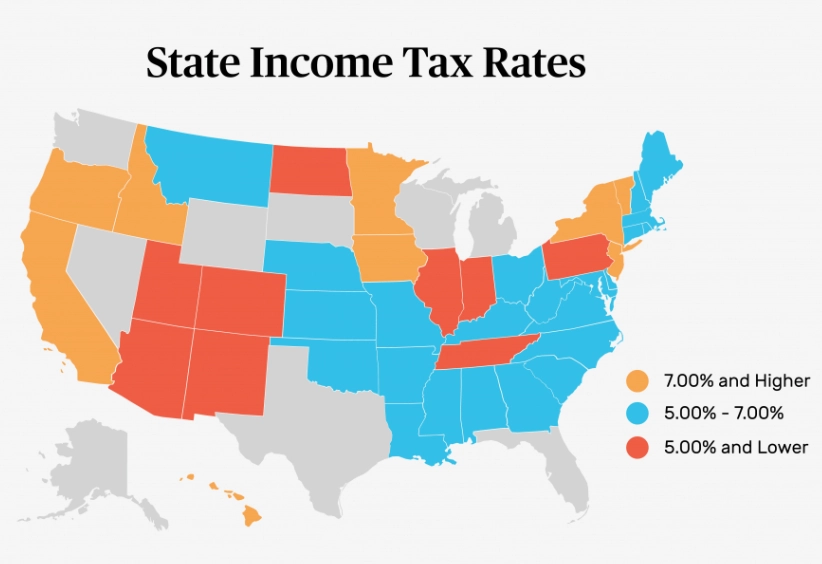
This isn't about tax evasion or loopholes. It's about understanding a fundamental trade-off in how states choose to fund themselves. Some states lean heavily on taxing what you earn. Others decide to tax what you own, what you buy, or what you extract from the ground. The list of states without income tax is shorter than you might think, and each one has its own unique—and sometimes quirky—financial personality.
Quick Reality Check: We're talking about state-level personal income tax here. Everyone, no matter where they live in the U.S., is still on the hook for federal income tax, Social Security, and Medicare. That part doesn't change.
So, Which States Actually Have No Income Tax?
Alright, let's get to the list. There are nine states that, as of now, do not levy a broad-based personal income tax on wages and salaries. It's a mix of sunbelt favorites, rugged western states, and a couple of unique outliers. It's useful to break them into two groups: the ones with truly zero income tax, and the ones that have a small twist.
The "pure" states with no income tax at all on wages are:
- Alaska
- Florida
- Nevada
- South Dakota
- Texas
- Washington
- Wyoming
Then, there are two states that technically don't have a traditional income tax on earned income (your job), but they do tax investment income like dividends and interest at a different rate:
- New Hampshire
- Tennessee (Note: Tennessee's tax on investment income, the "Hall Tax," was fully phased out as of January 1, 2021, making it now a true no-income-tax state. But this recent change is important history.)
That's the club. Nine states. You'll notice some patterns right away—no big northeastern states (except for New Hampshire's unique case), no west coast giants (sorry, California). It's a specific slice of America.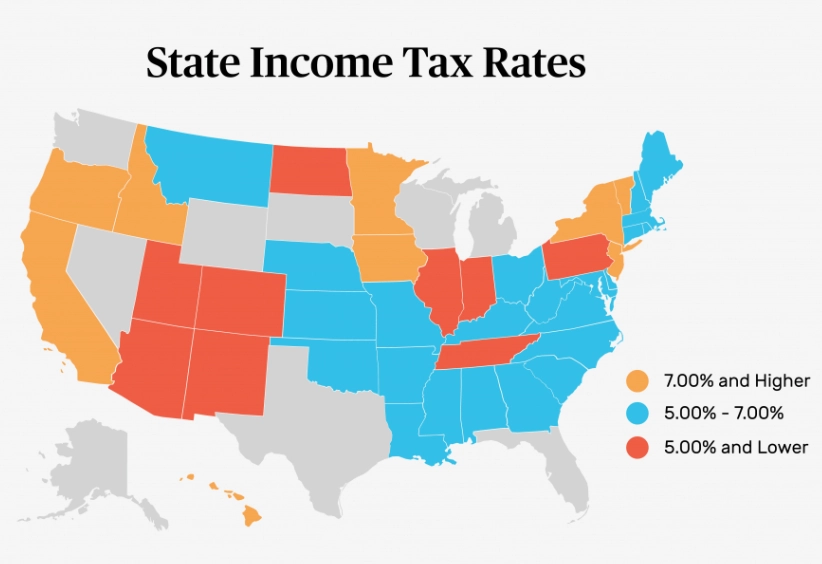
| State | Primary Alternative Revenue Source(s) | Notable Financial Quirk |
|---|---|---|
| Alaska | Oil & gas royalties, investments (Permanent Fund) | Often pays residents an annual dividend from oil wealth. |
| Florida | High sales tax, tourism taxes | Relies on a massive stream of tourists and retirees. |
| Nevada | Sales tax, gaming & hospitality taxes | Las Vegas and Reno casino revenue is a huge pillar. |
| South Dakota | Sales tax, financial services taxes | Benefits from being a hub for credit card companies and trusts. |
| Texas | High property taxes, sales tax, oil & gas severance taxes | Local property taxes are among the highest in the nation. |
| Washington | High sales tax, business & occupation (B&O) tax | Has a capital gains tax on high earners, a recent development. |
| Wyoming | Mineral severance taxes (coal, gas), sales tax | Similar to Alaska, heavily resource-dependent. |
| New Hampshire | High property taxes, business taxes | Taxes dividends & interest (but not wages). |
| Tennessee | High sales tax (one of the highest in the U.S.) | Recently abolished its tax on investment income. |
Looking at that table, the big question starts to form: How do these governments keep the lights on? The answer is in the second column. They get creative, and you, as a resident or potential resident, pay in other ways.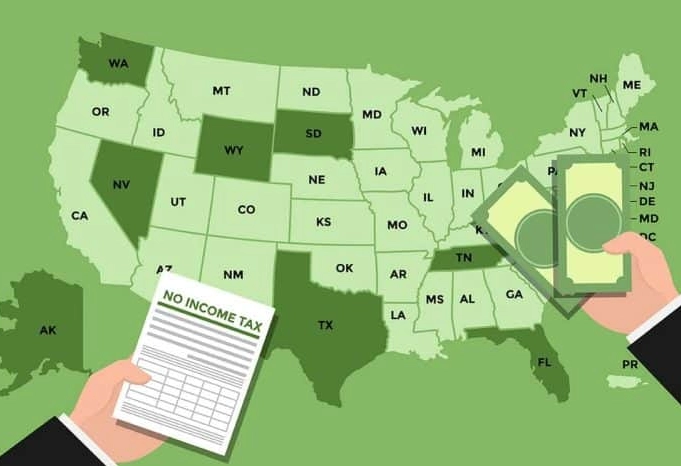
How Do States With No Income Tax Actually Make Money?
This is the most important part to understand. It's the classic "there's no such thing as a free lunch" principle applied to state budgets. When a state forgoes income tax revenue, it has to lean harder on other revenue streams. Sometimes, a lot harder.
The Big Three Alternatives: Sales, Property, and Sin
Most of these states ramp up their sales tax rates. Take Tennessee. According to data from the Tax Foundation, a nonpartisan tax research group, Tennessee has one of the highest combined state and local sales tax rates in the country. You save on your paycheck but pay more every time you buy a pair of shoes, a meal, or a computer.
Then there's property tax. Oh boy, property tax. If you're thinking of moving to Texas dreaming of big savings, you need to look at the property tax bill. Texas has no state property tax, but it allows local counties and cities to levy some of the highest effective property tax rates in the nation. I've seen friends in Austin get absolutely walloped by their annual property tax assessment—it can feel like a second mortgage. New Hampshire is similar; it uses sky-high property taxes to fund its towns and schools.
And then there are the specialty taxes. Nevada and Florida lean heavily on taxes from tourism—hotel room taxes, rental car surcharges, you name it. Alaska and Wyoming are propped up by severance taxes on oil, gas, and minerals. Washington has a unique and often-criticized Business & Occupation (B&O) tax, which is a gross receipts tax on businesses, which critics argue can stifle small business profitability.
Watch Out For: The "tax shift." You might save $5,000 a year in state income tax, but end up paying $3,000 more in property taxes, $1,000 more in sales tax, and face higher fees for services that were once covered. The net benefit can be smaller than you think, or even negative.
The Pros and Cons: Is It Really Worth It?
Let's weigh the actual advantages and disadvantages of living in one of these states with no income tax. It's never a simple yes or no answer—it depends entirely on your personal financial picture and lifestyle.
The Potential Advantages (The Good Stuff)
Simplicity. Filing your state taxes is a breeze. In many cases, it's just a matter of confirming you had no income to report. That's a real time and stress saucer.
Immediate Cash Flow. More money in your take-home pay each month. For middle and high-earners in states with steeply progressive income taxes (think California or New York), this can be a significant monthly difference.
Attractive to Retirees and Remote Workers. If you're living on a fixed income (like retirement savings) or have the freedom to work from anywhere, moving to a no-income-tax state can be a strategic way to stretch your dollars. Your pension or 401(k) withdrawals aren't taxed at the state level.
Perceived Business Friendliness. For business owners, not having a state corporate income tax (which many of these states also lack) can be a draw, though the alternative business taxes (like Washington's B&O) need careful scrutiny.
The Potential Disadvantages (The Not-So-Good Stuff)
Higher Other Taxes. As we've covered, you often pay more elsewhere. High sales taxes hit low and middle-income families disproportionately, as they spend a larger share of their income on taxable goods.
Service Trade-offs. This is the big, often-debated point. Some studies suggest that, on average, states without income tax might spend less per capita on things like education, social services, and infrastructure. Now, that's a huge generalization—Texas and Florida have massive, complex economies—but it's a question to ask. Are the public schools well-funded? Is the social safety net robust? You can find data on state spending from sources like the U.S. Census Bureau's State & Local Finance data.
Volatility. States that rely on tourism (Florida, Nevada) or natural resources (Alaska, Wyoming) can see their budgets swing wildly with economic cycles. A bad hurricane season, a drop in oil prices, or a pandemic that shuts down travel can create sudden budget shortfalls.
It Might Not Save You Much. If you're a younger person just starting out, renting an apartment, and not earning a high salary, your overall state and local tax burden in a high-income-tax state might already be low. Moving to Texas for the "low taxes" while renting might not move the needle much, but buying a house there certainly will—in the opposite direction.
My Two Cents: I think the biggest mistake people make is seeing "no income tax" and automatically equating it with "low overall taxes." That's rarely the full story. You have to run your own numbers. For a high-earning professional homeowner? Maybe a huge win. For a retiree renting a condo in Florida? Also potentially a win. For a family with kids looking at buying a home in a good Texas school district? The math gets complicated fast with those property taxes.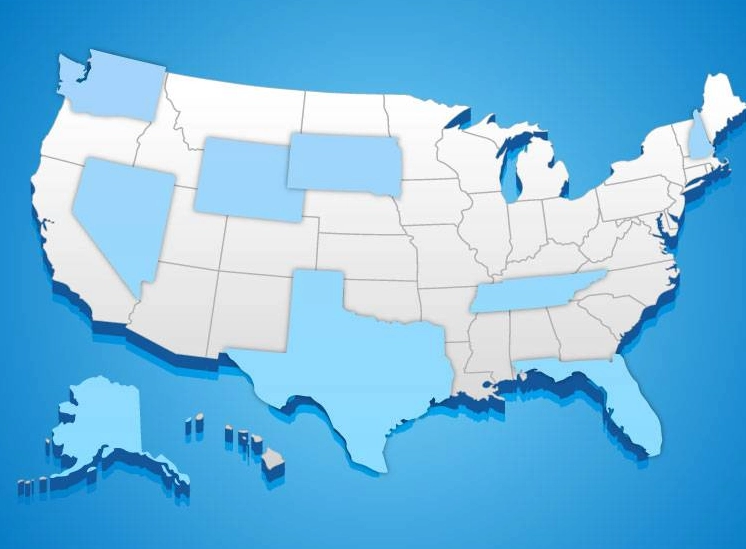
Answering Your Biggest Questions
See? It's never just one question. The answer always starts with, "It depends..."
Thinking of Moving? Do This First.
If you're seriously considering a move to one of these states, a little homework can save you from a nasty surprise. Here's a practical checklist.
- Run a Total Tax Burden Comparison. Don't just look at income tax. Use online calculators (the Tax Foundation has good tools) or, better yet, work with a CPA to model your total state and local tax liability (property, sales, auto, etc.) in your current state versus your target state. Use your actual income, spending, and home value estimates.
- Research Specific Cities and Counties. State averages lie. Property taxes in Houston are different than in El Paso. Sales tax in Seattle is different than in Spokane. Drill down to the local level.
- Evaluate the Whole Package. Taxes are important, but they're just one part of life. What's the job market like? The cost of housing (separate from property tax)? The quality of schools if you have kids? The climate? The culture? Moving for taxes alone to a place you hate is a bad trade.
- Understand the Residency Rules. States have specific rules (days physically present, driver's license, voter registration) to establish you as a resident. If you're keeping a vacation home in your old state, you need to be crystal clear on these rules to avoid being considered a resident of both states—a tax nightmare.
Look, the allure of states with no income tax is powerful. It speaks to a desire for keeping more of what you earn, for simplicity, for control. And for the right person in the right circumstances, it can be a fantastic financial decision.
But it's not a universal truth. For every person who saves thousands, there's someone who finds their savings eaten up by a different set of bills. These states have crafted a different deal with their residents: pay as you go, pay for what you own, pay when you spend. Whether that's a better deal for you isn't found in a headline. It's found in a spreadsheet, in local research, and in a honest assessment of what you value most in where you live.
So, dream about that extra cash in your pocket. But then get pragmatic. The devil, and your future budget, is in the details.
Reader Comments