Your Guide to Mastering Compound Interest
- The Math Behind the Magic (It's Simpler Than You Think)
- Compound Interest and Investments: Your Wealth Accelerator
- The Dark Side: Compound Interest and Debt
- Your Action Plan: Harnessing Compound Interest Now
- Common Questions About Compound Interest (The Stuff People Actually Google)
- The Mental Game: Staying the Course
Let's talk about money. Not the stressful, "how am I going to pay this bill" kind of talk, but the exciting kind. The kind that involves your money getting off the couch and going to work for you while you sleep, travel, or just binge-watch your favorite show. That's the magic we're digging into today. It all centers on one powerful, often misunderstood force: compound interest.
I remember the first time the concept of compound interest and its potential really clicked for me. It wasn't in a fancy finance class. It was my grandpa, over a cracked kitchen table, showing me his old passbook from a savings account he'd opened for my mom when she was born. A small initial deposit, left completely alone for decades, had grown into something that genuinely surprised me. "It's not magic," he said, "it's just patience and the math doing its thing." He was right. But most of us never get that kitchen table lesson, and we end up either ignoring this tool or, worse, falling victim to its dark side.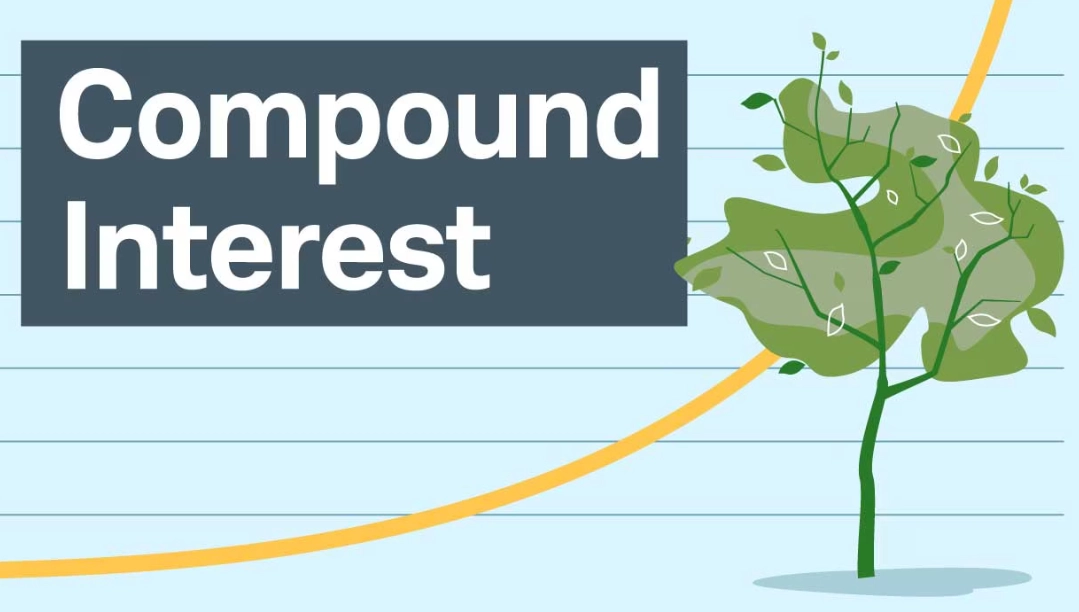
So, what is compound interest, really? In plain English, it's interest earned on your interest. It's the "snowball effect" for your finances. You earn interest on your initial deposit (the principal), and then in the next period, you earn interest on both the principal and the previously earned interest. That growth starts slow, almost imperceptibly so, but then it begins to curve upward in a way that feels almost unbelievable. This is the core engine behind compound interest and long-term wealth creation.
Think of planting an oak tree. You don't get a giant tree in a year. You get a sapling. The growth is slow at first. But decade after decade, that sapling becomes an unstoppable force. Your money works the same way with compounding. The problem is, we live in a world of instant gratification, and compounding is the ultimate game of delayed gratification. It asks for time above all else.
The Math Behind the Magic (It's Simpler Than You Think)
I know, I know. The word "math" makes people want to close the browser. Stick with me. You don't need to be a mathematician, you just need to get the picture.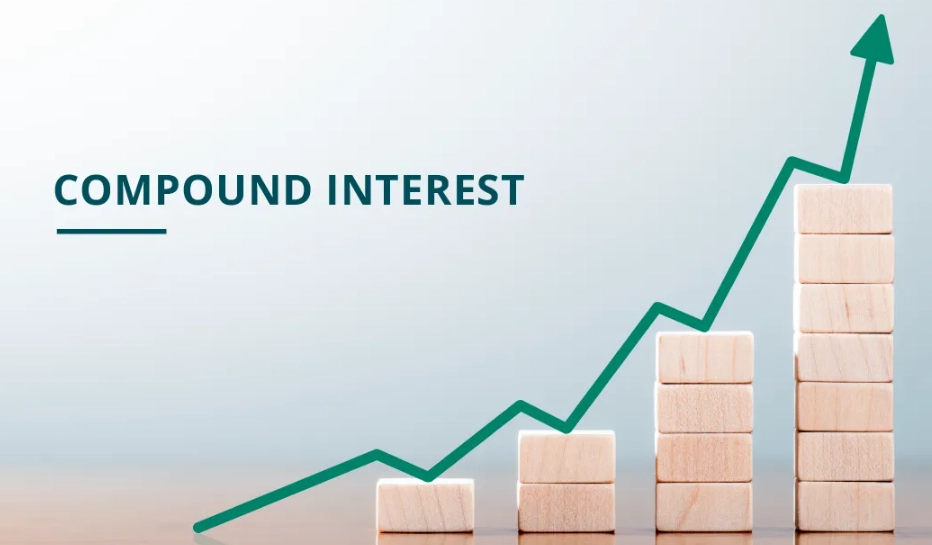
The classic formula is A = P (1 + r/n)^(nt). Looks scary, right? Let's translate.
- A is the future value of your investment/loan.
- P is the principal amount (your starting lump sum).
- r is the annual interest rate (in decimal form, so 5% = 0.05).
- n is the number of times interest is compounded per year.
- t is the number of years the money is invested or borrowed.
But forget the formula for a second. Let's look at a story instead.
Imagine two friends, Alex and Sam. Both decide to save for retirement.
- Alex starts at age 25. She invests $5,000 a year for just 10 years ($50,000 total) into a retirement account. Then she stops contributing entirely. She just lets it sit and compound.
- Sam is a late bloomer. He starts at age 35. To "catch up," he invests $5,000 a year, but he does it every single year for 30 years, until he's 65. That's a total of $150,000 out of his pocket.
Assuming a 7% average annual return (a common long-term stock market benchmark), who do you think has more at age 65?
Most people guess Sam. He put in three times as much money! But the power of compound interest and time is brutal in its efficiency.
At age 65:
- Alex (started at 25): Her $50,000 total investment grows to roughly $602,070.
- Sam (started at 35): His $150,000 total investment grows to roughly $540,741.
Alex ends up with more money, despite putting in only one-third of the cash. Her money had 10 extra years to compound. That's the entire argument for starting early, wrapped up in one example. It's not about being rich to start; it's about starting.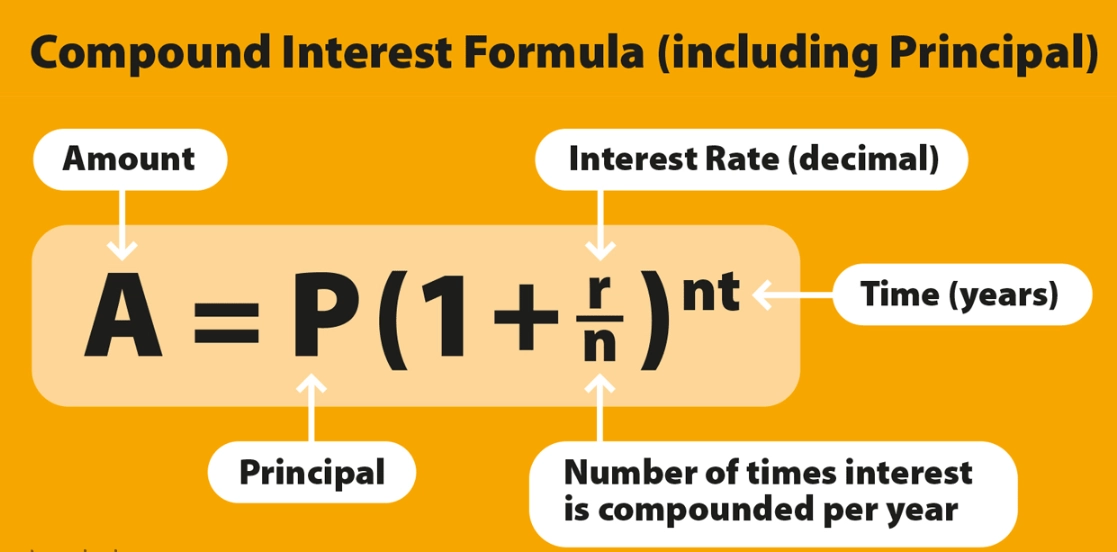
Compound Interest and Investments: Your Wealth Accelerator
This is where the fun begins. When you harness compound interest and investing together, you're pairing a powerful engine with high-octane fuel. Not all investments compound equally, though. Understanding the difference is key.
Most growth-oriented investments—like stocks, mutual funds, and ETFs—offer the potential for compounding returns. This doesn't mean you get a guaranteed interest rate. It means that if your investment grows in value (through price appreciation and reinvested dividends), that new, larger balance becomes the base for the next period's potential growth.
Where Does Compounding Work Best?
Let's break down common investment vehicles and how they interact with compounding.
| Investment Type | How Compounding Typically Works | The Good Stuff | The Not-So-Good Stuff |
|---|---|---|---|
| Stock Market (Index Funds/ETFs) | Compounding through reinvested dividends and long-term price appreciation. Your share count grows if dividends are reinvested. | Historically high long-term growth potential. The ultimate set-and-forget compounding machine for most people. | Volatile. Values go down, sometimes for years. Requires a strong stomach and a long timeline. |
| High-Yield Savings Accounts & Money Markets | Pure interest compounding. The bank pays you interest, usually monthly, which is added to your principal. | Safe, predictable, and liquid. Great for emergency funds or short-term goals. | Low returns. Often doesn't outpace inflation, so your money's purchasing power can slowly erode. |
| Bonds | Interest payments (coupons) can be reinvested to buy more bonds, leading to compounding. | More stable than stocks. Provides regular income. | Lower growth potential than stocks. Sensitive to interest rate changes. |
| Dividend Growth Stocks | A powerful combo: reinvest dividends to buy more shares, and the company may also increase the dividend payout each year. | "Double compounding" effect from more shares and higher payouts per share. Can build significant income streams. | Individual stock risk. Requires research. The company could cut its dividend. |
| Retirement Accounts (401k, IRA, Roth IRA) | These are containers, not investments themselves. They hold stocks, bonds, etc., and their key benefit is tax-advantaged compounding. | Taxes are deferred or eliminated on the growth, letting 100% of your returns compound uninterrupted. This is a massive, often overlooked, advantage. The U.S. Securities and Exchange Commission has a great compound interest calculator that lets you model this. | Contribution limits and rules for withdrawals. Your investment choices may be limited by your 401k plan. |
See the pattern? The vehicles with higher historical returns (like the stock market) supercharge the compounding effect, but they come with volatility. The safer vehicles offer stable, predictable compounding but at a much slower pace. Your job is to figure out your timeline and risk tolerance, and choose the right mix.
A personal mistake I made: In my early 20s, I was so scared of the stock market's ups and downs that I kept all my long-term savings in a "high-interest" savings account (it was 0.5% at the time). I thought I was being safe and smart. In reality, I was guaranteeing that my money would lose value to inflation. I was on the wrong side of compounding. It took me years to finally move some of that money into a simple stock index fund in my Roth IRA. Don't let fear of short-term loss rob you of long-term compounding.
The Dark Side: Compound Interest and Debt
If compound interest is a superpower for building wealth, it's a supervillain when it comes to debt. The math is identical, but it's working against you with terrifying efficiency. This is the part of compound interest and personal finance that keeps people awake at night.
Credit card debt is the classic example. You don't pay off your balance, the issuer charges you interest. Next month, you're charged interest on the original balance plus the last month's interest. It snowballs in the wrong direction. The Federal Reserve publishes data on average credit card rates, and they are often staggeringly high, making the compounding effect brutal. You can find historical interest rate data on the Federal Reserve's G.19 report.
Warning: High-interest consumer debt is an emergency. The compounding effect here is so destructive that it can wipe out any positive compounding you're trying to achieve with your investments. I always tell people: paying off a 20% APR credit card is a guaranteed, risk-free 20% return on your money. You won't find that anywhere in the market.
But it's not just credit cards. Payday loans, some personal loans, and even the growing balances on some student loans (if you're on certain income-driven plans where unpaid interest gets added to the principal) operate on this harmful compounding principle.
The rule is simple: compound interest is a friend to the saver and investor, but a ruthless enemy to the borrower.
Your Action Plan: Harnessing Compound Interest Now
Okay, enough theory. How do you actually make this work for you? It boils down to a few non-negotiable habits.
Start. Today. Seriously.
Time is the most critical ingredient. The difference between starting at 25 and 35, as we saw, is monumental. Don't wait for the "perfect" amount of money. Start with $50 a month. Automate it. The act of starting is more important than the amount.
Be Consistent
Regular contributions are like adding kindling to a fire. They continuously feed the principal, which then gets to compound. Setting up automatic monthly transfers from your checking account to your investment account is the single best financial habit you can build.
Choose the Right Vehicle
For long-term goals (retirement, 10+ years away), you need assets with growth potential. For most people, a low-cost, broad-market stock index fund inside a tax-advantaged retirement account (like a Roth IRA or 401k) is the perfect compounding machine. The Internal Revenue Service (IRS) website details the contribution limits and rules for retirement plans each year.
Reinvest EVERYTHING
This is the secret sauce. Don't take the dividends or interest out to spend. Turn on the "dividend reinvestment" (DRIP) option in your brokerage account. Let those small payments automatically buy more shares, which will then generate their own dividends. This is the engine turning over.
Don't Interrupt the Process
The biggest killer of compounding is withdrawing the money. Every time you take money out, you're not just removing that amount; you're removing all the future growth that amount could have generated. Treat your retirement and long-term investment accounts like a one-way street. Money goes in, it doesn't come out until you're ready for the goal.
Pro-Tip: Increase your contributions with every raise or windfall. Got a 3% raise? Increase your 401k contribution by 1%. You still get a pay bump, and you're fueling the compounding engine without feeling the pinch.
Common Questions About Compound Interest (The Stuff People Actually Google)
Let's get practical. Here are the questions I get asked most often, or that I see popping up in forums all the time.
How often should interest compound for the best results?
More frequently is technically better, but it's a case of diminishing returns. Daily compounding is better than monthly, which is better than annually. But in the real world, the difference between daily and monthly compounding on an investment is tiny compared to the far bigger factors: the rate of return (investment choice) and the time you give it. Don't stress over this. Focus on the big picture.
Can compound interest make me rich quickly?
No. And anyone selling you that idea is lying. The words "compound interest" and "get rich quick" should never be in the same sentence. Compounding is the opposite. It's the "get rich slowly" plan. Its power is in the later years. The first decade is about building the foundation. The explosive growth happens in decades two, three, and four. Impatience is its greatest enemy.
Is compound interest the same for savings and loans?
The mathematical mechanism is identical. The emotional and financial impact is opposite. With savings, you are the beneficiary (the bank or market pays you). With loans, you are the payer (you pay the bank or lender). Understanding both sides is crucial for full financial literacy.
What's a realistic annual return to assume for compounding calculations?
This is the million-dollar question. For long-term stock market investing, financial planners often use 5-7% after accounting for inflation (so a "real" return). Nominal returns might be higher, but inflation eats away at your purchasing power. Being conservative in your estimates is wise. If you assume 10%, you'll likely be disappointed. If you assume 6-7% and get more, it's a happy surprise.
The key is to just start modeling. Use a calculator, play with the numbers. See what $100 a month could become.
The Mental Game: Staying the Course
All this math and strategy is useless without the right mindset. Compounding requires faith in the unseen. It requires you to keep putting money in during market crashes, when it feels pointless. It requires ignoring the noise and the temptation to pull money out for a shiny new thing.
You have to visualize the oak tree when you're looking at the sapling. You have to trust the process more than you trust your fears. That's the real work. Setting up the accounts is the easy part. Developing the patience of an investor is the lifelong practice.
So, where does that leave us? Compound interest and its relationship with your financial future isn't a mystery. It's a predictable, powerful force. You can choose to be on the right side of it by starting early, investing consistently in growth assets, and avoiding high-interest debt. Or you can ignore it and, by default, end up on the wrong side.
The formula for success is simple, but not easy. It demands discipline over decades. But the reward—a future where your money has done the heavy lifting for you—is absolutely worth it. Now, go check if your 401k contributions are automated. Do it today. Your future self will look back and thank you for that single, simple act.
Reader Comments