What You'll Find in This Guide
- Capex vs. Opex: The Eternal Business Rivalry
- The Capex Lifecycle: From a Spark of an Idea to a Depreciating Asset
- Why Bother? The Strategic Power of Smart Capex
- Real-World Capex: It's Not All Factories and Machines
- The Dark Side: Common Capex Pitfalls and How to Avoid Them
- Planning and Budgeting Your Capex: A Practical Framework
- Your Burning Capex Questions, Answered
- Final Thoughts: Making Peace with the Process
Let's be real. If you're running a business, managing a team's budget, or just trying to make sense of financial reports, you've bumped into the term "capex." Maybe you've even typed "capex capex" into Google in a moment of frustration, trying to get a straight answer. You're not alone. I remember the first time I had to present a capex budget to our board. I felt like I was speaking a different language. The accountants nodded along, but the operational folks looked completely lost. That's when I realized most explanations are either overly simplistic or buried in accounting jargon.
This guide is my attempt to fix that. We're going to tear down the walls around capital expenditure, or capex for short, and look at it for what it really is: the lifeblood of a company's future growth. Forget dry definitions. We're talking about the money you sink into things that will make you money tomorrow. That new factory machine? Capex. The software platform that will run your entire operation for the next decade? Capex. Even renovating your office to attract better talent—yep, that's capex too.
The Core Idea, Plain and Simple
At its heart, capex (capital expenditure) is money spent to buy, upgrade, or maintain physical or intangible assets that you expect to use for more than a year. It's an investment in your business's productive capacity. The key differentiator? Time. Unlike day-to-day expenses (like rent or salaries), a capex outlay is meant to benefit your business over a long period. Because of this, you don't just expense the whole cost in the year you pay it. Instead, you spread the cost out over the asset's useful life through depreciation (for tangible stuff) or amortization (for intangible stuff). This matching principle is a cornerstone of accrual accounting, as outlined by bodies like the Financial Accounting Standards Board (FASB).
Why should you care? Because how you handle capex determines whether you're just surviving or strategically thriving. Skimp on it, and your technology becomes obsolete, your equipment breaks down, and you fall behind competitors. Spend on it recklessly, and you can bleed cash and saddle the company with debt for assets that never pay off. Getting capex right is a balancing act.
Capex vs. Opex: The Eternal Business Rivalry
This is where people get tangled up. You can't understand capex without its counterpart: opex, or operational expenditure. Think of them as two different buckets of money for two different jobs.
| Aspect | Capex (Capital Expenditure) | Opex (Operational Expenditure) |
|---|---|---|
| Purpose | Investment for future benefit. Buying the goose that lays golden eggs. | Cost of running the business today. Feeding and caring for the goose. |
| Time Horizon | Long-term (useful life > 1 year). | Short-term (benefit consumed within the year). |
| Financial Statement Impact | Appears on the Balance Sheet as an asset. Cost is gradually expensed via Depreciation/Amortization on the Income Statement. | Fully expensed in the period incurred, hitting the Income Statement immediately. |
| Cash Flow | Recorded under "Investing Activities" on the Cash Flow Statement. | Recorded under "Operating Activities" on the Cash Flow Statement. |
| Tax Treatment | Deducted gradually over several years through depreciation schedules. | Typically fully deductible in the current tax year. |
| Examples | Purchasing a building, company vehicles, heavy machinery, a patent, major software license. | Monthly rent, utility bills, employee salaries, office supplies, software subscription fees (SaaS). |
See the difference? It's not just accounting pedantry. This distinction drives real business decisions. Let's say you need a new customer relationship management (CRM) system. You could buy a perpetual license and host it on your own servers (a big upfront capex outlay, followed by smaller maintenance opex). Or, you could subscribe to a cloud-based CRM like Salesforce (a pure, predictable monthly opex). The shift from capex to opex in tech is a huge trend for a reason—it frees up capital and makes costs more variable.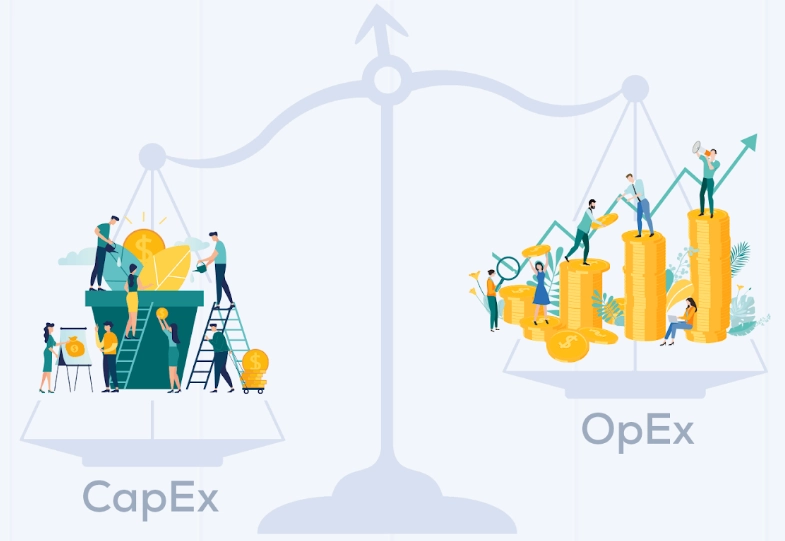
The Capex Lifecycle: From a Spark of an Idea to a Depreciating Asset
Approving a significant capital expenditure isn't a snap decision. It's a journey, often a bureaucratic one. A formal capex process protects the company from impulsive, wasteful spending. Here’s how it typically flows, though every company adds its own twists.
Stage 1: Identification and Proposal
It starts with a need. The production line is too slow. The sales team has no mobile tools. The server room is a fire hazard. Someone—a department head, a project manager—drafts a capex proposal. This isn't a back-of-the-napkin sketch. A good proposal needs to justify its existence. It should lay out the business case: What problem does it solve? What are the expected benefits (increased revenue, reduced costs, compliance achieved)? What are the technical specifications? Most importantly, it must include a detailed financial analysis with cost estimates and, crucially, a projected Return on Investment (ROI).
Stage 2: Evaluation and Approval
This is where the gatekeepers step in. The proposal goes to finance, who pokes holes in the numbers. It might go to a procurement team to source quotes. For tech projects, IT security gets a say. Eventually, it lands in front of a capital expenditure committee or a senior executive with signing authority. The approval threshold depends on the amount. A $5k laptop purchase might need a department head's sign-off, while a $5 million new warehouse needs board-level approval. This layered approval is a necessary control, but boy, can it slow things down.
Stage 3: Procurement and Implementation
Approval in hand, the real work begins. Procurement negotiates contracts, purchase orders are cut, and the asset is acquired. Then comes implementation—installing the machine, deploying the software, constructing the building. This phase is often managed as a project, with its own budget and timeline. It's critical to track actual spending against the approved capex budget here. Scope creep is the enemy.
Stage 4: Capitalization and Depreciation
Once the asset is placed in service and ready for its intended use, it gets "capitalized." This accounting magic trick moves the cost from a pile of cash outflows to an asset on the balance sheet. From that point on, accountants begin depreciating or amortizing the asset. That $100,000 machine with a 10-year life? It'll show up as a $10,000 depreciation expense on your income statement every year for a decade, reducing your taxable income gradually.
That's the full cycle. A capex item starts as an idea, becomes a cash outflow, transforms into a balance sheet asset, and finally, over years, trickles onto the income statement as an expense.
Why Bother? The Strategic Power of Smart Capex
If the process sounds arduous, that's because it is. So why go through it? Because strategic capex is how you build moats around your business.
The Top Benefits of Getting Capex Right
- Drives Growth & Competitive Edge: This is the big one. Capex funds the new product lines, the expanded territories, the more efficient processes that let you outpace competitors. It's the investment in R&D and technology that leads to innovation.
- Improves Operational Efficiency: Newer equipment often breaks down less, produces more with less waste, and requires less labor. That upgrade from a manual packing station to an automated one is a classic efficiency-driven capex.
- Enhances Long-Term Profitability: Although it hurts cash flow upfront, a successful capex project should generate more cash inflow (through higher sales or lower costs) over its life than it cost. That's the whole point of the ROI calculation.
- Tax Advantages: Depreciation is a non-cash expense. It reduces your reported profit (and thus your tax bill) without you having to write a check. This shields some of your cash flow.
- Builds Asset Value: Wise capital expenditures directly increase the asset base on your balance sheet. For asset-heavy businesses (manufacturing, telecoms, utilities), this is a key measure of strength and borrowing capacity.
Look at companies like Amazon. Their massive, relentless capex in fulfillment centers, AWS data centers, and robotics is not an accident. It's a deliberate strategy to build an infrastructure empire that is nearly impossible for anyone else to replicate. That's capex as a strategic weapon.
Real-World Capex: It's Not All Factories and Machines
Let's get concrete. Capex isn't some abstract concept only for Fortune 500 companies. It's everywhere.
For a Manufacturing Company: This is the classic case. Capex is the lifeblood. Examples include buying a new CNC machine, constructing an additional production wing, or installing a solar power array to reduce energy costs. The National Institute of Standards and Technology (NIST) has resources on advanced manufacturing, which is fueled by capital investment.
For a Tech Company or Digital Business: Their capex might be less visible but just as critical. It could be the cost to develop a proprietary software platform (if they capitalize it, which has specific rules), purchasing a data center, or acquiring another company's technology and customer list (an intangible asset).
For a Small Retail Store: Even a local shop engages in capex. Remodeling the storefront, buying a new point-of-sale system and inventory computers, or installing a walk-in freezer are all capital expenditures. The U.S. Small Business Administration (SBA) discusses equipment financing, a common way small businesses fund their capex.
For a Service Business (like a law firm or consultancy): Their major capex is often their office fit-out (furniture, conference room tech) and their professional software licenses. Leasing vs. buying decisions happen here constantly.
The common thread? It's a substantial outlay for something that will be used to generate revenue for years. That's the capex capex decision in a nutshell.
The Dark Side: Common Capex Pitfalls and How to Avoid Them
Let's not sugarcoat it. Capex projects fail. A lot. I've been part of a few stinkers. Here’s where things usually go wrong.
- Underestimating Total Cost: You budget for the sticker price of the machine but forget about shipping, installation, training, and the necessary facility upgrades. Always budget for "all-in" cost.
- Overestimating Benefits (ROI Optimism): Sales projections are too rosy. Cost savings are theoretical. This is the most common way a capex proposal gets approved based on fiction. Demand hard data and conservative assumptions.
- Ignoring the Ongoing Opex: That shiny new asset needs maintenance, software updates, insurance, and power. This "carrying cost" can sink the ROI if not planned for.
- Poor Integration & Change Management: You buy a fantastic new system, but no one trains the staff on how to use it, or it doesn't talk to your old systems. The asset is technically in service, but it's not delivering value.
- Analysis Paralysis: The opposite problem. Spending so long evaluating options that the opportunity passes or the problem gets worse. Sometimes, a good decision now is better than a perfect decision too late.
A failed capex project doesn't just waste money. It drains morale and destroys trust in future proposals.
Planning and Budgeting Your Capex: A Practical Framework
You don't just wake up and decide to spend half a million dollars. A capex budget is a strategic plan. Here's a down-to-earth approach to building one.
- Start with Strategy: What are the company's big goals for the next 3-5 years? Enter new markets? Launch a product? Improve margins? Your capex budget should be a direct financial translation of that strategy.
- Bottom-Up Gathering: Ask each department what they need to achieve their goals. Have them submit formal proposals using a standardized template you provide (this forces them to think through the business case).
- Prioritize Ruthlessly: You'll never have enough money for every wish-list item. Create a scoring system. How strategic is it? What's the ROI and payback period? Is it for maintenance (replacing broken equipment) or growth (new capability)? Rank everything.
- Model Cash Flow Impact: Work with finance to understand the timing of payments. A $1M capex spread over 18 months feels very different from $1M due next quarter. Model different scenarios.
- Build in Contingency: Add a buffer (10-15% is common) for unforeseen costs. Trust me, something always comes up.
- Get Alignment & Approval: Socialize the draft budget with key stakeholders before the big meeting. Avoid surprises. Then present the final, prioritized plan to the decision-makers.
Remember, a capex budget is a living document. Review it quarterly. If a higher-priority opportunity emerges, be prepared to reallocate funds. Flexibility within a disciplined framework is key.
Your Burning Capex Questions, Answered
Over the years, I've been asked the same things repeatedly. Let's tackle them head-on.
Final Thoughts: Making Peace with the Process
Capex can feel like a drag. The paperwork, the approvals, the waiting. But when you reframe it, it's one of the most powerful tools you have. It's the formal mechanism your business uses to vote on its own future. Every approved capex proposal is a bet, a statement that says, "We believe spending this money here will make us stronger, faster, or better down the road."
Don't fear the capex capex conversation. Embrace it. Come to the table with clear data, a compelling story about the future benefit, and an understanding of the full financial picture. Whether you're the one proposing the spend or the one approving it, you're now equipped to have a smarter conversation. And that's how you move from just managing costs to strategically investing in growth.
It's not about the expense. It's about the asset it becomes.
Reader Comments