Quick Guide
- Cutting Through the Jargon: What KPIs Are and What They Aren't
- The Different Flavors of KPIs: A Quick Tour
- How to Choose Your KPIs: A Framework That Actually Works
- Setting Targets and Benchmarks: The Art of the Possible
- The Tracking and Reporting Dilemma: Tools and Rhythm
- Analyzing and Acting: The Part Everyone Skips
- Common KPI Mistakes (And How to Avoid Them)
- KPI FAQs: Answering the Real Questions People Have
- Bringing It All Together
Let's be honest for a second. The term "Key Performance Indicators" gets thrown around a lot. In boardrooms, in team meetings, on strategy slides. Sometimes it feels like a magic spell people chant hoping for better results. But what does it actually mean to have good KPIs? And more importantly, how do you move from just having them on a spreadsheet to actually using them to steer your business or team?
I've seen it firsthand. A startup I consulted for was tracking over fifty different metrics. Their dashboard looked like the cockpit of a spaceship. Impressive, right? The problem was, nobody knew which five dials they should actually be watching as they were trying to land. They were data-rich but insight-poor. That's the trap this whole guide is designed to help you avoid.
So, what are Key Performance Indicators, really? At their core, KPIs are the handful of metrics that tell you, with brutal clarity, whether you're on track to hit your most important goals. They're not just any data points; they're the vital signs for your project, campaign, or entire company.
Cutting Through the Jargon: What KPIs Are and What They Aren't
Everyone talks about metrics. But not all metrics deserve the title of "Key" Performance Indicator. That word "Key" is doing a lot of heavy lifting. It means essential, crucial, pivotal. A true KPI is a quantifiable measure that directly reflects the success of a critical objective.
Think of it this way: If your goal is to get healthier, your weight is a metric. The number of times you go to the gym each week is a metric. But your resting heart rate or your ability to run a 5k without stopping might be a better KPI—it directly measures the outcome you want.
A common mistake is confusing leading indicators with lagging indicators. Lagging indicators, like quarterly revenue, tell you what already happened. They're historical. Leading indicators, like the number of qualified sales leads generated this month, predict what will happen. The most powerful KPI dashboards track a mix of both.
So, a vanity metric (like total page views) is not a KPI. A true KPI (like conversion rate for a key landing page) is tied directly to a business outcome.
The Different Flavors of KPIs: A Quick Tour
Not all key performance indicators are created equal. They serve different purposes depending on what you're trying to understand. Let's break down the main types you'll encounter.
Strategic vs. Operational KPIs
Strategic KPIs are the big-picture ones. They're often watched by the C-suite and relate to the overall health and direction of the organization. Think "Net Profit Margin," "Market Share," or "Customer Lifetime Value." They change slowly.
Operational KPIs are more tactical. They're for teams and managers, focused on efficiency and processes. These change frequently—daily, weekly. Examples are "Customer Support Ticket Resolution Time," "Manufacturing Defect Rate," or "Website Uptime Percentage." Getting this distinction right stops your marketing team from being grilled on the company's overall debt ratio.
Quantitative vs. Qualitative KPIs
Most KPIs are quantitative—hard numbers. Revenue, units sold, error count. Easy to track, easy to graph. But qualitative KPIs are just as important, though trickier. Think "Customer Satisfaction Score (CSAT)" or "Employee Net Promoter Score (eNPS)." These often come from surveys and feedback. Ignoring them because they're "soft" is a great way to miss why your hard numbers are suddenly falling.
Here’s a practical table to show how different types of key performance indicators might manifest across common departments:
| Department | Strategic KPI Example | Operational KPI Example | Qualitative KPI Example |
|---|---|---|---|
| Sales | Customer Lifetime Value (CLV) | Average Sales Cycle Length | Client Relationship Score (from account manager feedback) |
| Marketing | Marketing Originated Customer % | Cost Per Lead (CPL) by Channel | Brand Sentiment Score (social listening) |
| Customer Service | Net Promoter Score (NPS) | First Contact Resolution Rate | Customer Effort Score (CES) |
| Product Development | Monthly Active Users (MAU) | Mean Time to Recovery (MTTR) for outages | User Usability Rating (from testing) |
See the pattern? The strategic ones often connect to money or long-term growth. The operational ones are about doing things right, day-to-day. And the qualitative ones ask "how do people *feel* about what we're doing?"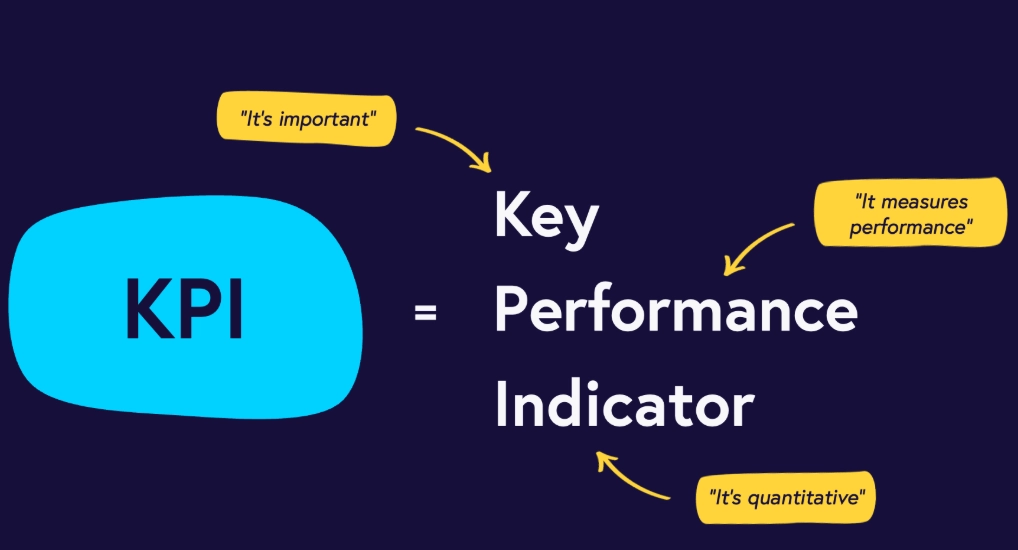
How to Choose Your KPIs: A Framework That Actually Works
This is where most guides get vague. They say "align KPIs with your goals." Well, duh. But how? Let me give you a process that's less theoretical and more like a recipe you can follow.
First, start with the goal. Not a fuzzy wish like "be better at marketing." A real, specific goal. Use the SMART framework (Specific, Measurable, Achievable, Relevant, Time-bound). The folks at MindTools have a great breakdown of how to set SMART goals if you need a refresher. For example, "Increase qualified leads from organic search by 25% in Q3" is a SMART goal.
Now, work backwards. Ask yourself: "What is the most direct evidence that we are making progress toward this goal?" For that lead goal, is it the number of form submissions? Maybe. But is a form submission a *qualified* lead? Probably not. You might need a KPI for "Marketing Qualified Leads (MQLs) from Organic Search." That's more direct.
A huge pitfall here is choosing KPIs that are easy to measure rather than ones that are right. Website visits are easy to track. Conversions from a specific, high-intent audience segment are harder, but infinitely more valuable. Don't take the easy way out.
Here's my personal checklist for vetting a potential KPI. If it doesn't pass most of these, it's probably just a metric, not a *key* one:
- Is it directly tied to a strategic objective? (If the objective disappears, does this metric become irrelevant?)
- Is it measurable and unambiguous? (Can two people look at it and agree on what it means and how it's calculated?)
- Is it actionable? (If the number changes, do we know what levers to pull to influence it?)
- Is it timely? (Can we get the data frequently enough to make decisions before it's too late?)
- Is it simple for the team to understand? (If you need a 10-minute explanation, it won't drive behavior.)
I learned the importance of that last one the hard way. I once presented a "Churn Prediction Score" to a client team. It was a fancy model output. Their eyes glazed over. When I switched to tracking "Number of support tickets opened in the last 30 days" for at-risk customers, they immediately got it and knew what to do.
Setting Targets and Benchmarks: The Art of the Possible
Okay, so you've picked your key performance indicators. A number in isolation is pretty useless. Is a 2% conversion rate good? Is 10% employee turnover bad? You need context. That's where targets and benchmarks come in.
Targets are your internal goals. Where do you *want* the KPI to be? Setting these requires a mix of ambition and realism. Look at historical data (where have we been?), consider resource changes (are we adding staff?), and align with the broader goal (what does success require?).
Benchmarks are external reference points. How do you stack up against competitors or industry standards? These are tricky. Public benchmarks can be misleading because every business is different. A SaaS startup and an enterprise software company will have wildly different benchmarks for customer acquisition cost. Use them as a rough guide, not a gospel. Resources like industry reports from Gartner or specific trade associations can offer directional data.
My rule of thumb: Spend 80% of your energy on setting the right internal target. Benchmarking is useful to know if you're in the right ballpark, but beating your own past performance is often a more powerful and controllable motivator for a team.
The Tracking and Reporting Dilemma: Tools and Rhythm
Now comes the operational grind. How do you actually track these things? The tool landscape is overwhelming—from Google Sheets and Excel to sophisticated BI platforms like Tableau or Power BI, to dedicated KPI software.
Honestly, start simple. A well-organized spreadsheet is better than a poorly configured $1000/month dashboard. The tool doesn't matter if the data going into it is garbage. Focus on getting clean, reliable data sources first.
What matters more than the tool is the rhythm. When do you review the KPIs? Who sees them? This is about creating a culture of data-informed discussion, not data dumping.
- Daily/Real-time: Reserved for a few, critical operational KPIs that need immediate attention (e.g., site downtime, high-volume sales conversion rate). Most teams don't need this.
- Weekly: The sweet spot for most operational and tactical KPIs. A weekly team huddle to review progress, identify blockers, and adjust tactics for the week ahead.
- Monthly/Quarterly: The right cadence for strategic key performance indicators. This is for leadership to review progress toward major goals, reallocate resources, and decide if strategies need a pivot.
The biggest mistake is creating a beautiful dashboard that nobody looks at. I've been there. You build it, send the link, and... crickets. To avoid this, tie the KPI review to an existing, non-negotiable meeting. Make it a standing agenda item. Ask "what's driving this number?" not just "what is the number?"
Analyzing and Acting: The Part Everyone Skips
Tracking KPIs is pointless if you don't analyze the *why* behind the numbers and take action. This is the step that separates busywork from business intelligence.
When a KPI moves (for better or worse), your first question should be "What changed?" Drill down. Segment the data. If your overall conversion rate dropped, did it drop for all traffic sources? Or just one? For all product lines? Or just the new one? Use the principle of comparison (vs. target, vs. last period, vs. a similar period last year) and segmentation to find the story.
A green KPI is not always a cause for celebration. Sometimes you hit a target for the wrong reasons (e.g., a price drop spiking sales but killing profit). A red KPI is not always a failure. It might be a planned dip from investing in a new channel. Context is king.
Then, act. Create hypotheses. "We think conversion rate dropped because the new page layout is confusing on mobile." Then test. Change one thing and watch the KPI. This turns your KPI dashboard from a report card into a steering wheel.
Common KPI Mistakes (And How to Avoid Them)
Let's talk about where things usually go wrong. I've made most of these mistakes myself, so learn from my pain.
Tracking too many KPIs. This is the #1 error. If everything is key, nothing is. You can't focus on 20 things at once. Aim for 3-7 KPIs per major goal or team. It forces ruthless prioritization.
Setting and forgetting. Your business evolves. Your key performance indicators should too. A KPI that was vital last year might be irrelevant this year. Schedule a quarterly "KPI health check" to ask: "Are these still the right things to measure?"
Rewarding the wrong thing. This is dangerous. If you reward sales only on revenue, don't be surprised when discounting goes wild and profitability tanks. Your KPIs (especially those tied to bonuses) will dictate behavior. Make sure they encourage the *right* behavior.
Ignoring qualitative data. Your quantitative KPIs might tell you *what* is happening, but your qualitative data (customer interviews, employee feedback) tells you *why*. You need both to make good decisions.
A dashboard full of green numbers can be a sign of complacency, not success, if your targets are too easy.
KPI FAQs: Answering the Real Questions People Have
Bringing It All Together
At the end of the day, key performance indicators are just tools. Powerful, essential tools, but tools nonetheless. They exist to reduce uncertainty, focus effort, and create a shared language of success within your organization.
The magic isn't in picking the perfect KPI framework from a textbook. It's in the ongoing conversation they spark. It's in the weekly meeting where someone points to a dipping graph and says, "I think I know why that's happening, and here's what we should try." That's where data turns into insight, and insight turns into action.
Don't let perfect be the enemy of good. Start with one goal. Pick one or two KPIs that truly measure progress toward it. Start tracking them in a simple way. Review them regularly with your team. Talk about the "why." Adjust. Rinse and repeat. That iterative process, more than any fancy software or complex formula, is how you'll actually get value from your key performance indicators.
It's a journey, not a one-time setup. But it's a journey that makes the path to your goals a whole lot clearer.
Reader Comments