Quick Guide
Let's be honest for a second. The word "entrepreneur" gets thrown around so much it's lost some of its meaning. It's plastered on social media bios, used to sell expensive courses, and wrapped up in this glamorous, hustle-culture fantasy. But what does it really take to be one? I'm not talking about the Instagram version. I'm talking about the real, gritty, often-uncomfortable work of building something from nothing.
I remember sitting at my kitchen table years ago, staring at a spreadsheet that was mostly red, wondering if I'd made a huge mistake. That feeling in the pit of your stomach? Most of us have been there. The path for entrepreneurs is rarely a straight line. It's a messy, winding road full of potholes and unexpected detours.
So, let's skip the fluff and the generic advice. This isn't about getting rich quick. It's about building something that lasts, something that solves a real problem, and hopefully, doesn't burn you out in the process. Whether you're just toying with an idea or you're in the thick of scaling your third venture, there's something here. We're going to dig into the stuff that actually matters: the mindset you need, the money you have to find (or make), and the strategies that separate a fleeting idea from a functioning business.
The Foundation: Getting Your Head in the Game
Before you write a single line of code, design a logo, or order business cards, you need to sort out the internal stuff. The mental game is where most ventures are won or lost before they even start.
The Non-Negotiable Mindset Shifts
You can't think like an employee and expect to succeed as a founder. The frameworks are completely different.
First, you have to embrace a growth mindset. This isn't just psychobabble. It's the practical belief that your skills and intelligence can be developed. When you hit a wall—and you will—a fixed mindset says "I'm not good at this." A growth mindset asks, "What do I need to learn to get past this?" The Harvard Business Review has some solid, research-backed insights on how cultivating this mindset impacts leadership and innovation, which is crucial for any entrepreneur trying to navigate uncharted territory. You can find a deeper dive on their website.
Then there's resilience. Not the toxic "grind until you break" kind. I mean the ability to absorb a setback, learn from it, and keep moving. It's not about avoiding failure; it's about changing your relationship with it. I once lost a major client that accounted for 40% of our monthly revenue. It felt like a punch to the gut. But that crisis forced us to diversify our client base, which made the business stronger in the long run. Failure is just data. Painful, embarrassing data, but data nonetheless.
And finally, execution over ideas.
Everyone has ideas. In coffee shops, in shower thoughts, in late-night texting sessions. The difference is execution. The world is full of brilliant, unfinished concepts. Successful entrepreneurs are the ones who figure out how to take that messy idea and turn it into a series of actionable, manageable steps. They focus on the "how" when everyone else is stuck on the "what."
Confronting the Big, Scary Mental Blocks
Imposter syndrome. Fear of judgment. The paralysis of perfectionism. These aren't personal failings; they're occupational hazards for anyone trying to create something new.
Imposter syndrome is that voice whispering, "Who do you think you are? You're going to be found out." The weird secret? Almost every accomplished entrepreneur I've met battles it. The goal isn't to eliminate it—that's probably impossible. The goal is to acknowledge it and do the work anyway. As my friend who runs a successful tech firm says, "I've just learned to make room for that annoying passenger in my head. I don't let him drive."
And perfectionism? It's a progress killer. I used to delay launching products because one tiny feature wasn't "ready." I wasted months. The mantra that saved me: "Don't let perfect be the enemy of good." Or even better, the enemy of "good enough to get feedback." Your first version should be a Minimum Viable Product (MVP), not a masterpiece. Get it out there, see how real people use it (or don't), and iterate. The U.S. Small Business Administration's site has practical guides on planning and launching that emphasize starting small and testing, which is a great resource to counter the perfectionist urge. Check out their planning section for a structured approach at sba.gov.
What's the single biggest mental shift? Taking responsibility. Completely. For the wins, the losses, the delays, the team morale, everything. There's no one else to blame. It's terrifying and liberating all at once.
The Fuel: Navigating the Money Maze
Let's talk about the elephant in the room: cash. You can have the best idea and the strongest mindset, but without capital, it's just a hobby. The funding landscape can feel like a confusing labyrinth with a million different paths.
Bootstrapping vs. Raising Capital: The Eternal Debate
This is one of the first major forks in the road for entrepreneurs. There's no universally right answer, only what's right for you, your business model, and your goals.
Bootstrapping means building your business with your own finances and the revenue it generates. It's slow growth, total control, and a lot of mac and cheese dinners. The upside? You answer to no one. You own 100% of the equity. Every decision is yours. The downside? You're limited by your own resources. Scaling can feel like pushing a boulder uphill. You might miss market opportunities because you can't move fast enough.
Raising capital—from angels, venture capitalists (VCs), or through loans—gives you a rocket booster. You can hire faster, develop quicker, and capture market share. But you trade control for cash. You now have investors who expect a return. Your priorities can shift from building a great company to hitting the growth metrics needed for the next funding round.
My personal bias? If you can bootstrap to a point of proven, repeatable revenue, you're in a much stronger position. You've de-risked the business. If you then decide to take money, you'll get better terms because you don't need it to survive; you want it to accelerate. Too many entrepreneurs seek funding as step one, when it should be a strategic tool, not a prerequisite.
| Funding Type | Best For... | Biggest Advantage | Biggest Drawback | Realistic Timeframe |
|---|---|---|---|---|
| Personal Savings / Bootstrapping | Service businesses, lifestyle businesses, low-cost prototypes. | Complete autonomy and ownership. | Extremely limited resources and slow growth. | Ongoing, as revenue allows. |
| Friends & Family | Getting the initial concept off the ground. | Easier terms, belief in you personally. | Can ruin relationships if things go south. | Early seed stage. |
| Angel Investors | Startups with a working prototype and some traction. | Smart money + mentorship; more patient than VCs. | Dilution of equity; can be hard to find the right fit. | Seed to early Series A. |
| Venture Capital | Tech or high-growth startups aiming for massive scale. | Large sums of capital for rapid scaling. | High pressure for exponential growth; significant loss of control. | Series A and beyond. |
| Small Business Loans (SBA) | Established small businesses with collateral and a track record. | No equity given up; predictable repayment. | Debt must be repaid regardless of success; requires credit/collateral. |
Look at that table. See how each option fits a different phase and ambition? A local bakery and a biotech startup have completely different capital needs. Don't just chase VC because it sounds sexy. Most businesses are not VC-backable, and that's perfectly fine. The goal is sustainability, not just spectacle.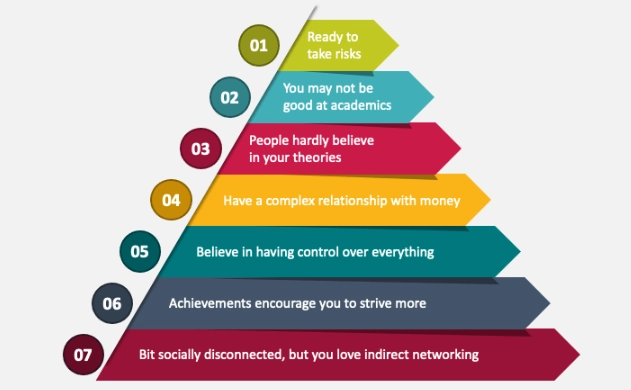
Getting Your Financial House in Order
Before you ask for a dime from anyone else, you need clarity on your own numbers. This is where many aspiring entrepreneurs freeze. It feels overwhelming.
Start with a brutally simple budget. What are your absolute essential costs for the next 6 months? Rent, software, a basic salary to keep the lights on? Then, build a realistic cash flow projection. When do you expect money to come in? Be conservative. Most of us are wildly optimistic about how fast customers will pay.
Open a separate business bank account. The moment you decide to be serious, do this. Mixing personal and business finances is a nightmare for accounting, taxes, and understanding your business's true health. It also looks incredibly unprofessional to potential investors.
And for goodness sake, talk to an accountant early. Not just at tax time. A good accountant who works with small businesses and entrepreneurs can save you thousands, help you choose the right business structure (LLC, S-Corp, etc.), and set up your books properly from day one. This is one expense you shouldn't cheap out on.
"Running out of cash is the number one reason startups fail. It's not always about not making money; it's about the timing of money in and money out. You can be profitable on paper and still go bankrupt because a big client paid 90 days late."
That quote haunts me because I've seen it happen. Manage your burn rate. Extend your runway. Every financial decision should be filtered through one question: "Does this directly help us get to the next milestone that will bring in revenue or reduce a key risk?" If not, you probably can't afford it yet.
Building the Thing: Strategy and Execution
Okay, mindset? Checked. Funding plan? In progress. Now we build. This is where the rubber meets the road.
Finding Your Niche and Validating Like Crazy
You don't need a new idea. You need a better solution to an existing problem. The most successful entrepreneurs often don't create new markets; they serve existing ones in a clearer, faster, or cheaper way.
Start with a problem you understand deeply. Then, talk to people who have that problem. I mean actually talk to them. Don't just send a survey. Ask open-ended questions: "Walk me through the last time you dealt with this. What was frustrating? What solutions did you try? Why did they fall short?"
This is called customer discovery, and it's the antidote to building something nobody wants. I once spent 4 months building a fancy app feature based on my assumption of what users needed. When we launched it, crickets. Had I just asked 10 users, I would have saved myself that time and built what they actually asked for.
Define your ideal customer. Get specific. Not "small business owners," but "owners of brick-and-mortar retail stores with 2-10 employees, who are tech-wary but overwhelmed by manual inventory tracking." The sharper your focus, the more effective your messaging and product will be.
The Unsexy Backbone: Systems and Operations
Vision is great. But a business runs on processes. The sooner you systemize repeatable tasks, the sooner you stop being the chief everything-officer and can start scaling.
Document how you do things. How do you onboard a new client? What's your process for handling a customer complaint? How do you produce your product or deliver your service? Write it down, even if it's just for you right now. This creates consistency and makes it possible to eventually hand tasks off to someone else (a virtual assistant, a first employee).
Choose your tools carefully, but don't get lost in tool-itis. You don't need a $300/month project management suite for a team of two. Start simple. Use a combination of Google Workspace, a simple task app like Trello or Asana, and a basic CRM. The goal is to have a single source of truth for each part of your operation.
Automate what you can.
Email sequences for new leads. Invoicing reminders. Social media scheduling. Every hour you save on repetitive admin is an hour you can spend on high-value work like strategy or talking to customers. But a warning: automation is a tool, not a strategy. Don't automate a broken process. Fix the process first, then automate it.
Leveling Up: Growth, Scaling, and Not Losing Your Mind
You've got a product, you've got customers, money is coming in. Congratulations, you're officially in business! Now comes a whole new set of challenges.
Marketing That Doesn't Feel Slimy
For many entrepreneurs, especially solopreneurs, marketing is the most dreaded task. It feels like shouting into a void or, worse, being salesy.
Shift your perspective. Marketing is simply sharing your story and your solution with people who might benefit from it. The best marketing for early-stage entrepreneurs is direct and educational.
Content marketing is your friend. Write a blog post answering a common question your customers have. Make a short video tutorial. Go on a podcast in your niche. This isn't about a hard sell; it's about demonstrating your expertise and building trust. Over time, people will come to see you as the go-to person for that problem.
Networking, but the right way. Don't just collect business cards. Seek out genuine connections with other business owners, potential partners, or mentors. Offer value first. Can you make an introduction for them? Share a helpful resource? Relationships built on generosity pay dividends down the line.
And please, track what works. If you're spending 10 hours a week on LinkedIn and getting no leads, but one guest post brought you three clients, that's data. Double down on what works. A publication like TechCrunch often analyzes effective startup marketing strategies, which can give you ideas beyond the basics. While their focus is often on funded tech startups, the core principles of clear messaging and channel testing apply broadly. You can see case studies at techcrunch.com.
Hiring Your First People (And Maybe Firing Them)
This is a massive leap. Going from a solo act to having employees changes everything. You're no longer just responsible for your own work; you're responsible for their success, their morale, and their paychecks.
Hire slowly. The first few hires define your company culture. Look for competency, obviously, but also for cultural fit and a growth mindset. Are they resourceful? Can they handle ambiguity? You won't have perfect processes yet, so you need people who can thrive in a bit of chaos.
Be clear about expectations from day one. What does success look like in this role in 3 months? 6 months? Have regular check-ins, not just annual reviews.
And sometimes, you have to let someone go. It's one of the hardest things you'll do. If someone isn't working out, and you've given clear feedback and support, delaying the decision is unfair to them, to you, and to the rest of the team. It drains energy and slows progress. Do it respectfully, do it clearly, and have it be a last resort, not a first impulse.
The Long Game: Sustainability and Exit
Not every business is built to sell for billions. And that's okay. What's your end goal? A lifestyle business that provides you a great income and freedom? A high-growth company you plan to sell? A legacy business to pass on?
Building a sustainable business means paying attention to your own well-being. Founder burnout is real and catastrophic. Schedule downtime. Have hobbies outside of work. Your business needs a healthy leader more than it needs a workaholic martyr.
Think about an exit strategy early, not because you want to leave, but because it forces you to build a business that isn't entirely dependent on you. Is it sellable? Could it run without you for a month? Building transferable value (brand, systems, intellectual property, a strong team) makes your business more resilient and valuable, regardless of whether you ever sell.
The journey of an entrepreneur is ultimately a personal one. It tests your character, your relationships, and your resolve. There's no single playbook, but there are patterns, pitfalls, and principles that can guide you.
Questions Real Entrepreneurs Actually Ask (And Tried-and-True Answers)
Look, this is a long read. I know. But if you've made it this far, you're serious. And that's the first ingredient.
The path for entrepreneurs isn't a checklist. It's a series of experiments, corrections, and small wins. You'll have days where you feel unstoppable and days where you question every life choice that led you here.
That's normal.
Focus on solving a real problem for real people. Manage your cash like your life depends on it (because your business's life does). Build a little bit every day. And be kind to yourself in the process. The world needs more people willing to build things. I hope you're one of them.
Now, go make something.
Reader Comments