What You’ll Discover in This Guide
- Why Bother with Depreciation? It's More Than Just a Rule
- How Do You Actually Calculate It? The Methods Unpacked
- The Tax Man Cometh: Depreciation vs. the IRS (Section 179 & Bonus)
- Depreciation vs. Amortization: The Tangible vs. Intangible Split
- Common Questions & Misconceptions About the Depreciation Definition
- The Bigger Picture: Why Understanding This Definition Matters to You
Let's be honest, when most people hear the word "depreciation," their eyes glaze over. It sounds like one of those dry, technical terms accountants throw around to make things complicated. I used to think the same way. But then I bought a brand-new laptop for my freelance business. That thing was a beast when I got it. Two years later? Let's just say it's seen better days, and its resale value has taken a nosedive. That, right there, is depreciation in action. It's not just a line on a spreadsheet; it's the real-world decline of your stuff.
So, what is the actual depreciation definition in the world of finance and accounting? At its core, it's a systematic method of allocating the cost of a tangible asset over its useful life. Think about it like this: you buy a delivery van for your small bakery for $30,000. You don't get to write off the entire $30,000 as an expense in the year you buy it (unless there's a special tax rule, but we'll get to that). Instead, the van will help you earn money for, say, five years. Depreciation is how you match that $30,000 cost with the five years of revenue the van helps generate. It's the accounting recognition of wear and tear, obsolescence, or just the passage of time.
The Core Depreciation Definition: An accounting process that systematically reduces the recorded cost of a tangible, long-term asset (like machinery, vehicles, or buildings) over its estimated useful life. This reflects the asset's consumption, wear and tear, or decline in value as it's used to generate income.
Why should you care? Well, if you're a business owner, freelancer, investor, or even just someone trying to understand their company's financial statements, getting a handle on this concept is non-negotiable. It directly impacts your profit, your tax bill, and how you understand the true health of a business. A company that isn't properly depreciating its assets might look more profitable than it really is, which is a massive red flag.
Why Bother with Depreciation? It's More Than Just a Rule
Okay, so we have a basic definition of depreciation. But why do we go through all this trouble? Can't we just expense the whole thing when we buy it and be done? The answer is a firm "no," and the reasons are pretty logical once you break them down.
First up is the Matching Principle. This is a cornerstone of accrual accounting. The idea is simple: expenses should be recorded in the same period as the revenues they helped to create. My bakery van delivers cakes and generates revenue every month for five years. The cost of the van should therefore be spread out as an expense over those same five years, not dumped entirely in year one. This gives you a much clearer, more accurate picture of your profitability each year.
Then there's Tax Benefits. This is often the biggest practical reason small business owners learn about depreciation. The IRS (and tax authorities worldwide) allow you to deduct depreciation as a business expense. This reduces your taxable income, which means you pay less in taxes each year. It's a legal way to keep more of your hard-earned cash. The rules can be a maze, though. For instance, in the U.S., the IRS has specific guidelines and systems like the Modified Accelerated Cost Recovery System (MACRS) that dictate how you must depreciate assets for tax purposes. You can dive into the nitty-gritty on the IRS Publication 946, which is the official guide. It's not exactly light reading, but it's the source of truth.
I remember doing my taxes for the first year I was fully self-employed. I tried to deduct the full cost of my office desk and chair. My accountant (a lifesaver) gently explained depreciation to me. She said, "That chair isn't going to magically disappear after one tax year. It'll last you five. The tax man wants his piece spread out too." It was a lightbulb moment. Getting it wrong would have been an invitation for an audit.
Finally, there's Accurate Financial Reporting. Your balance sheet is supposed to show what your business is worth. If you have a $50,000 piece of equipment on your books at its purchase price five years after buying it, that's misleading. It's probably not worth $50,000 anymore. Depreciation creates a "contra-asset" account called Accumulated Depreciation, which is subtracted from the asset's original cost to show its current, lower book value (or carrying value). This gives investors, lenders, and you a more honest view of the company's assets.
How Do You Actually Calculate It? The Methods Unpacked
This is where the rubber meets the road. There isn't just one way to define depreciation in practice. The method you choose changes your financial landscape. The main ones are Straight-Line, Declining Balance, and Units of Production. Picking one isn't always arbitrary; it should reflect how the asset is actually used.
The Straight-Line Method: Simple and Steady
This is the granddaddy of depreciation methods, and for good reason. It's dead simple. You take the cost of the asset, subtract its estimated salvage value (what you think you can sell it for at the end of its life), and divide that by its useful life.
Formula: (Asset Cost - Salvage Value) / Useful Life = Annual Depreciation Expense
Let's use my bakery van example. Cost: $30,000. I think I can sell it for scrap in 5 years for $5,000. Useful life: 5 years.
($30,000 - $5,000) / 5 = $5,000 per year.
Every year for five years, I'd record a $5,000 depreciation expense. It's predictable, easy to understand, and spreads the cost evenly. It's perfect for assets that provide consistent utility over time, like office furniture or buildings. But is it realistic? A new van loses a bigger chunk of value in the first year or two, which the straight-line method doesn't capture. That's where other methods come in.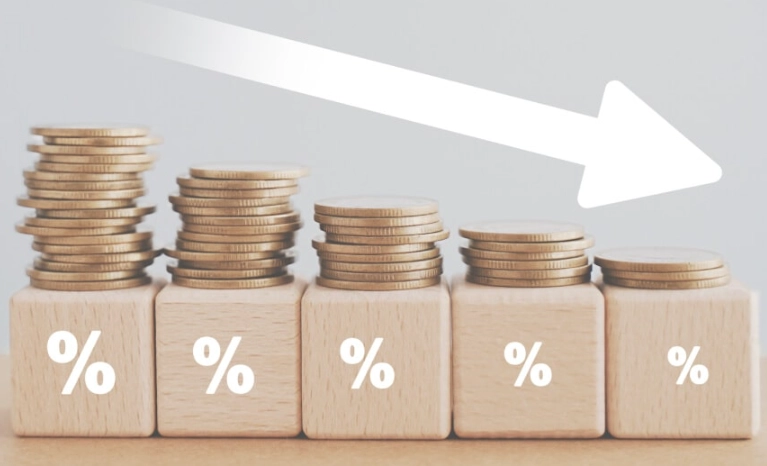
The Declining Balance Method: Front-Loading the Expense
This method is more aggressive. It applies a constant depreciation rate to the asset's book value each year, which means you depreciate more in the early years and less later on. This is often called an "accelerated" method. The most common version is the Double-Declining Balance (DDB) method, which uses a rate that's double the straight-line rate.
This often matches economic reality better for assets like computers, phones, or vehicles that lose value quickly. It also gives you bigger tax deductions early on, which can be helpful for cash flow. The math is a bit trickier, but spreadsheets handle it easily.
A word of warning: The declining balance method doesn't typically consider salvage value in its initial calculation. You have to be careful not to depreciate the asset below its estimated salvage value. Often, companies will switch to the straight-line method partway through the asset's life to ensure this doesn't happen. It's a bit of a hybrid approach.
The Units of Production Method: Usage-Based
This is the most logical method if an asset's life is best measured by how much it produces, not how many years it exists. Think of a commercial printer, a mining drill, or a delivery vehicle where mileage matters more than calendar years.
Here, you estimate the total number of units (hours, miles, prints) the asset will produce in its lifetime. Then, you calculate a depreciation cost per unit. Each year, you multiply the number of units actually produced by that cost.
Formula: (Asset Cost - Salvage Value) / Estimated Total Units = Depreciation per Unit
Depreciation Expense for Year = Depreciation per Unit x Units Produced This Year
If my bakery van is expected to drive 100,000 miles in its life, and its depreciable base is $25,000 ($30k - $5k), then depreciation is $0.25 per mile. If I drive 22,000 miles in year one, my expense is $5,500. If I only drive 15,000 miles in year two, it's $3,750. It perfectly matches expense to usage.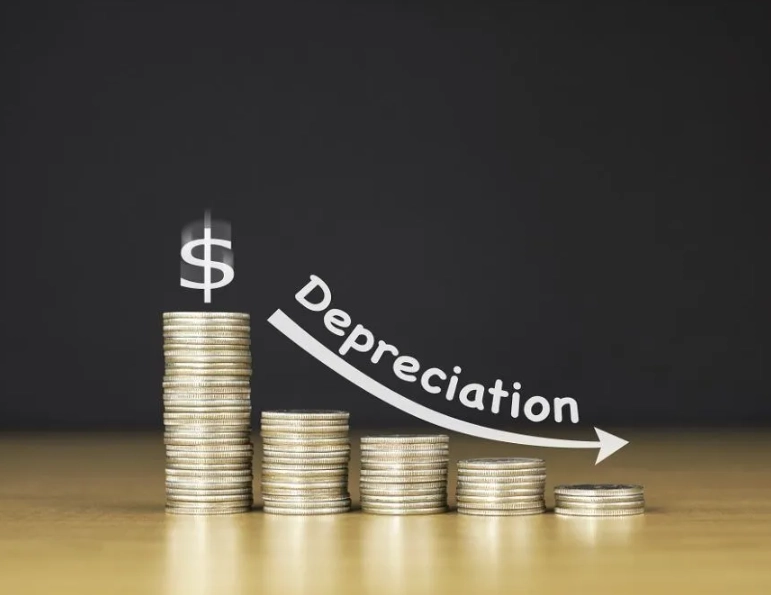
Here’s a quick comparison to see the differences side-by-side:
| Method | Best For... | Key Advantage | Key Disadvantage | Impact on Profit |
|---|---|---|---|---|
| Straight-Line | Assets with steady utility (buildings, furniture) | Simplicity & predictability | May not reflect actual value loss pattern | Even, consistent expense |
| Declining Balance | Assets that lose value fast (tech, vehicles) | Larger early tax deductions, matches rapid early loss | More complex, can over-depreciate | Higher expense early, lower later |
| Units of Production | Assets where usage varies (machinery, fleet) | Most accurate matching of cost to revenue | Requires tracking usage, unpredictable expense | Variable, tied directly to activity |
The Tax Man Cometh: Depreciation vs. the IRS (Section 179 & Bonus)
Alright, let's talk about the part that often causes the most confusion and gets people really interested in the depreciation definition: taxes. Financial accounting depreciation and tax depreciation are often two different beasts. Your books might use straight-line, but the IRS mandates its own system (MACRS, which is generally an accelerated method).
But there are also huge exceptions that can change your strategy completely.
Section 179 Deduction: This is a game-changer for small businesses. Instead of depreciating an asset over several years, Section 179 allows you to deduct the full purchase price of qualifying equipment and software in the year you buy it and put it into service. There are limits (for 2023, the maximum deduction is $1,160,000, and it begins to phase out after $2,890,000 of equipment purchases), but for most small businesses, this means you can get a massive tax break upfront. It's designed to encourage investment.
Bonus Depreciation: This has been another powerful tool, often allowing for 100% first-year deduction for new qualified assets. The rules for bonus depreciation have changed recently and are scheduled to phase down. It's critical to check the current year's rules on the IRS bonus depreciation page or consult with a tax pro. Relying on last year's info here can be a costly mistake.
Pro Tip: The choice between using Section 179, bonus depreciation, or regular MACRS isn't always straightforward. If you expect to be in a higher tax bracket in future years, you might want to save some depreciation deductions for later. This is where a good CPA earns their fee—running the scenarios for you.
I made a classic rookie mistake early on. I bought a piece of equipment and immediately expensed it all under Section 179 because I could. That year, my income was relatively low. The deduction wiped out my tiny profit, which felt good at the time. But the next year, business boomed, and I was in a much higher tax bracket. I wish I had saved some of that depreciation deduction to offset the higher income. Lesson learned: tax strategy is about timing, not just taking the biggest immediate deduction.
Depreciation vs. Amortization: The Tangible vs. Intangible Split
This is a common point of confusion. People often use "depreciation" as a catch-all term for spreading out costs. Technically, in accounting, depreciation is for tangible assets—things you can touch: machines, cars, buildings.
Amortization is its cousin for intangible assets—things you can't touch but have value: patents, copyrights, trademarks, goodwill, software (for accounting purposes). The concept is identical: allocating cost over useful life. But because intangible assets are different, the rules and calculations can vary. For example, goodwill is tested for impairment annually rather than amortized on a set schedule under current U.S. GAAP rules. The Financial Accounting Standards Board (FASB) sets these detailed standards.
And then there's Depletion, which is for natural resources like oil, minerals, or timber. You're literally "depleting" the resource as you extract it.
So, remember: Depreciation for physical stuff, Amortization for ideas and rights, Depletion for what you dig up.
Common Questions & Misconceptions About the Depreciation Definition
Let's tackle some of the real questions people have when they're searching for a clear depreciation definition. This isn't textbook stuff; it's what actually comes up.
The Bigger Picture: Why Understanding This Definition Matters to You
Look, you don't need to become a CPA. But having a solid grasp of the depreciation definition and its mechanics gives you a superpower: financial clarity.
If you're a business owner, it helps you make smarter buying decisions. Should you buy that $10,000 machine or lease it? Understanding how the cost will hit your books and taxes over time is crucial. It helps you budget more accurately and understand your true net profit.
If you're an investor or analyst looking at a company's financial statements, depreciation is a key to unlocking reality. A company with low or no depreciation expense relative to its assets might be overstating its profits. You can look at metrics like EBITDA (Earnings Before Interest, Taxes, Depreciation, and Amortization), but then you have to remember that EBITDA adds depreciation back in. Depreciation is a real, non-cash cost that represents the using up of capital assets. Ignoring it completely is dangerous.
For anyone, it's a lesson in economic reality. Nothing lasts forever. Everything from your phone to your car to a giant factory loses value as it's used. Depreciation is just the formal, numerical acknowledgment of that universal truth.
The Bottom Line: Depreciation isn't a dry accounting rule invented to torture business students. It's a fundamental concept that connects cash spent today with value earned over time. A proper depreciation definition encompasses this matching principle, its critical role in accurate reporting and tax strategy, and its reflection of the inevitable decline of physical assets. Whether you're running a lemonade stand or analyzing a Fortune 500 company, you can't understand financial performance without it.
So the next time you see a depreciation line on an income statement or hear the term, don't just gloss over it. Think about the actual assets behind it—the trucks on the road, the servers in a data center, the ovens in a restaurant. It's the story of those assets slowly transferring their value into the goods and services we use every day. And that's a story worth understanding.
Reader Comments