What You'll Uncover in This Guide
You walk into the bank, confident. Your business owns equipment worth $200,000. You need a $100,000 loan. The math seems simple. The asset covers the loan twice over. Then the loan officer starts asking strange questions. How quickly can it be sold? Who would buy it? What are the maintenance costs? Suddenly, that $200,000 asset feels like it's shrinking before your eyes.
This is the gap between price and collateral meaning. In finance, collateral meaning isn't just the market value of an asset. It's the layered, often hidden, value that asset holds specifically in the context of securing a loan. It's the story the asset tells a lender about risk, liquidity, and control. Most borrowers focus on the first number—the price tag. Savvy ones understand the deeper narrative.
I've spent over a decade advising businesses on debt financing. The single biggest point of friction isn't interest rates; it's this mismatch in perception. The borrower sees potential and utility. The lender sees potential problems and exit strategies. Bridging that gap is the key to unlocking capital.
What Is Collateral Meaning? (Beyond the Dictionary Definition)
Forget the textbook definition for a second. In practice, collateral meaning is built on three pillars that lenders assess, often silently. They rarely spell this out, which is why so many applications stall.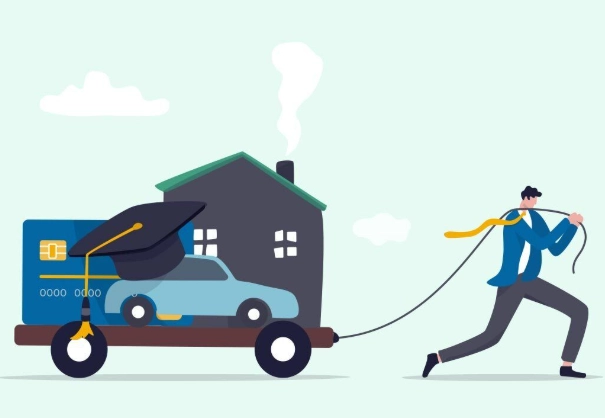
1. The Liquidity Lens: How Fast Can This Become Cash?
This is the most critical factor. Market value assumes a willing buyer, a reasonable timeframe, and a standard sale. A lender's valuation assumes a forced liquidation. If you default, they need to seize and sell the asset quickly to recover their money. The difference between these two values can be staggering.
A custom-built, specialized machine for your factory might have a $50,000 replacement cost. Its collateral meaning? Maybe $5,000. The pool of buyers is tiny. The sale process is long. It's illiquid. Conversely, a portfolio of blue-chip stocks has a collateral meaning very close to its market value—it can be sold in minutes on an exchange.
2. The Risk and Control Narrative: Who's Really in Charge?
Collateral meaning is deeply tied to control. Can the lender easily establish and maintain a legal claim (a lien)? Is the asset likely to depreciate, break, or vanish?
Consider inventory. Raw materials like copper wire have higher collateral meaning than finished, branded goods. Why? The copper is fungible—it has a universal market. Your finished widget only has value if your brand is alive and customers want it. If your business fails, the brand fails with it, destroying the widget's value. The lender loses control over that value proposition.
Real estate has high collateral meaning partly because it's immovable. They know where it is. They can secure it with a mortgage filed at the county office. They feel in control.
3. The Purpose Alignment: Does the Collateral Match the Loan?
Using factory equipment to secure a long-term mortgage? Makes sense. Using that same equipment to secure a 90-day line of credit for payroll? The meanings clash. The loan is short-term, but liquidating the collateral is a long, messy process. The collateral's "time-to-cash" meaning doesn't support the loan's quick-repayment structure. Lenders prefer collateral that matures or turns over in a cycle similar to the loan term. Receivables finance a receivables cycle. Inventory loans finance inventory turnover.
How Collateral Meaning Drives Real-World Financial Decisions
Let's make this concrete. Sarah runs a boutique marketing agency. She needs $80,000 to hire two new employees and cover their salaries for six months. She looks at her assets.
Her instinct is to pledge her agency's "intellectual property"—proprietary client processes, brand assets. She values this at $150,000. To a bank, the collateral meaning of vague IP is near zero. It's unproven in sale, hard to value, and tied to her personal expertise.
Instead, I had her look at her accounts receivable. She had $120,000 in outstanding invoices, mostly from established, creditworthy clients. This is a game-changer. Here’s how the collateral meaning shifts:
| Asset | Borrower's View (Price) | Lender's View (Collateral Meaning) | Key Meaning Factors |
|---|---|---|---|
| Intellectual Property | $150,000 (Strategic Value) | $0 - $15,000 (Highly Speculative) | Low Liquidity, No Control, Hard to Value |
| Accounts Receivable (From Stable Clients) | $120,000 (Face Value) | $96,000 (80% Advance Rate) | High Liquidity (Client pays cash), Clear Control (Assignment of invoice), Aligns with Short-Term Need |
By shifting the conversation to receivables financing, Sarah secured a $75,000 line of credit. The collateral meaning was clear, quantifiable, and comfortable for the lender. She got the capital by speaking their language of risk, not potential.
This principle is why asset-based lending exists. Institutions like the Commercial Finance Association outline standards where advance rates (the percentage of an asset's value they'll lend against) are direct reflections of collateral meaning. Cash gets 95%. New inventory might get 50%. Used equipment gets 20%. The number is the meaning, quantified.
Practical Steps to Maximize Your Collateral's Meaning and Value
You can actively manage and improve your assets' collateral meaning. It's not passive. Here’s a actionable plan.
Step 1: Conduct a Collateral Meaning Audit
List every significant asset on your balance sheet. Next to each, don't write its book value. Write answers to these questions:
- Forced Sale Price: What could a liquidator sell this for in 60 days? (Call a liquidation appraiser for a rough idea).
- Market Depth: Are there 3 buyers or 3000?
- Control Proof: Do I have a clear, unencumbered title? Can I prove it easily?
- Stability: Is this value stable, or does it swing wildly with commodity prices?
This audit shifts your mindset from owner to risk-assessor.
Step 2: Build a "Collateral Package," Not a Single Asset
Rarely does one asset have perfect meaning. Combine assets to balance weaknesses. Pair lower-liquidity equipment with higher-liquidity receivables. The package's overall meaning becomes stronger and more diversified, reducing the lender's perceived risk. It shows you understand the game.
Step 3: Create Transparency Before You Ask
Documentation is proof of meaning. For equipment, have recent maintenance logs and a third-party appraisal stating its orderly liquidation value (not retail). For inventory, have a clean, categorized list and a system that tracks it. For receivables, have aging reports and credit reports on your major clients. Walk in with this. You're not just offering an asset; you're offering a low-friction, well-understood asset. You're reducing the lender's homework, which increases the asset's value to them.
I once saw a client get a 15% higher advance rate on inventory simply because they used RFID tagging and gave the lender read-only portal access. It transformed "mystery boxes in a warehouse" into "trackable, verifiable security." The meaning changed from opaque to transparent.
Common Pitfalls and How to Avoid Them
After years in this, I see the same mistakes.
Pitfall 1: The Emotional Valuation. "This business is my life! It's worth millions!" The lender doesn't care. They underwrite balance sheets, not passion. Separate your emotional equity from the hard-nosed collateral meaning of the underlying assets.
Pitfall 2: Ignoring the "Hidden Liens." You think you own that equipment free and clear, but did the supplier retain a Purchase Money Security Interest (PMSI)? Did you pledge it vaguely in a previous small loan agreement? A title search or UCC lien search is crucial. An asset with prior claims has a fractured, low collateral meaning. Clear the title first.
Pitfall 3: Overlooking the Best Collateral. Many service businesses think they have nothing to pledge. Look at your contracts. Recurring revenue contracts with reputable clients can be factored or used as collateral in specialty lending. Their predictable cash flow has high meaning. Your monthly retainer from a large corporation is a goldmine of collateral meaning.
The bottom line is this: securing a loan is a negotiation about risk. Your assets are your side of the bargain. Their collateral meaning—the story of how they mitigate the lender's risk—is your most powerful negotiating tool. Master that story, and you master your access to capital.
Your Collateral Meaning Questions, Answered
Why was my loan rejected despite having sufficient collateral value?
How can I improve the collateral meaning of my inventory for a loan?
Is real estate always the best collateral for a business loan?
Reader Comments