Let's be real. You've probably heard the term "discretionary spending" tossed around in personal finance blogs. It's often painted as the villain—the frivolous coffee, the impulsive online shopping, the leak in your financial boat. But what if I told you that's only half the story? After helping hundreds of people untangle their finances, I've seen that the real problem isn't the spending itself. It's the lack of awareness and intention behind it.
Discretionary spending is simply the money you choose to spend after covering your essentials like rent, groceries, utilities, and minimum debt payments. It's your "fun money," your "life-enhancement fund." The goal isn't to eliminate it. That's a miserable and unsustainable path. The goal is to master it, to align it with what you truly value so your money amplifies your happiness instead of draining your bank account. This guide will show you exactly how to do that, step by step.
Your Quick Navigation Map
- What Exactly Counts as Discretionary Spending?
- How to Track Your Discretionary Spending Without Losing Your Mind
- The 3 Biggest Mistakes People Make (And How to Avoid Them)
- Actionable Strategies to Tame Your Discretionary Spending
- The Ultimate Mindset Shift: From Restriction to Empowerment
- Your Burning Questions Answered
What Exactly Counts as Discretionary Spending?
This is where most guides get fuzzy. They'll say "entertainment and dining out," which is true, but incomplete. The line between "need" and "want" is personal and often blurry. Is your $8 artisanal latte a need? Probably not. But is your gym membership? It might be essential for your mental health.
Here’s a more practical breakdown. Think of it as a spectrum, not a binary list.
To make it concrete, here are the major categories where discretionary spending hides, based on data from sources like the U.S. Bureau of Labor Statistics' Consumer Expenditure Surveys.
| Spending Category | Discretionary Examples | Non-Discretionary (Essential) Context |
|---|---|---|
| Food & Dining | Restaurant meals, coffee shops, food delivery apps, alcohol at bars. | Groceries for home-cooked meals, basic staples. |
| Entertainment | Streaming services (Netflix, Spotify), movie tickets, concert tickets, books, hobbies. | – |
| Apparel & Services | New clothes for fashion, expensive brands, shoe collections. | Replacing worn-out work clothes or a broken winter coat. |
| Transportation | Rideshares (Uber/Lyft) for convenience, car upgrades for luxury, frequent car washes. | Gas for commuting, basic car maintenance, public transit pass for work. |
| Personal Care | Manicures, spa treatments, high-end haircuts, luxury skincare. | Basic haircuts, essential toiletries like soap and shampoo. |
| Miscellaneous | Gifts, donations, subscriptions (magazines, apps), impulse buys at checkout. | – |
See the pattern? It's often about degree and choice. A $30 haircut at a basic salon is essential maintenance. A $150 cut-and-color at a trendy boutique is discretionary. The key is to define these lines for yourself, honestly.
How to Track Your Discretionary Spending Without Losing Your Mind
You can't manage what you don't measure. This is non-negotiable. But the method most experts recommend—tracking every penny for months—is a recipe for burnout. I suggest a more targeted approach.
The 30-Day Discretionary Spending Audit
For one month, focus only on tracking your discretionary purchases. Don't worry about your rent or electric bill. Use whatever tool is easiest: a notes app on your phone, a spreadsheet, or a budgeting app like Mint or YNAB (You Need A Budget).
The goal isn't judgment. It's discovery. At the end of the month, categorize your spending. You'll likely find one or two surprising leaks. For a client named Sarah, it was "micro-subscriptions"—$5 here, $10 there for apps and services she never used, adding up to over $80 a month. She had no idea.
The 3 Biggest Mistakes People Make (And How to Avoid Them)
Most advice misses these subtle traps.
Mistake 1: The "Leftover" Budget. People pay all their bills and save a bit, then spend whatever is left. This makes discretionary spending a black hole that automatically consumes any surplus. Flip it. Decide on a fixed amount for "fun money" first (after accounting for essentials and savings), and let that be your limit. This is called a "zero-based budget" or "envelope system" in spirit.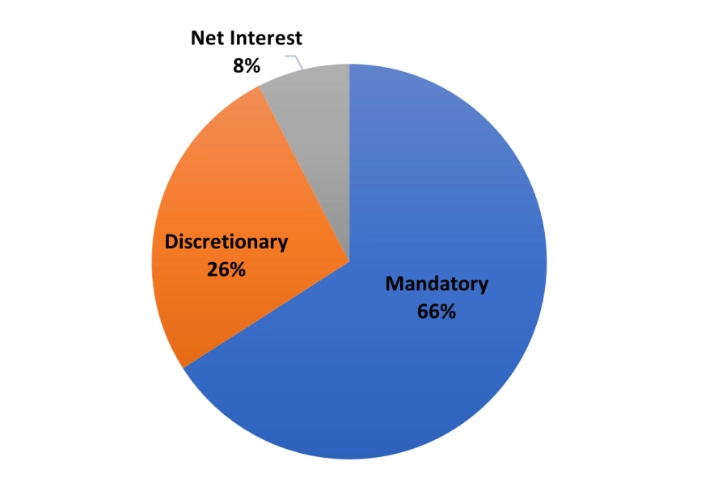
Mistake 2: Ignoring the "Subscription Creep." You sign up for a free trial, forget, and get charged. You keep a streaming service "for one show." These small, automated deductions feel painless but compound. Do a quarterly "subscription purge." Cancel everything, then deliberately re-add only the ones you actively used in the last 90 days.
Mistake 3: Deprivation Mindset. Slashing all fun leads to a massive, guilt-ridden binge later. It's like an extreme diet. Instead, schedule your indulgence. Plan for that nice dinner or new video game. Anticipating a planned purchase is often more satisfying than the impulsive one, and it keeps you in control.
Actionable Strategies to Tame Your Discretionary Spending
Here are tactics that actually work in real life, not just in theory.
- The 24-Hour Rule: For any unplanned purchase over a set amount (say, $50), force a 24-hour waiting period. If you still want it tomorrow, buy it. This short-circuits impulse buys driven by fleeting emotion.
- Cash for Categories: Withdraw your monthly "fun money" in cash. When the physical cash is gone, you're done for the month. The tactile act of handing over bills creates more psychological friction than swiping a card.
- Implement a "Wish List": Keep a running list (in your phone notes) of things you want. Review it weekly. You'll find that half the items lose their appeal after a few days, saving you from buyer's remorse.
- The "Cost-Per-Use" Analysis: Before a big discretionary buy, estimate how many times you'll use it. A $200 jacket worn 100 times is $2 per use—a great value. A $80 kitchen gadget used twice is $40 per use—likely a poor one.

The Ultimate Mindset Shift: From Restriction to Empowerment
This is the secret sauce nobody talks about. Controlling discretionary spending isn't about saying "no" more often. It's about saying "yes" to more important things.
When you see that cutting $100 a month on unused subscriptions and casual dining out could fund a weekend getaway in six months, your perspective changes. That daily coffee isn't just a $5 expense; it's trading off against your future vacation or your debt-free date.
I had a client, Mark, who loved golf but felt guilty about the cost. We calculated his annual golf spending and framed it as his primary hobby budget. He then cut back dramatically on other, less meaningful areas (like upgrading his tech every year) to protect his golf fund guilt-free. He felt empowered, not restricted.
Your discretionary spending should reflect your values. If you value experiences, maybe you spend less on clothes and more on travel. If you value community, maybe your budget goes more towards dining with friends than solo entertainment. There's no right answer, only your answer.
Your Burning Questions Answered
I know I should cut back, but everything feels essential. How do I start?
Start with a single category for one week. Pick the easiest one, like "dining out" or "coffee shops." Don't change anything else. Just track every dollar spent in that category. Awareness alone will create small, natural adjustments. Once that feels manageable, add another category. Small, consistent wins build momentum far better than a drastic, overwhelming overhaul.
What's a reasonable percentage of my income for discretionary spending?
Forget rigid percentages. They're useless without context. A better approach: use the 50/30/20 rule as a loose framework. Aim for 50% of your take-home pay on needs, 20% on savings/debt repayment, and 30% on wants (discretionary). But if you have high debt, your "wants" percentage might need to be 15% or 10% temporarily. The number is less important than the process of consciously deciding what that 10%, 20%, or 30% gets spent on.
How do I handle social pressure to spend when friends want to go to expensive places?
This is a huge, unspoken pain point. Be proactive. Suggest alternative, more affordable plans first ("I'd love to see you! How about we try that new pizza place instead?"). If that doesn't work, be honest but brief—"I'm really watching my budget this month, but I'd still love to hang out. Can I join you for a drink after dinner?" True friends will respect this. You can also schedule cheaper get-togethers, like potlucks or game nights, to set the tone yourself.
Is it okay to have a "no questions asked" discretionary spending category?
Absolutely—in fact, I insist on it. This is a small, fixed amount of money (maybe $50-$100 a month) that you can spend on anything you want, no justification, no guilt, no tracking required. It acts as a pressure release valve. It prevents the feeling of total deprivation that leads to budget blowouts. This category is for pure, guilt-free fun and is essential for long-term budgeting sanity.
Reader Comments