You're about to buy a house with your partner, or maybe invest in a rental property with a sibling. The real estate agent or lawyer asks how you want to hold the title: "joint tenants" or "tenants in common?" You nod along, but honestly, you're not entirely sure what the difference is or why it matters so much. Most people just go with joint tenancy because it sounds simpler, the default option. That can be a multi-hundred-thousand dollar mistake.
I've seen it firsthand. A client, let's call him Mark, owned a vacation cabin with his brother as joint tenants. They never discussed the "what ifs." When Mark's brother passed away unexpectedly, the cabin automatically went to his brother's wife due to the right of survivorship. Mark was suddenly a tenant in his own vacation home, now co-owning it with his sister-in-law, who had different ideas about selling. The family harmony and the asset were both fractured. This wasn't malice; it was a lack of understanding about a legal structure chosen without full consideration.
Joint tenancy isn't just a checkbox on a form. It's a powerful legal framework with profound implications for your control, your finances, and your heirs. This guide will walk you through exactly what it means to be joint tenants, when it's brilliant, when it's a trap, and the critical questions you must ask before signing anything.
What You'll Learn in This Guide
- What is Joint Tenancy? The Core Principle
- The Right of Survivorship: How It Really Works
- Joint Tenancy vs. Tenancy in Common: The Decisive Differences
- When Should You Use Joint Tenancy? (The Good Scenarios)
- The Hidden Pitfalls and Risks of Joint Tenancy
- Tax and Legal Considerations You Can't Ignore
- How to Make the Right Decision for Your Situation
- Your Joint Tenancy Questions Answered
What is Joint Tenancy? The Core Principle
At its heart, joint tenancy is a form of co-ownership where two or more people own an asset—almost always real estate, but sometimes a bank account or investment—equally and undividedly. Think of it as owning the whole pie together, not each owning a specific slice.
Four legal elements, often called the "four unities," must be present to create a joint tenancy:
- Unity of Time: All owners acquire their interest at the same moment.
- Unity of Title: All owners acquire their interest from the same legal document (the same deed).
- Unity of Interest: All owners hold an equal share and the same type of interest.
- Unity of Possession: All owners have an equal right to possess the entire property. You can't fence off "your" half of the living room.
If any of these unities is broken, the joint tenancy can sever and turn into a tenancy in common. This isn't just legal theory. Imagine you and your co-owner buy a property as joint tenants. A few years later, you sign a private agreement giving you 70% of the rental income and them 30%. That act, by creating unequal interests, can potentially sever the joint tenancy. The consequences of an accidental severance are messy.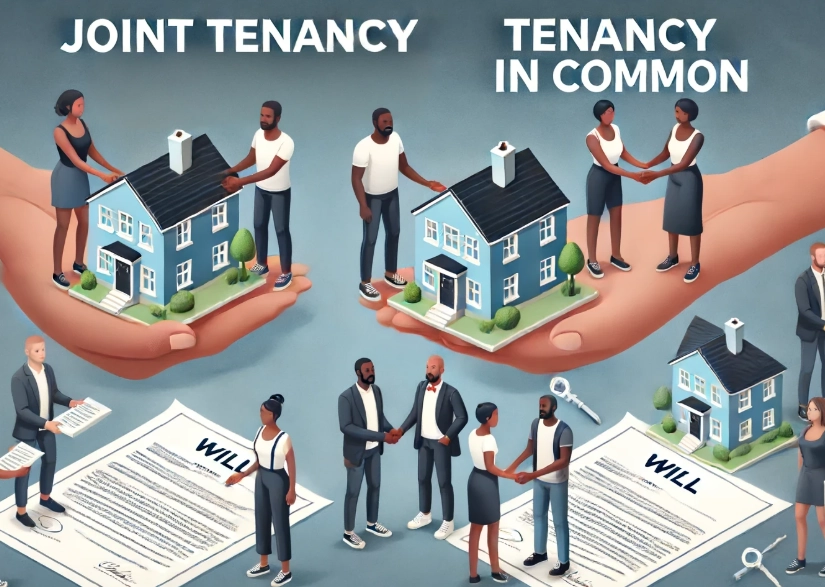
The Right of Survivorship: How It Really Works
This is the feature that defines joint tenancy and the reason most people choose it. The right of survivorship means that when one joint tenant dies, their ownership interest automatically passes to the surviving joint tenant(s). It bypasses the deceased's will entirely. The process is straightforward:
- A joint tenant passes away.
- The surviving owner(s) obtain a certified copy of the death certificate.
- They file an affidavit of survivorship (or a similar document) along with the death certificate with the county recorder's office.
- The deceased owner's name is removed from the title, and the survivor(s) become the sole owner(s).
But here's the subtle twist many miss: the right of survivorship is only triggered upon death. If a joint tenant simply wants out—to sell their share, get divorced, or go their separate way—they cannot force a sale of the entire property on their own if the other owner(s) disagree. They would need to go to court to potentially force a partition sale, which is a costly and adversarial process. You're tied together in life, but the bond breaks cleanly only in death.
Joint Tenancy vs. Tenancy in Common: The Decisive Differences
Choosing between these two is the critical decision. They feel similar on the surface but lead to completely different outcomes. Let's break it down side-by-side.
| Feature | Joint Tenancy | Tenancy in Common |
|---|---|---|
| Ownership Shares | Equal shares only (e.g., 50/50 for two owners). | Shares can be unequal (e.g., 70/30, 40/40/20). |
| Right of Survivorship | YES. Automatic transfer to survivor(s). | NO. Deceased's share passes via their will or state intestacy laws. |
| Probate Avoidance | For the deceased's interest, yes. | No. The deceased's share goes through probate. |
| Transfer During Life | A joint tenant can sell or gift their interest, but doing so severs the joint tenancy for that share, converting it to a tenancy in common. | An owner can freely sell, gift, or mortgage their specific share without changing the structure for others. |
| Ideal For | Married couples, life partners with aligned estates, parents and children in specific cases. | Investment partners, friends buying together, siblings with unequal contributions, anyone wanting to leave their share to someone other than the co-owner. |
| Control Over Inheritance | None. You cannot will your share to your children if you have a surviving co-owner. | Full control. You can will your share to anyone you choose. |
The most common mistake I see is business partners or friends using joint tenancy because it's the default on a form. They think, "We're 50/50 partners, so joint tenancy makes sense." But they fail to consider that if one dies, the other automatically gets the entire business property, potentially cutting out the deceased partner's family from an inheritance they were counting on. This almost always leads to litigation.
When Should You Use Joint Tenancy? (The Good Scenarios)
Joint tenancy is a powerful tool in the right context. It shines when:
- For a Married Couple's Primary Residence: This is the classic and often best use. Both spouses typically want the other to have the home seamlessly if one dies. It's simple, effective, and aligns with most couples' estate plans.
- Between Life Partners with Fully Integrated Finances: Similar to married couples, if your lives and estates are fully merged and you intend for the other to have everything, joint tenancy on a shared home works.
- As a Simple Probate-Avoidance Tool for a Specific Asset: An elderly parent might add an adult child as a joint tenant on a bank account for convenience and to ensure immediate access to funds upon death. Warning: This has major gift tax and creditor risk implications, discussed below.
In these scenarios, the key is complete alignment of intent. Both parties must want the survivor to own the whole asset, to the exclusion of their own other heirs.
The Hidden Pitfalls and Risks of Joint Tenancy
Now for the part most articles gloss over. The downsides are significant and often irreversible.
1. Loss of Control Over Your Legacy
This is the big one. You cannot leave your share of a joint tenancy property to your children in your will if your co-owner outlives you. I've had clients realize too late that by holding everything in joint tenancy with their second spouse, they have completely disinherited their children from a first marriage. The surviving spouse gets everything and is under no legal obligation to pass any of it on.
2. Creditor Problems for All Owners
If one joint tenant has a significant judgment against them (from a lawsuit, unpaid taxes, or debt), the creditor can often place a lien on the entire property. Even though the debt is only one person's, the creditor may force a sale of the whole asset to satisfy the debt. Your innocent co-ownership doesn't protect you.
3. The Gift Tax Trigger
This catches people off guard. When you add someone as a joint tenant to an existing property you own, you may have made a taxable gift for the portion you gave away. For example, if you own a $500,000 home free and clear and add your son as a joint tenant, the IRS may view you as having gifted him a 50% interest ($250,000). While you may not owe immediate tax due to the high lifetime exemption, you are required to file a gift tax return (Form 709). Failure to do so can lead to penalties.
4. Severance by Accident
As mentioned earlier, actions that break one of the "four unities" can sever the joint tenancy. Mortgaging your share without the other's consent, or even a court order in a dispute, can convert it to a tenancy in common, destroying the right of survivorship you thought you had.
Tax and Legal Considerations You Can't Ignore
The tax treatment is nuanced and depends heavily on the relationship between the owners and the type of asset.
- Capital Gains Tax (Step-Up in Basis): For jointly held property between spouses, when one dies, the entire property's tax basis is "stepped up" to its fair market value at the date of death. This is a huge benefit. For non-spouse joint tenants (like a parent and child), only the deceased's half gets the step-up. The survivor's original basis in their half remains. This can create a complex capital gains calculation when the survivor eventually sells.
- Medicaid Eligibility: Adding a child as a joint tenant to your home is often a terrible strategy for Medicaid planning. Medicaid officials will likely treat the transfer as a disqualifying gift, and the child's creditors could still attach the property.
You must consult with an estate planning attorney and a tax advisor in your state. Laws vary, especially regarding community property states (like California and Texas) which have different rules altogether.
How to Make the Right Decision for Your Situation
Don't just check a box. Have a deliberate conversation. Ask yourselves these questions:
- What is our primary goal? Is it probate avoidance at all costs, or is it ensuring each owner can control where their share ultimately goes?
- What happens if one of us wants out in 5 years? Do we have a separate, written agreement (a buy-sell agreement) detailing how a buyout would work?
- What happens if one of us dies? Does the surviving owner truly want and need 100% of this asset? Should the deceased owner's share go to their children or other heirs instead?
- What are the financial situations of each owner? Are there significant creditor risks, divorces, or bankruptcies possible?

For many couples, a joint tenancy on the home combined with a revocable living trust for other assets is a balanced approach. For investors, tenancy in common with a detailed partnership agreement is almost always the safer, more professional choice.
Your Joint Tenancy Questions Answered
My spouse and I are buying a house. Is joint tenancy always the best option?
For most married couples, yes, it's straightforward and effective for the marital home. However, if you have children from prior relationships and want to ensure they inherit your share of the home eventually, you might consider holding the property as tenants in common and each putting your share into a trust that provides for the spouse but ultimately passes to your children. An estate planning attorney can help you structure this.
Can I change from joint tenancy to tenancy in common later?
Yes, you can. This is called "severance." All joint tenants can agree to sever by signing and recording a new deed that states you now hold the property as tenants in common. One joint tenant can also unilaterally sever their own interest by conveying it to a third party (even themselves in a straw-man transaction, though this gets legally tricky). The key is to get the new deed properly filed.
If I'm a joint tenant, do I need my co-owner's permission to rent out the property?
Legally, each joint tenant has an equal right to possess the entire property. In practice, renting it out involves a lease that affects everyone's rights. If you rent it without agreement, your co-owner could likely collect half the rent from you, as you've taken exclusive possession. More likely, they could sue for partition. You absolutely need a clear, written agreement before becoming landlords.
How does divorce affect a joint tenancy?
The divorce itself does not automatically sever the joint tenancy, but the divorce decree and subsequent property settlement will. The court will order the property to be divided—often sold, or one spouse bought out. Once the settlement is executed (e.g., one spouse deeds their interest to the other), the joint tenancy is severed. It's crucial to get the title updated after divorce to reflect the new ownership.
Is a joint tenancy bank account safer than putting someone as a beneficiary (Payable on Death)?
It's different, and often riskier. A joint owner on an account has immediate rights to all the funds, even while you're alive. They can withdraw everything. A Payable on Death (POD) beneficiary has no rights until you die, giving you full control during your lifetime. For probate avoidance on accounts, POD or a trust is usually safer than adding a joint owner, unless you fully trust that person with unlimited access to your money.
Reader Comments