You've probably heard the term "lead time" thrown around in meetings. Your supplier mentions it, your project manager worries about it, and your customers definitely care about it. But what does lead time actually mean? If you think it's just a fancy word for "how long something takes," you're missing the strategic goldmine buried within this concept. A clear grasp of lead time meaning is the difference between running a reactive, fire-fighting operation and a smooth, predictable business.
In its core, lead time is the total latency between the initiation and completion of a process. It's the clock that starts ticking the moment a need is identified and stops only when that need is fully satisfied. I've seen too many businesses focus only on the final assembly or shipping day, completely ignoring the crucial hours, days, or weeks spent before an order is even officially placed. That's the first subtle mistake—treating lead time as a single event rather than a connected chain of events.
What You'll Learn Inside
What is Lead Time? Breaking Down the Core Definition
Let's get specific. Lead time is the cumulative duration required to fulfill a request from start to finish. The formula is straightforward but powerful:
Sounds simple, right? The complexity—and where most managers slip up—lies in accurately defining what "start" and "finish" mean for your specific process. For a manufacturer, the start might be the moment raw material is ordered, not when production begins. For a software team, it might be when a feature request is added to the backlog, not when a developer starts coding.
This isn't academic. Misdefining these points creates invisible delays. You think your production lead time is 5 days, but you've silently accepted a 10-day wait for materials from your supplier. Your real lead time is 15 days. Your customer only sees the 15-day delay, not your efficient 5-day production window.
Lead Time Meaning in Different Industries
The term "lead time" wears different hats depending on the context. Here’s how it plays out on the ground.
Manufacturing & Supply Chain Lead Time
This is the classic arena. It's often broken into distinct, measurable chunks:
- Material Lead Time: Time for suppliers to deliver raw materials.
- Production/Manufacturing Lead Time: Time to actually make the product.
- Delivery/Shipping Lead Time: Time to get the finished good to the customer.
Total lead time is the sum of all these. A report from the Council of Supply Chain Management Professionals (CSCMP) consistently highlights that companies excelling in lead time management break it down to this granular level for monitoring.
Project Management & Development Lead Time
In software or construction, lead time often refers to the period from task prioritization to its deployment or completion. It includes queue time (waiting for resources), active development time, testing, and deployment. The big mistake here? Only measuring "active development time" and calling it lead time, while ignoring the weeks a task sat in a backlog.
Customer-Facing Lead Time (The One That Matters Most)
This is the lead time you promise your customer. It's a business decision, not just a measurement. You might have a 20-day internal lead time but promise 30 days to build in buffer, or aggressively promise 15 days and work tirelessly to hit it. Setting this wrong—either too optimistically or too conservatively—directly impacts sales and customer trust.
| Industry | Key Lead Time Components | Typical Pain Points |
|---|---|---|
| Custom Manufacturing | Supplier quotes, material procurement, machining, assembly, quality check, packaging. | Unreliable supplier dates, machine breakdowns, quality reworks. |
| E-commerce Retail | Warehouse picking, packing, carrier pickup, transit, last-mile delivery. | Inventory stockouts, carrier delays during peak seasons, inaccurate warehouse management. |
| Software Development (Agile) | Backlog grooming, sprint planning, active coding, testing (QA), deployment. | Constantly changing priorities, unclear requirements leading to rework, testing bottlenecks. |
| Construction | Permit approval, material delivery on-site, specialized labor scheduling, inspections. | Weather delays, permit office backlog, sub-contractor coordination failures. |
How to Calculate Lead Time: A Step-by-Step Walkthrough
Forget vague estimates. Let's track a real example. Imagine you run a small business selling custom-engraved wooden desks.
Step 1: Map Your Specific Process. List every single step from customer idea to customer satisfaction. 1. Customer places order & pays (Day 0). 2. Order enters production queue (often there's a wait here—Day 0 to Day 2). 3. Purchase order sent to lumber supplier (Day 2). 4. Wood delivered (Day 9). 5. Desk cut & assembled (Day 12). 6. Engraving & finishing (Day 15). 7. Quality check & packaging (Day 16). 8. Handoff to courier (Day 16). 9. Customer receives desk (Day 20).
Step 2: Assign Realistic Durations. Use historical data, not guesses. You find that the supplier consistently delivers in 7 days, not the 5 they initially quote. That's a critical data point.
Step 3: Identify the Critical Path. Which steps are sequential and which can overlap? You can't engrave before assembling, but can packaging materials be ordered in parallel with assembly? Probably. The longest sequential path determines your minimum lead time.
Step 4: Do the Math.
- Internal Processing Time (Steps 2,5,6,7): 2 (queue) + 3 (assembly) + 3 (engraving) + 1 (QC) = 9 days.
- External Time (Steps 3,4,8,9): 7 (material delivery) + 4 (shipping) = 11 days.
Some steps overlap (queue happens while material is in transit). Your total lead time from customer order (Step 1) to delivery (Step 9) is 20 days. Your production lead time (often what you tell yourself) is only 9 days. See the discrepancy?
Most businesses only calculate their internal processing time and are shocked when external dependencies blow up their schedules.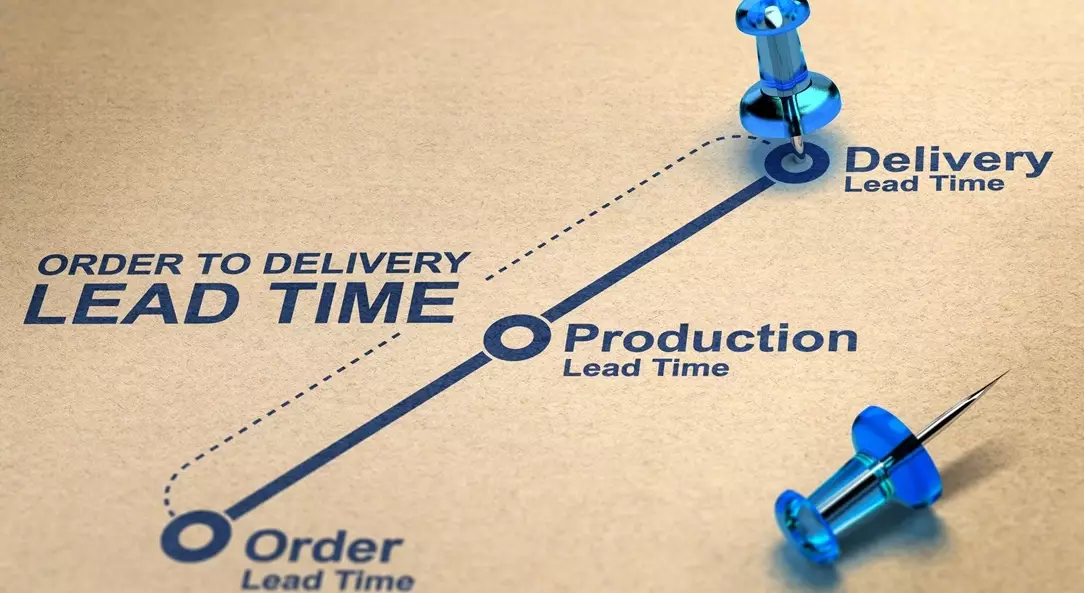
Actionable Strategies to Reduce Lead Time
Shortening lead time isn't about working faster until people burn out. It's about working smarter and removing obstacles.
Tackle the Low-Hanging Fruit First
Improve Supplier Relationships: Don't just have five suppliers for a part and pick the cheapest each time. Develop a partnership with one or two reliable ones. Share your forecasts. This stability often gets you priority and more realistic timelines than chasing daily price fluctuations. I've seen this single change cut material lead time by 30%.
Implement a Kanban System: Visualize your workflow. Use a physical or digital board with columns for "To-Do," "In Progress," "Awaiting Review," "Done." Limit the number of items in "In Progress." This prevents multitasking, which is a massive, hidden lead time killer. A task that gets switched constantly takes far longer in total than one done sequentially.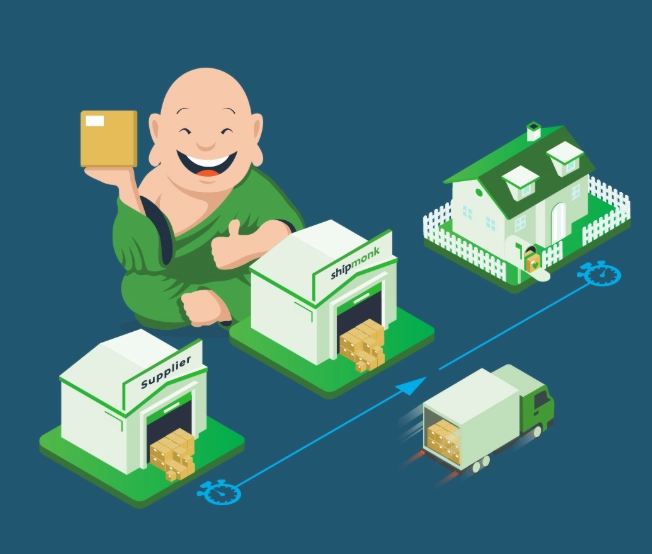
Invest in Smarter Processes
Adopt Just-In-Time (JIT) Carefully: JIT aims to receive goods only as they are needed. It slashes inventory holding costs and can compress lead time. But here's the non-consensus part: JIT is fragile. It requires impeccable supplier reliability and demand forecasting. For most small to mid-sized businesses, a "Just-In-Case" buffer for critical components is wiser than a pure JIT system that collapses with one delayed shipment.
Cross-Train Your Team: If only John can do the quality check, and John is on vacation, lead time stalls. Cross-training creates flexibility and removes single points of failure from your process chain.
Use Technology for Visibility: Even a simple shared spreadsheet tracking order status is better than emails and memory. Better yet, use affordable project management or lightweight ERP tools. Knowing exactly where an order is stuck allows you to fix the blockage immediately.
The goal isn't to eliminate all lead time—that's impossible. The goal is to make it predictable and as short as competitively possible, then communicate it honestly to your customers.
Reader Comments