In This Article
- The Big Picture: What Cost Analysis Actually Gives You
- The Top Tier Advantages: Where You'll Feel the Impact
- Seeing It in Action: A Simple Comparative Table
- Going Deeper: Strategic Advantages Beyond the Spreadsheet
- Tackling Common Questions (And Hesitations)
- Wrapping It Up: The Bottom Line on the Bottom Line
Look, I get it. The phrase "cost analysis" sounds like something your accountant would bring up in a meeting that's already running too long. It conjures images of spreadsheets, complicated formulas, and a lot of headache. I used to think the same way. Early in my career, I figured if we were making sales, we were doing okay. Why dig into the boring details?
Boy, was I wrong. It took a project that seemed profitable slowly bleeding money for me to realize I was flying blind. That's when I truly learned the advantages of cost analysis. It wasn't about pinching pennies; it was about gaining superpowers for my business.
So let's cut through the noise. This isn't a textbook. We're going to talk about the real, tangible benefits you get when you actually understand where your money is going. The kind of advantages that move the needle from "just getting by" to "strategically growing."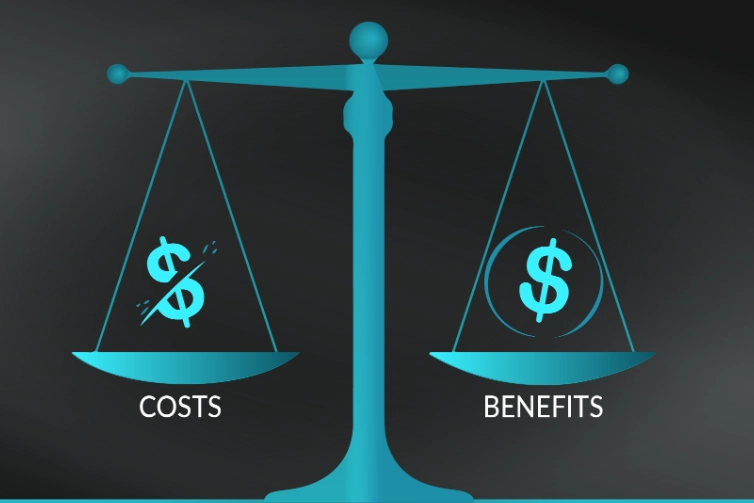
The Big Picture: What Cost Analysis Actually Gives You
Before we dive into the specific perks, let's set the stage. Why bother? Think of your business as a car. Revenue is the gas pedal. Costs are everything else—the engine, the tires, the weight of the car. You can floor the gas pedal (chase sales!), but if your engine is inefficient (high production costs) or your tires are flat (wasteful overhead), you're not going to get far, and you'll burn fuel like crazy.
Cost analysis is your diagnostic tool. It's how you pop the hood and see what's actually happening. The primary advantages of cost analysis all stem from this one act of looking under the hood with clear eyes.
It transforms financial data from a backward-looking report card into a forward-looking GPS.
From Guessing to Knowing: The End of Financial Blind Spots
The most immediate benefit? It kills uncertainty. How much does it truly cost to serve that one difficult client who calls constantly? What's the real profit on your bestselling item after you factor in shipping, packaging, and support time?
Without analysis, you're guessing. With it, you know. This knowledge is power. It stops you from accidentally selling products at a loss (it happens more than you think). It shows you which services are your cash cows and which are just... well, cows.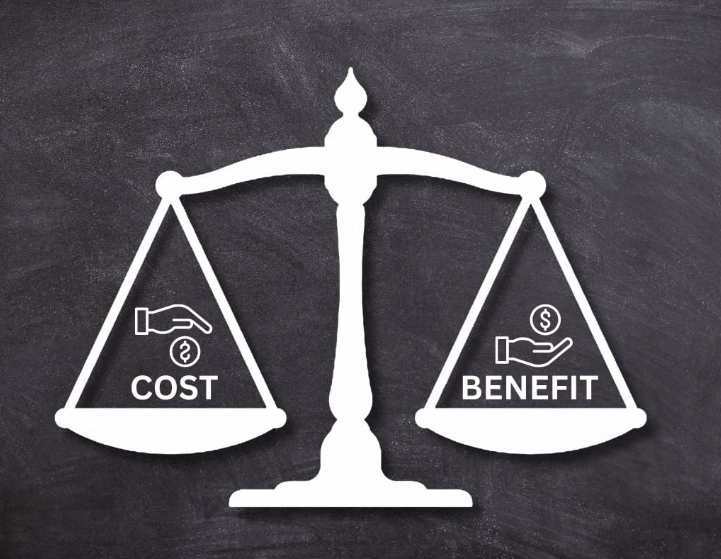
The Top Tier Advantages: Where You'll Feel the Impact
Let's get concrete. These are the areas where the benefits of cost analysis pay off the most.
1. Smarter Pricing That Actually Makes Sense
Pricing is a nightmare for most businesses. Charge too much, you lose customers. Charge too little, you work yourself to death for no profit. Cost analysis is the anchor that stops you from drifting.
You move from "let's match the competitor" or "this sounds good" to "to achieve a 30% margin, we need to price at X." It tells you the absolute floor price (your break-even point) and gives you the confidence to build your profit on top of it. This is crucial for custom quotes, service contracts, or new product launches. I once saw a consultancy raise their prices by 40% after a proper cost analysis revealed they were vastly undervaluing their experts' time. They lost a few price-sensitive clients but doubled their profit on the remaining work. That's a powerful advantage.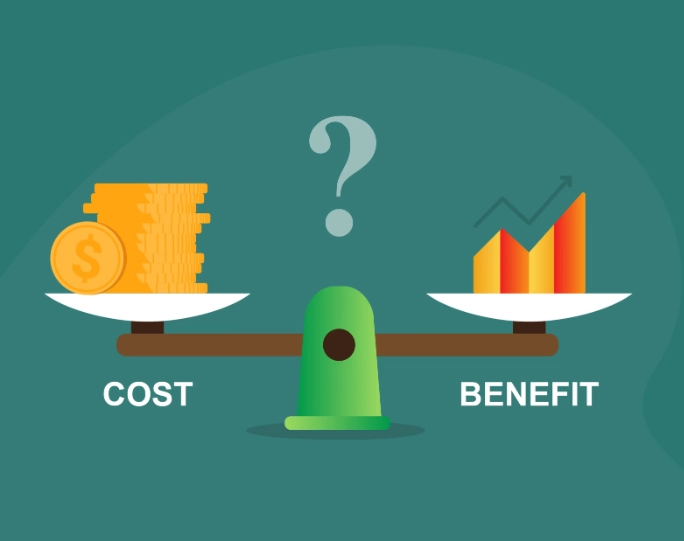
2. Hunting Down Waste (It's Hiding Everywhere)
Waste isn't just scrap material on a factory floor. It's the software subscription nobody uses. It's the inefficient process that takes five steps when it could take two. It's over-ordering supplies that sit in a closet. A detailed cost analysis shines a light on these leaks.
You start asking questions: Why is the cost of this raw material so high? Can we get a better deal? Is this manual process costing us more in labor than automating it? This is where you find pure savings that go straight to your bottom line. It's found money.
Let me give you a personal example. We analyzed our digital marketing costs and found we were paying for three different tools that essentially did the same social media scheduling. Nobody even remembered buying the oldest two! Cancelling them was an instant, recurring saving. Obvious in hindsight, but invisible without looking.
3. Budgets You Can Actually Stick To
Ever created a budget that fell apart by the second quarter? That's usually because it was built on hopes and historical guesses, not analysis. When you understand your cost drivers—the things that make your costs go up and down—you can create a dynamic, realistic budget.
If you know that material costs fluctuate with commodity X, you can budget a range or plan hedging strategies. If you know that project Y always incurs unexpected travel costs, you can build a contingency into the budget from the start. This turns budgeting from a frustrating exercise in being wrong into a useful roadmap. The advantages of cost analysis for budgeting are all about predictability and control.
4. Making Decisions Without the Sweaty Palms
Should we hire another employee or outsource? Should we buy that new machine? Should we expand to a new market? These big, scary questions become much less scary when you have cost data.
You can build a comparative cost model. For the hire-vs-outsource question, you don't just compare salary to contractor fee. You analyze the total cost: benefits, training, equipment, management time for an employee versus the potentially higher direct rate but zero overhead of a contractor. The numbers tell a story. They don't make the decision for you (you still need strategy and gut feel), but they give you a solid financial foundation to stand on. You can't overstate the importance of cost analysis for reducing risk in big calls.
Seeing It in Action: A Simple Comparative Table
Sometimes it helps to see the contrast. Let's look at how two different approaches to a common business dilemma—launching a new product line—play out.
| Decision Factor | Without Cost Analysis (The "Gut Feel" Approach) | With Rigorous Cost Analysis |
|---|---|---|
| Pricing | Based on competitor prices or desired profit margin. High risk of being too low or alienating customers by being too high. | Based on calculated cost-per-unit (materials, labor, overhead) plus target margin. Price is defensible and sustainable. |
| Supplier Choice | Goes with the best-known or first-quoted supplier. May miss out on better quality/price options. | Evaluates multiple suppliers on total landed cost (price, shipping, minimum order quantities, payment terms). |
| Profitability Forecast | A hopeful guess. "If we sell X units, we should make money." | A detailed model showing break-even point, profit at various sales volumes, and sensitivity to cost changes. |
| Budgeting for Launch | Often underestimates hidden costs (marketing, packaging design, logistics setup). Leads to overspending. | All launch activities are identified and costed. Creates a realistic spending plan with contingencies. |
| Long-term Outcome | Unpredictable. Success is luck-dependent. Failure is hard to diagnose. | Measurable. Success can be replicated. Failure provides clear data on what cost assumptions were wrong. |
The difference is like navigating with a map versus wandering around hoping to recognize a landmark.
Going Deeper: Strategic Advantages Beyond the Spreadsheet
The benefits we've covered are mostly operational. But the real game-changers are strategic. These are the advantages of cost analysis that help you outmaneuver competitors.
Finding Your Competitive Edge
By understanding your cost structure better than anyone, you can compete in ways others can't. If your analysis shows you have a super-efficient, low-cost production process, you can compete on price aggressively and still be profitable. If you find your costs are higher but tied to superior quality or unique materials, you can compete on value and justify a premium price. You stop trying to be everything to everyone and start playing to your specific strengths, which are now financially quantified.
Resources like the Investopedia guide on Cost-Benefit Analysis explain the foundational theory behind weighing costs against strategic gains, which is a core part of this thinking.
Resource Allocation That Actually Aligns with Goals
Every business has limited money, time, and people. Where should you put them? Cost analysis informs this at a fundamental level. It helps you answer: Is pouring more money into marketing for Product A worth it if its production costs are eating 80% of revenue? Should we shift resources to Product B, which has lower costs and higher potential margins?
This moves resource allocation from a political or emotional debate ("I like this project") to a data-driven discussion ("This project has the best cost-to-strategic-value ratio").
Building a Culture of Accountability and Efficiency
This one's subtle but massive. When a business embraces cost analysis, it sends a message: we care about how we use our resources. It encourages teams to think about the financial impact of their decisions. The marketing team starts considering the cost-per-lead of different channels. The development team weighs the long-term maintenance cost of a quick-and-dirty code fix.
This cultural shift might be the biggest long-term advantage of cost analysis of all. It makes efficiency and value everyone's job, not just the finance department's.
Tackling Common Questions (And Hesitations)
Absolutely not. This is a huge misconception. While it's true large manufacturers have complex cost accounting departments, the benefits of cost analysis are perhaps even greater for small businesses and service firms.
Why? Because your margin for error is smaller. A big corporation can absorb a loss on a poorly priced product line. A small shop or agency might go under. For a service business, your primary cost is time. Doing a cost analysis means understanding your effective hourly rate after all overhead. You might bill $150 an hour, but if non-billable admin, marketing, and tools eat up 40 hours a week, your actual take-home rate is much lower. Knowing that number changes everything about how you price, hire, and spend your time. The U.S. Small Business Administration has guides on managing business finances that underscore the need for this kind of understanding, regardless of size.
It can be as simple or as complex as you need. You don't need a $10,000 software package to start. Begin with your biggest cost center. For a restaurant, it's food. For a consultant, it's time. Track it diligently for a month. Use a spreadsheet. The question isn't "Can I afford the time to do this?" It's "Can I afford the money I'm losing by NOT doing this?" The initial investment of time almost always pays for itself many times over by uncovering a single major waste or pricing error.
Great question. Your P&L is the what. It tells you your total revenue, your total costs, and your final profit. Cost analysis is the why and the how. It digs into those total costs. Which specific products contributed to that profit? Which customers were the most expensive to serve? Which marketing campaign had the lowest cost per acquisition? The P&L is the destination; cost analysis is the detailed map of how you got there.
Start small and specific. Pick one thing:
- Your flagship product or service: List every single thing that goes into it—materials, direct labor hours, software used, shipping, packaging.
- Your most problematic client/project: The one that feels like it sucks up all your time. Log every hour and expense associated with them for a month.
- Your biggest monthly expense category: Is it software? Raw materials? Subcontractors? Drill down into the invoices and see what you're actually paying for.
The goal of the first analysis isn't to overhaul your business. It's to prove the value to yourself. Once you see one clear insight—"Wow, we're spending HOW much on expedited shipping because we order supplies at the last minute?"—you'll be hooked on finding more.
For foundational methodologies, bodies like the Institute of Management Accountants (IMA) set professional standards and offer resources that can provide a reliable framework, even if you adapt them for your own scale.
Wrapping It Up: The Bottom Line on the Bottom Line
Let's be blunt. Ignoring your costs is like driving with a blindfold on. You might be moving, but you have no idea if you're about to hit a wall or miss your exit.
The advantages of cost analysis are fundamentally about control and clarity. It gives you control over your profitability, your pricing, and your future. It provides clarity on what's working, what's not, and where your best opportunities lie.
It's not about being cheap. It's about being smart. It's about making sure the hard work you put into your business translates into real, sustainable financial health. You stop being a passive passenger in your business's financial journey and become the confident driver.
The best time to start was yesterday. The second-best time is now. Pick that one cost, that one product, that one nagging question, and dig into it. You'll be surprised what you find. And those findings? They're the first real steps toward unlocking all the advantages we've talked about.
Trust me, your future self—the one making confident decisions with a healthier bank balance—will thank you.
Reader Comments