Let's cut through the jargon. A stakeholder is anyone who has a "stake" in the outcome of your project, business decision, or initiative. It's that simple, and that complex. They can influence your work, be impacted by it, or both. If you think stakeholder management is just a box to tick in a project plan, you're setting yourself up for a world of pain. I've seen too many brilliant ideas and well-funded projects derail because someone forgot to ask, "Who else cares about this?" This guide isn't about textbook definitions. It's about giving you a practical, battle-tested framework to identify, understand, and work with your stakeholders so you can actually get things done.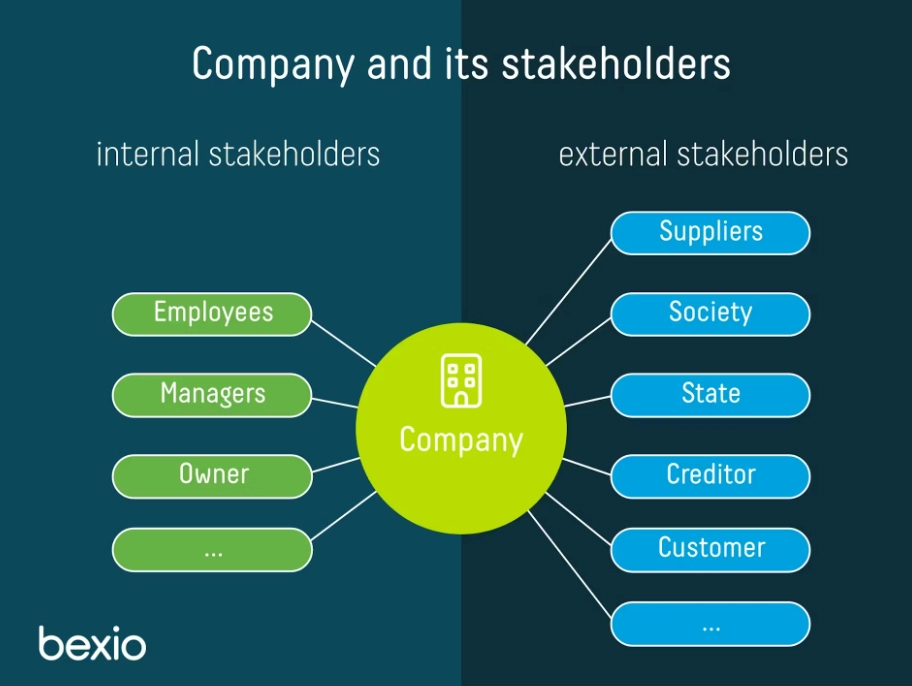
What You'll Learn in This Guide
The Real-World Stakeholder Definition (Beyond the Textbook)
The Project Management Institute (PMI) defines a stakeholder as "an individual, group, or organization who may affect, be affected by, or perceive itself to be affected by a decision, activity, or outcome of a project." That's accurate, but it feels sterile.
In practice, stakeholders are the human ecosystem around your work. They have hopes, fears, agendas, and the power to help or hinder you. Forget the idea that they're just a list of names on a slide. They are dynamic.
We typically break them into two broad camps:
| Stakeholder Type | Who They Are | What They Typically Care About |
|---|---|---|
| Internal Stakeholders | People within your organization. They are part of the "doing" machine. | Project success, budget, resources, their team's workload, personal performance metrics, internal politics. |
| External Stakeholders | People or groups outside your organization. They experience the output. | Product/service quality, pricing, safety, community impact, regulatory compliance, brand reputation. |
Here's where many managers slip up. They focus only on the obvious, high-ranking internal stakeholders (the CEO, the VP) and completely miss the influential operators—the IT sysadmin whose support you need for deployment, the veteran customer service rep who knows all the client complaints, or the regulatory affairs officer who knows the approval loopholes. These people often hold the real keys to execution.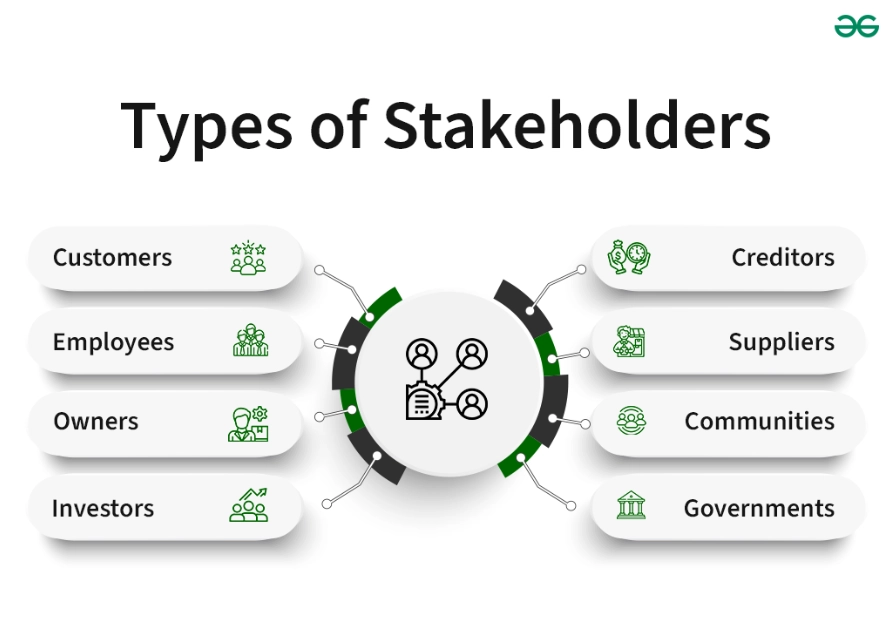
Why Stakeholder Management is Non-Negotiable
Think of a stakeholder as a force of nature. You can try to ignore gravity, but it will always win. Ignoring a key stakeholder has the same effect.
I consulted on a software rollout for a retail chain. The project team had buy-in from the C-suite and store managers. They built a great system. The launch was a disaster. Why? They never spoke to the cashiers—the primary users. The interface was confusing during peak hours, slowing down lines and frustrating customers and employees alike. The project had to be re-scoped, costing six months and a significant budget overrun. The cashiers were high-impact, low-influence stakeholders who were completely overlooked.
Effective stakeholder management is your strategic radar. It helps you:
- Avoid Surprise Roadblocks: Uncover hidden objections or requirements early.
- Secure Resources: Turn neutral parties into active supporters who advocate for your budget and team.
- Improve Decision Quality: Incorporate diverse perspectives, leading to more robust, sustainable outcomes.
- Protect Your Reputation: Proactively managing relationships builds trust and credibility, which is currency in any organization.
It's not "soft skills." It's risk mitigation and opportunity creation.
How Do You Identify Your Stakeholders?
Don't just brainstorm in a room. Use a systematic scavenger hunt. Start with your project's core objective and ask these questions radiating outward:
- Who AUTHORIZES this? (The sponsor, the board, a government agency)
- Who FUNDS this? (Budget holders, investors)
- Who will DO the work? (Your team, contractors, specific departments like IT or Marketing)
- Who will USE the output? (End-users, customers, another internal team)
- Who is AFFECTED by the process or outcome? (Community groups, adjacent departments whose workflow changes, suppliers)
- Who has EXPERTISE we need? (Subject matter experts, legal, compliance)
- Who could BLOCK this? (Influential skeptics, regulatory bodies, unions)
A trick I use: For every person you list, ask "Who do they listen to?" and "Who depends on them?" This network thinking often reveals the connective tissue—the assistants, the technical advisors, the long-tenured staff—who wield informal influence.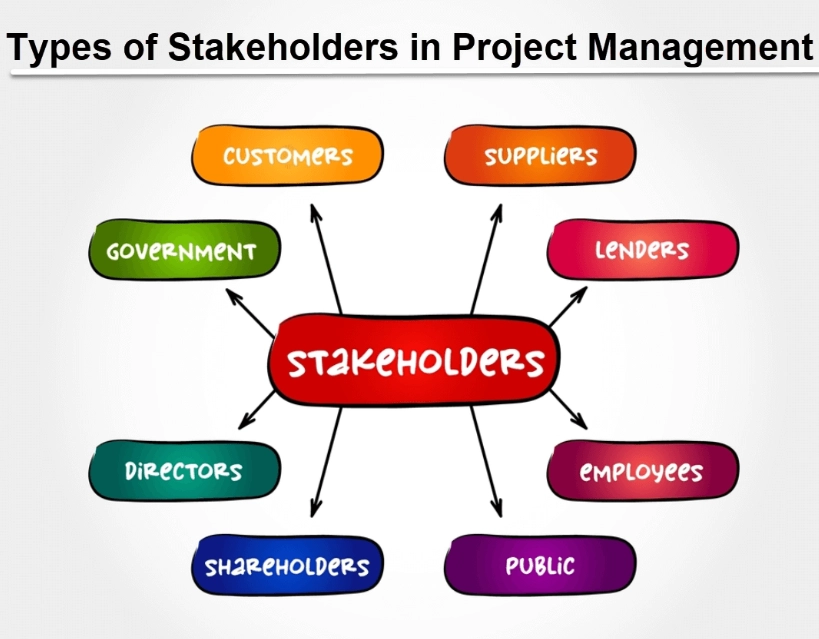
The Stakeholder Analysis & Mapping Playbook
Once you have names, you need to understand them. This is where stakeholder analysis and mapping come in. It's about prioritizing your communication and engagement effort.
Step 1: Assess Power and Interest
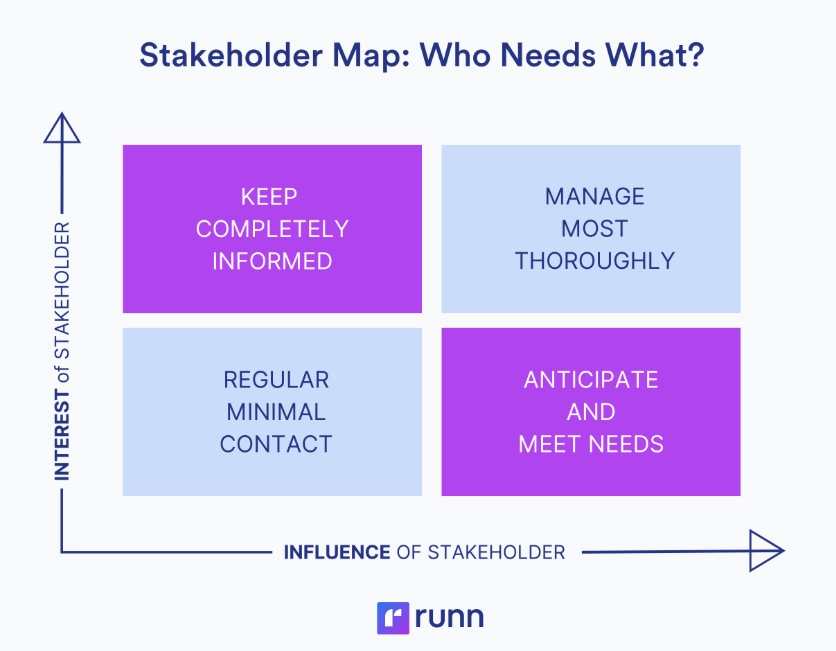
The classic model. Plot each stakeholder on a 2x2 grid based on their Power (ability to influence the project) and Interest (level of concern about the outcome).
- High Power, High Interest (Manage Closely): Your key players. Engage deeply and frequently. These are your sponsors and primary users. Example: The project sponsor, the lead customer.
- High Power, Low Interest (Keep Satisfied): Don't bombard them with details, but keep them informed enough that they remain supportive. A sudden loss of support here is catastrophic. Example: A senior executive not directly involved but who signs the checks.
- Low Power, High Interest (Keep Informed): They care a lot and can provide great feedback or become advocates. They can also become detractors if ignored. Example: End-users, community members.
- Low Power, Low Interest (Monitor): Minimal effort required. Generic updates are fine. Example: A peripheral department with minimal touchpoints.
The mistake? Assuming this map is static. After a major milestone, re-assess. A low-power user group (High Interest) can gain power quickly by organizing and complaining publicly.
Step 2: Go Deeper with a Stakeholder Engagement Assessment Matrix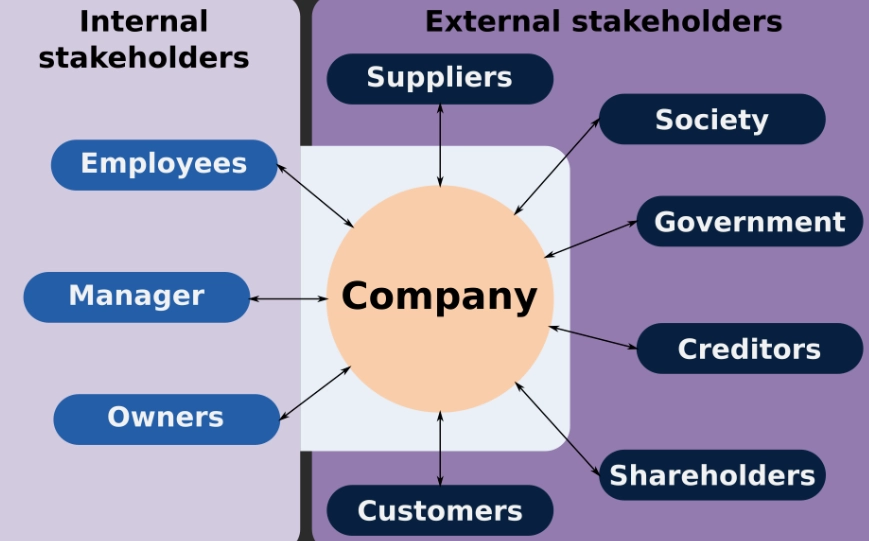
This is where you move from analysis to action. For your top-tier stakeholders, define their current and desired level of engagement. The RACI model (Responsible, Accountable, Consulted, Informed) can feed into this. Ask: Where are they now, and where do I need them to be for success?
- Unaware: Doesn't know about the project.
- Resistant: Aware and opposed.
- Neutral: Aware, neither supportive nor opposed.
- Supportive: Aware and favorable.
- Leading: Aware and actively championing.
Your strategy is to move key stakeholders from left to right on this spectrum. For a resistant, high-power stakeholder, your plan might be one-on-one meetings to understand concerns, not a broadcast email.
How to Manage Stakeholders Effectively
Management means tailored communication and relationship building. It's a rhythm, not a one-off event.
Build Your Communication Plan
For each stakeholder group (from your grid), define:
- Key Message: What do they need to know? (Different from what you want to tell them).
- Channel: Formal report? Quick stand-up? Dashboard? Face-to-face?
- Frequency: Weekly? Monthly? Only at milestones?
- Owner: Who on your team is the primary contact?
The biggest waste of time is sending a 50-page technical report to a "Keep Satisfied" executive. They need a three-bullet summary with implications for their goals.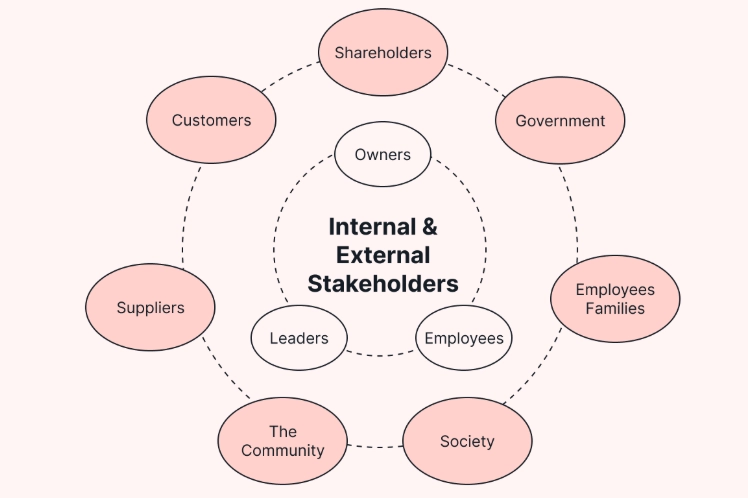
Navigate Difficult Stakeholders
You'll encounter the skeptic, the micromanager, the constantly-changing-mind person. The universal rule: Seek first to understand. Schedule a coffee. Ask open questions: "What would success look like for you from this project?" "What are your biggest worries about this change?" Often, resistance is rooted in a legitimate unaddressed concern or a past bad experience. Your job isn't to win an argument, it's to solve a shared problem.
Document agreements and expectations. After a key meeting, send a brief email: "As per our discussion, I understand we've agreed on X and you'll provide Y by Friday. Please let me know if I've mischaracterized anything." This creates clarity and accountability.
Your Stakeholder Questions, Answered
Reader Comments