Quick Guide to the Value Chain
- Breaking Down Porter's Value Chain: The Two Big Buckets
- How to Actually Do a Value Chain Analysis: A Step-by-Step Walkthrough
- Common Misconceptions and Pitfalls (Where People Go Wrong)
- Value Chain vs. Supply Chain: What's the Actual Difference?
- The Digital Transformation of the Value Chain
- Putting It All Together: Your Action Plan
- Frequently Asked Questions (FAQs)
Let's talk about something that sounds fancy but is actually incredibly practical: the value chain. You've probably heard the term thrown around in boardrooms or seen it in business articles. Maybe it even made you zone out a little. I get it. Business jargon can be a snooze fest.
But here's the thing. When you strip away the academic veneer, the value chain concept is one of the most powerful tools you can use to understand why your business makes money (or doesn't). It's not just theory. It's a map. A map that shows you exactly where you're creating value for your customers and, more importantly, where you're wasting time and resources.
I remember first trying to apply this to a small e-commerce client years ago. They were busy, sales were okay, but profits were thin. We sat down and literally drew out their value chain on a whiteboard. From the moment a customer clicked on an ad to the moment a package arrived at their door. The inefficiencies were glaring. One环节, their packaging process, was a total money pit. Fixing that one link in their chain boosted their margin by a few percentage points. That's the power of this model. It makes the invisible, visible.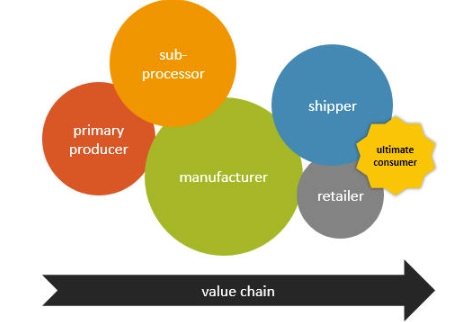
So, what exactly is a value chain? In simple terms, it's the entire series of activities a company goes through to bring a product or service from conception to delivery to the customer. The goal? To create value that exceeds the cost of providing it, thereby generating a profit margin. The guy who really put this on the map was Michael Porter, a strategy professor at Harvard Business School, back in 1985. His book, Competitive Advantage, is still the go-to source for the original framework.
Think of it as an X-ray for your business operations.
Breaking Down Porter's Value Chain: The Two Big Buckets
Porter split all business activities into two main categories: Primary Activities and Support Activities. This is the core of the value chain model. Primary activities are the hands-on, direct work of creating, selling, and supporting a product. Support activities are the behind-the-scenes functions that make the primary activities possible.
It's like a restaurant. The primary activities are the cooking, serving, and taking orders. The support activities are hiring the chefs, buying the ingredients, and managing the finances. You need both to run a successful meal.
Primary Activities: The Frontline of Value Creation
These are the steps that physically touch the product or service and move it toward the customer. They flow in a logical sequence, but the importance of each can vary wildly depending on your industry.
| Activity | What It Involves | Key Questions to Ask |
|---|---|---|
| Inbound Logistics | Receiving, storing, and distributing inputs (raw materials, components). Relationships with suppliers, warehouse management, inventory control. | Are we getting the best quality materials at the best cost? Is our inventory turning over quickly, or is money sitting on shelves? |
| Operations | The transformation of inputs into the final product. This is manufacturing, assembly, testing, packaging—the core production process. | Is our production line efficient? Can we reduce waste or downtime? Is our quality consistent? |
| Outbound Logistics | Getting the finished product to the buyer. This includes order processing, warehousing of finished goods, and distribution (shipping, delivery). | Are we delivering on time? Can we reduce shipping costs? Is our order fulfillment accurate? |
| Marketing & Sales | All activities that convince buyers to purchase. Advertising, promotion, channel selection, pricing, sales force management. | Is our messaging reaching the right people? What's our cost to acquire a customer? Are we priced correctly? |
| Service | Activities that maintain or enhance the product's value after the sale. Installation, training, repair, warranty, customer support. | Are we creating loyal customers through great service? Is service a cost center or a profit opportunity? |
For a software company (like Salesforce), Operations would be the software development and server maintenance, while Service is a massive part of their value chain, including customer success management. For a retailer like Walmart, Inbound Logistics and Outbound Logistics (their legendary supply chain) are their superpower. Your value chain analysis starts by honestly mapping these out for your own business.
Support Activities: The Foundation That Holds It All Up
These don't directly create the product, but they are absolutely essential. A weakness here can cripple your primary activities.
- Firm Infrastructure: This is the skeleton of the company. General management, planning, finance, accounting, legal, quality management. It's easy to overlook, but poor infrastructure—like a clunky budgeting process—can slow everything down.
- Human Resource Management: Recruiting, hiring, training, development, and compensation. You can have the best plan in the world, but you need the right people to execute it. A toxic culture or high turnover destroys value across the entire chain.
- Technology Development: This isn't just IT. It includes research and development (R&D), process automation, product design, and technological know-how. This is about innovation that improves products or makes processes more efficient. Think of Toyota's production system—a technology of management that revolutionized their operations.
- Procurement: The process of purchasing the inputs needed for the value chain. This isn't just raw materials; it's everything from office supplies to consulting services to fleet vehicles. Smart procurement gets better deals and ensures reliable supply, impacting cost and quality at multiple points.
The trick is seeing how these support activities interact with each primary activity. For example, HR manages hiring for the operations team, procurement buys the computers for the marketing team, and technology development might create a new CRM system for the sales team. The value chain is a system of interconnected parts.
How to Actually Do a Value Chain Analysis: A Step-by-Step Walkthrough
Okay, so you know the parts. But how do you use this thing? Value chain analysis isn't a one-time report you file away. It's an ongoing process of diagnosis and action. Here’s how I approach it, breaking it down into manageable chunks.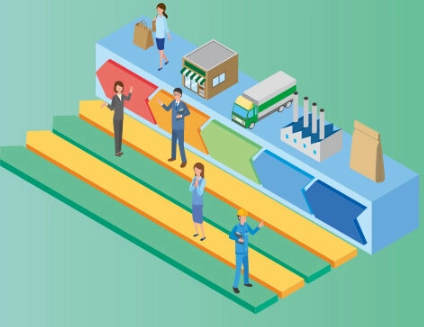
The numbers don't lie. They show you your priorities, whether you like them or not.

- Optimize: Reduce costs in a non-critical activity (e.g., automate a back-office process).
- Invest: Pour resources into an activity that drives differentiation (e.g., enhance your R&D).
- Outsource: If an activity is not a core strength and someone else can do it better/cheaper (e.g., payroll processing, standard component manufacturing).
- Re-engineer Linkages: Improve coordination between sales and production to reduce custom order lead times.
I've seen companies get bogged down in step 2, trying to get the cost allocation perfect. Don't let perfect be the enemy of good. A rough, informed analysis is infinitely more useful than no analysis at all.
Common Misconceptions and Pitfalls (Where People Go Wrong)
Let's clear the air on a few things. The value chain framework is powerful, but it's often misunderstood or misapplied.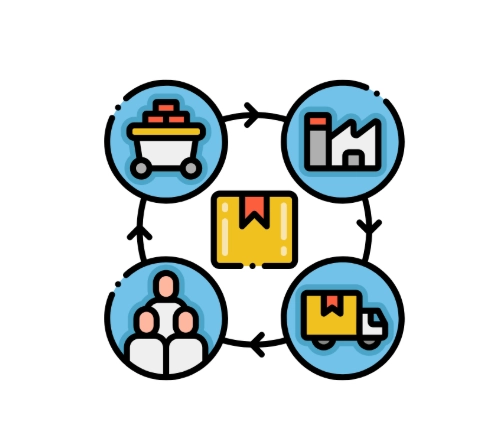
Another pitfall is focusing too much on internal analysis and forgetting the broader context. Your value chain is embedded within a larger industry value system that includes your suppliers' value chains and your distributors' or customers' value chains. Optimizing your inbound logistics might just push costs onto your supplier, damaging that relationship. A better approach might be to collaborate to improve the entire system.
Value Chain vs. Supply Chain: What's the Actual Difference?
This confuses a lot of people, and honestly, the terms get used interchangeably in casual conversation. But there is a key difference in focus.
Supply Chain is primarily concerned with the flow of physical goods and information. It's about logistics, procurement, and coordination with external partners (suppliers, distributors). It asks: How do we get the right stuff to the right place at the right time and cost?
Value Chain is broader. It encompasses the entire internal process of creating value, of which the supply chain is a major component (mainly the Inbound/Outbound Logistics parts). The value chain model also includes transformation (Operations), demand creation (Marketing & Sales), and post-sale support (Service), plus all the support functions. It asks: Where and how are we creating value for the customer at each step, and how can we do it better to gain an advantage?
Think of supply chain as the pipes. Value chain is the entire water treatment plant, including the customer's tap.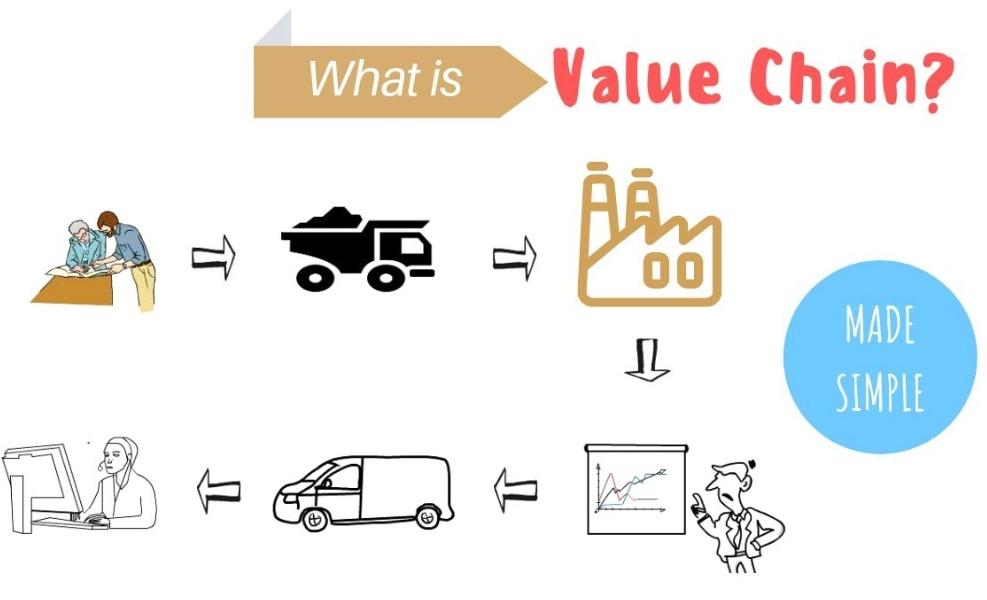
The Digital Transformation of the Value Chain
This isn't optional anymore. Technology is no longer just a support activity; it's rewiring primary activities. A modern value chain analysis has to account for this.
- Inbound Logistics: IoT sensors on shipments provide real-time tracking and condition data. AI predicts material needs.
- Operations: Robotics and AI-driven quality control. 3D printing for on-demand production.
- Outbound Logistics: Dynamic routing algorithms, drone delivery pilots, blockchain for provenance tracking.
- Marketing & Sales: This is the most obvious. Digital advertising, social media engagement, CRM platforms like Salesforce, personalized e-commerce experiences.
- Service: Chatbots for tier-1 support, remote diagnostics using AR, knowledge bases and community forums.
The big shift is that data is now a key input and output at every stage. Your company's ability to collect, analyze, and act on data is becoming a support activity that cuts across everything, potentially creating entirely new value propositions. Netflix's entire value chain is built around data: from recommending content (Marketing) to deciding what to produce (R&D within Technology Development).
Putting It All Together: Your Action Plan
Feeling overwhelmed? Don't be. Start small.
- Pick one product line or service. Don't try to map your entire multinational corporation on day one.
- Gather a small, cross-functional team. You need perspectives from sales, ops, finance, etc.
- Host a whiteboard session. Literally draw the chain. Use sticky notes for activities. Debate where costs and value are.
- Identify ONE quick win. Is there a glaring inefficiency between two activities? A cost that's way out of line? Fix that first. Prove the value of the exercise.
- Schedule a quarterly review. The value chain is a living thing. Revisit it.
The ultimate goal of managing your value chain isn't to have a pretty diagram. It's to make smarter decisions that lead to a healthier bottom line and a more competitive business. It forces you to move from vague feelings about "being efficient" to a concrete understanding of where and how you win.
Frequently Asked Questions (FAQs)
Look, the value chain model has been around for decades because it works. It cuts through the noise and gives you a structured way to think about your business. It’s not a magic bullet, but it’s a damn good compass. In a world where competition is just a click away, understanding your unique path to creating value isn't just smart strategy—it's survival.
So, grab that whiteboard marker. Your map is waiting to be drawn.
Reader Comments