You see it scrolling on financial news channels, mentioned in headlines, and cited as a shorthand for "the market." The Dow Jones Industrial Average, or simply "the Dow," is arguably the world's most famous stock market index. But here's the thing most casual observers miss: it's not the market. It's a very specific, sometimes quirky, and surprisingly old-fashioned lens through which to view a slice of corporate America. Understanding what it is, how it works, and—crucially—its limitations, is the first step to moving from a passive observer to a more informed investor.
What's Inside This Guide
What Exactly Is the Dow Jones Industrial Average?
Created in 1896 by Charles Dow and Edward Jones (yes, of The Wall Street Journal fame), the Dow started as a list of 12 primarily industrial companies. The goal was simple: create a single number that could give a quick snapshot of the health of the stock market and, by extension, the U.S. economy. Think of it like a thermometer for a specific part of the economic body.
Today, it consists of 30 large, publicly-owned companies based in the United States. The "Industrial" in its name is a relic; the index now includes giants from technology (Apple, Microsoft), finance (JPMorgan Chase), healthcare (UnitedHealth Group), and consumer goods (Procter & Gamble). Membership is not automatic. A committee at S&P Dow Jones Indices selects companies they believe represent a leading slice of the U.S. economy. It's a judgment call, not a strict formula based on size alone.
Key Takeaway: The Dow is a price-weighted index of 30 prominent U.S. companies. It's a historical benchmark, not a comprehensive measure of the entire U.S. stock market, which contains thousands of companies.
The Quirky Math: How the Dow Jones Is Calculated (And Why It Matters)
This is where most online explanations stop, and it's a huge mistake. The Dow's calculation method is its most defining—and most criticized—feature.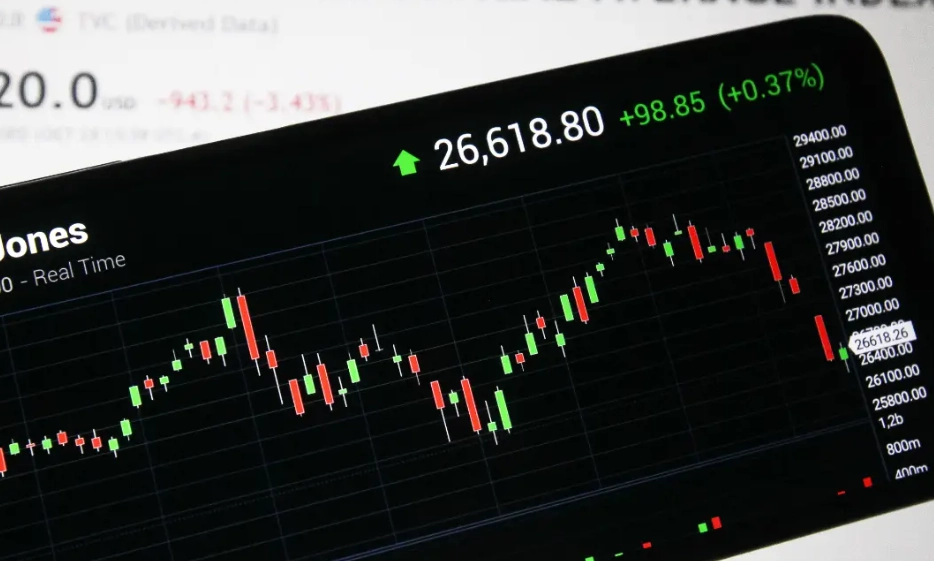
It's a price-weighted index. This means the stock price of each component is what matters, not the company's total market value (market capitalization). The index value is the sum of the prices of all 30 stocks, divided by a number called the "Dow Divisor." This divisor is constantly adjusted for stock splits, spin-offs, and component changes to keep the index value consistent over time.
Why This Quirk Creates Distortion
Imagine two companies in the index:
- Company A: Stock price = $400 per share. Total market value = $500 billion.
- Company B: Stock price = $40 per share. Total market value = $800 billion.
In the Dow, Company A has ten times the influence of Company B, simply because its share price is ten times higher, even though Company B is actually a larger company by total value. This leads to some bizarre realities. A 10% move in a high-priced stock like UnitedHealth Group (often over $500/share) swings the index far more than a 10% move in a lower-priced stock like Cisco Systems (around $50/share), regardless of which company's news is more economically significant.
Most other major indices, like the S&P 500, are market-cap-weighted. A company's influence is proportional to its total size. This is widely considered a more accurate reflection of the market's structure. The Dow's method is an anachronism, but its longevity gives it staying power.
The Good, The Bad, and The Misleading
Let's cut through the noise. Is the Dow a useful tool, or just a media headline generator?
The Pros (Why It Still Matters):
- Long-Term Trend Confirmation: Over decades, its long-term trajectory generally aligns with the broader U.S. economy and other indices. A steadily rising Dow over years suggests economic expansion.
- Psychological Benchmark: It's embedded in public consciousness. Round numbers like "Dow 40,000" become cultural milestones, influencing general investor sentiment.
- Blue-Chip Focus: It tracks established, dividend-paying companies. For investors interested in mature, profitable businesses, it's a decent starting list.
The Cons (The Pitfalls Everyone Ignores):
- Narrow Scope: 30 companies out of thousands. You get zero exposure to small or mid-cap companies, which are often engines of innovation and growth.
- The Price-Weighting Flaw: As discussed, it overemphasizes high stock prices, not economic impact. This can make the index's movements misleading on a day-to-day basis.
- No Tech/Growth Heavyweighting: Unlike the S&P 500 or Nasdaq, it doesn't automatically give more weight to the largest companies by market cap. This means its performance can diverge significantly from what you might experience in a diversified portfolio.

My personal view after watching markets for years? Relying on the Dow for your sole market insight is like trying to diagnose a car's health by only listening to the engine. It tells you something, but you're missing the transmission, brakes, and electrical system. The S&P 500 is a far better overall diagnostic tool.
How to Actually Invest Using the Dow Jones
You can't buy the index itself. But you can invest in ways that mirror its performance. Here are concrete, actionable strategies, moving from simple to more involved.
Strategy 1: The Set-and-Forget ETF Approach
The easiest way is through an Exchange-Traded Fund (ETF) that tracks the Dow. The most popular is the SPDR Dow Jones Industrial Average ETF (ticker: DIA), often called the "Diamonds" ETF.
- What it does: It holds all 30 Dow stocks in their exact index weights.
- Action: Buying shares of DIA in your brokerage account is functionally equivalent to buying a tiny piece of all 30 companies at once.
- Best for: Beginners, or investors who want simple, low-cost exposure to these specific blue-chip stocks without having to manage 30 separate positions.
Strategy 2: The Active "Dogs of the Dow" Tactic
This is a famous, rules-based strategy for more hands-on investors. At the start of each year, you identify the ten highest-yielding stocks in the Dow (the "Dogs")—these are typically the ones whose stock prices have underperformed, boosting their dividend yield. You invest an equal amount in each, hold for a year, then rebalance.
The logic? You're buying out-of-favor blue-chips with strong dividends, betting on a degree of mean reversion. It's not guaranteed to beat the market every year, but it's a disciplined, value-oriented approach rooted in the Dow's composition. You'd need to execute this manually in your brokerage account.
Strategy 3: Using It as a Research Filter, Not a Mandate
This is how I use it most often. The list of 30 companies is a curated group of industry leaders. I scan it for businesses I want to research further for individual stock purchases. If I'm looking for a stable consumer staples company, seeing Procter & Gamble on the list reminds me to dig into their financials. But I don't feel obligated to buy it just because it's in the Dow. The index is a starting point for due diligence, not the finish line.
A critical warning: Never judge an individual stock's value based on whether it's "in the Dow." Inclusion or exclusion can move a stock's price short-term, but it says nothing about its intrinsic worth. I've seen investors chase stocks just after they're added, often buying at a peak.
Who's In the Club? A Look at the Current Roster
Understanding the types of companies in the index helps you know what you're actually betting on. Here's a snapshot of the top 10 components by index weight (as influenced by their high stock prices), which drive most of the movement. Data is illustrative and changes with stock prices.
| Company | Ticker | Sector | Approx. Index Weight* | Why It Matters |
|---|---|---|---|---|
| UnitedHealth Group | UNH | Healthcare | ~9% | Largest weight due to high stock price; bellwether for healthcare costs. |
| Goldman Sachs | GS | Financials | ~7% | Key player in investment banking and capital markets. |
| Home Depot | HD | Consumer Discretionary | ~6% | Barometer for housing and consumer spending on renovations. |
| Microsoft | MSFT | Information Technology | ~5% | Tech giant, but its weight is tempered by its (relatively) lower stock price vs. UNH. |
| McDonald's | MCD | Consumer Discretionary | ~5% | Global consumer staple and franchise model leader. |
| Amgen | AMGN | Healthcare | ~4.5% | Biotechnology representative, subject to drug pipeline news. |
| Salesforce | CRM | Information Technology | ~4% | Cloud software leader, a more modern addition to the index. |
| Visa | V | Financials | ~4% | Payment processing network, a play on digital transaction growth. |
| Johnson & Johnson | JNJ | Healthcare | ~3.5% | Healthcare conglomerate, known for stability and dividends. |
| Procter & Gamble | PG | Consumer Staples | ~3% | Ultimate defensive stock, sells everyday essentials. |
*Weights are approximate and fluctuate daily. Source: S&P Dow Jones Indices methodology.
Notice the heavy tilt towards Healthcare and Financials in the top weights, purely a function of stock prices. A market-cap-weighted index would have Technology as its dominant sector.
Your Burning Questions Answered
As a beginner, should I just put all my money in a Dow Jones ETF like DIA to be safe?
Not if "safe" means diversified. Putting all your money in the Dow concentrates your risk in only 30 large U.S. companies. You miss out on thousands of other U.S. companies (small/mid caps) and all international companies. A safer, more diversified foundation for a beginner is a total U.S. stock market ETF or a simple S&P 500 index fund. Think of the Dow ETF as one ingredient, not the whole meal.
The Dow hit a new high, but my portfolio didn't. What am I doing wrong?
You're probably not doing anything wrong. This is the most common frustration stemming from the Dow's misrepresentation as "the market." Your portfolio likely holds different assets—maybe international stocks, bonds, or tech stocks that aren't weighted highly in the Dow. The Dow's movement, especially driven by a few high-priced stocks, often doesn't reflect the performance of a broadly diversified portfolio. Compare your returns to a blended benchmark relevant to your asset allocation, not just the Dow.
I keep hearing the Dow is "overvalued" when it reaches round numbers. Is 40,000 too high to start investing?
This is a classic psychological trap. The absolute number of the Dow is meaningless in terms of valuation. 40,000 isn't inherently more "expensive" than 30,000 was. Valuation depends on the underlying companies' earnings relative to their price. The Price-to-Earnings (P/E) ratio of the index is a better gauge. More importantly, time in the market consistently beats timing the market. Waiting for a round number to drop before investing means missing out on potential compounding. A better strategy is regular, periodic investments regardless of the headline number.
How often do they change the companies in the Dow, and does that create a buying opportunity?
Changes are infrequent and at the discretion of the S&P Dow Jones committee. They typically happen when a company is acquired, faces severe financial distress, or when the committee feels the index needs better sector representation (e.g., adding Salesforce to increase tech exposure). While the added stock often sees a short-term pop due to index fund buying, and the removed stock may dip, these are not reliable investment signals. The fundamental value of the companies doesn't change overnight because of index membership. Smart investing is based on business analysis, not index reshuffles.
Reader Comments