Quick Navigation
- What Exactly Is a Theory Conflict, Anyway?
- Real-World Theory Conflicts: It's Not Just Textbook Stuff
- A Practical Framework: Navigating the Conflict Minefield
- Common Pitfalls and How to Sidestep Them
- Your Theory Conflict Toolkit: Questions to Ask
- Digging Deeper: When You Need More Firepower
- Wrapping It All Up: Living with Productive Disagreement
You know that feeling, right? You're in a meeting, or maybe just reading the news, and two perfectly smart people are laying out completely different explanations for the same thing. One says the market is crashing because of interest rates. The other swears it's a global supply chain issue. Both sound convincing. Both have data. And you're left in the middle, wondering who's right and what you should actually do.
That, in a nutshell, is a theory conflict. It's not just an academic debate reserved for philosophers in tweed jackets (though they have their fair share). It's a daily reality in business, science, politics, and even our personal lives. Understanding this clash isn't about picking a side to win an argument. It's about navigating a world full of competing ideas without losing your mind—or making a terrible decision.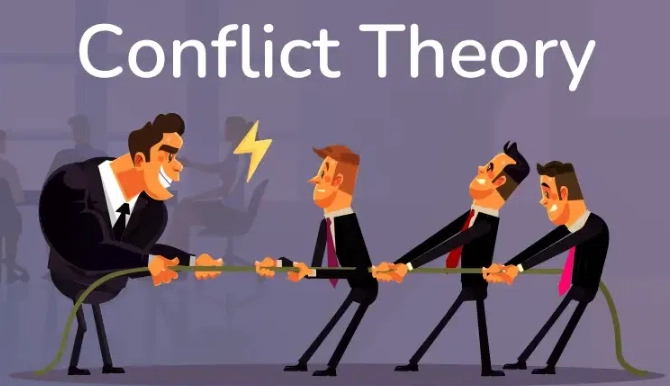
What Exactly Is a Theory Conflict, Anyway?
We throw the word "theory" around a lot. In everyday talk, it often means a guess or a hunch. "I have a theory about why the coffee machine is broken." But in the context of a real theory conflict, we're talking about something more substantial. A theory is a system of ideas intended to explain something, based on general principles independent of the thing being explained. It's a framework for understanding.
So, a theory conflict arises when two or more of these explanatory frameworks make different predictions, rely on different core assumptions, or interpret the same evidence in radically different ways. They're competing stories about how the world works.
I remember working on a software project years ago. The design team was utterly convinced, based on user engagement theories, that a single, minimalist homepage was the way to go. The marketing team, fueled by conversion rate theories, demanded multiple clear call-to-action buttons stacked on top of each other. Both theories were valid in their own domains. The conflict wasn't about who was smarter; it was about which theoretical lens we should prioritize for this specific goal. We were stuck for weeks.
The Anatomy of a Clash: Why Theories Fight
These conflicts don't pop up out of nowhere. They have specific roots. If you can spot the root cause, you're halfway to dealing with it.
- Differing Foundational Assumptions: This is the big one. Every theory rests on bedrock assumptions—things taken as given. One economic theory might assume people are rational actors. Another might assume they're influenced heavily by emotions and biases. If you start from different places, you'll almost certainly end up in different places. There's no amount of data that can resolve a conflict over core axioms. You have to acknowledge you're playing by different rulebooks.
- Incomplete or Ambiguous Data: The real world is messy. Data is often patchy, noisy, or open to interpretation. One theory might fit 80% of the data points beautifully but stumble on a weird outlier. Another theory might explain the outlier perfectly but be clunkier for the majority. Which one is "better"? It depends on how much weight you give to that outlier.
- Scope and Context Limitations: No theory explains everything. Newtonian physics is brilliant for everyday objects at reasonable speeds. Try applying it to something near the speed of light, and it falls apart—that's where Einstein's relativity takes over. A theory conflict often happens when people try to apply a theory outside its intended scope. The marketing theory for B2C products might create a theory conflict when forced onto a B2B scenario.
- Values and Goals in Disguise: Sometimes, what looks like a clash of ideas is really a clash of values or objectives. Is the goal maximum short-term profit or long-term brand sustainability? Is the value on individual freedom or collective safety? People will gravitate towards theories that align with their deeper values, often without even realizing it.
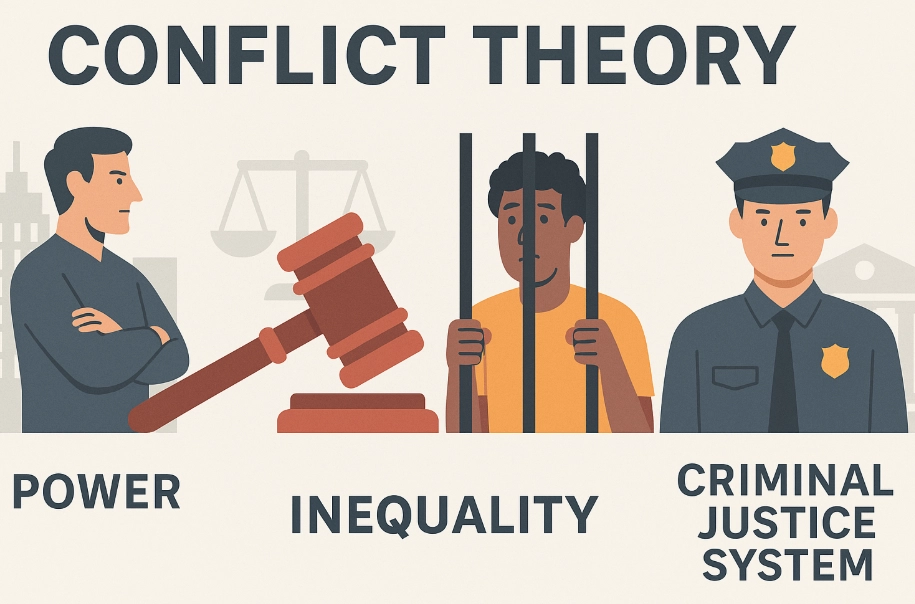
Real-World Theory Conflicts: It's Not Just Textbook Stuff
Let's get concrete. Where do you actually see these theory conflicts playing out with real consequences?
In Public Health: The COVID-19 pandemic was a brutal, real-time masterclass in theory conflict. Different epidemiological models (theories about disease spread) made different predictions based on assumptions about transmission rates, asymptomatic spread, and vaccine efficacy. Policy makers had to make monumental decisions while experts publicly disagreed. The public saw this as confusion or incompetence, but a large part of it was the normal, albeit stressful, process of scientific theories being tested and refined against new data.
In Psychology: The age-old nature vs. nurture debate is a foundational theory conflict. Are human behaviors and personalities primarily shaped by genetics (nature) or environment and experience (nurture)? Modern psychology generally accepts a complex interaction, but the tension between these theoretical poles still influences research questions, therapeutic approaches, and even educational policies.
And it's not just big institutions. Think about personal finance. The "Dave Ramsey debt snowball" theory (pay off smallest debts first for psychological wins) directly conflicts with the "mathematically optimal" theory (pay off highest-interest debt first). Both have merit. Which one you choose depends less on pure math and more on which theory of human motivation you believe in—yours and your ability to stick to a plan.
A Practical Framework: Navigating the Conflict Minefield
Okay, so you're facing a theory conflict. Two smart camps are dug in. What do actually do? Here's a step-by-step approach I've cobbled together from experience and reading. It's not a magic wand, but it beats screaming into the void.
Step 1: Map the Battlefield (Don't Fight Yet)
First, get everyone to explicitly state their theory. Not just their conclusion, but the actual explanatory framework. Ask: "What's the core story here that leads you to that prediction?" Write it down. Then, identify the key assumptions each theory rests on. Make a list. This alone is huge—it moves the conflict from "You're wrong!" to "Your theory assumes X, and mine assumes Y."
Step 2: Look for the "Crucial Experiment" or Test
Not all conflicts can be resolved quickly, but some can. Look for a piece of evidence, or a future outcome, that the theories predict different things about. Philosopher of science Karl Popper talked about falsifiability. In practice, ask: "What would have to happen for us to say your theory is probably less useful here?" If a theory can't answer that, it might not be a useful scientific theory; it might be more of a belief.
In business, this might be an A/B test. In a strategy debate, it might be identifying a specific, measurable market signal that would favor one theory over the other within a set timeframe.
Step 3: Consider a Meta-Theory or Hybrid Approach
Sometimes, the answer isn't Theory A or Theory B. It's realizing you need a broader theory (a meta-theory) that tells you when to use Theory A and when to use Theory B. This is about context.
For example, in project management, the conflict between Agile (iterative, adaptive) and Waterfall (sequential, planned) methodologies is legendary. The solution isn't declaring one the universal winner. The meta-theory is: Use Agile for projects with high uncertainty and changing requirements; use Waterfall for projects with well-defined, stable requirements. The conflict dissolves when you apply the right tool for the job.
Step 4: Decide Under Uncertainty
Let's be honest. You often have to make a call before the "crucial experiment" gives a clear result. This is where decision theory meets theory conflict. You have to weigh the risks and potential rewards of acting under each theoretical lens.
Create a simple grid. What are the possible actions? What does each theory say the outcome of those actions will be? What's the cost of being wrong? Sometimes, the best choice is the one that is reasonably good under multiple theories, even if it's not the optimal choice under any single one. It's the robust option.
| Potential Action | If Theory A is Correct... | If Theory B is Correct... | Risk of Being Wrong | Robustness Score |
|---|---|---|---|---|
| Invest heavily in new feature X | High market capture, first-mover advantage. | Wasted resources on an unproven need. | High (large financial loss) | Low |
| Run a limited pilot for feature X | Slower rollout, might lose some early adopters. | Minimal loss, gathers real data. | Low (contained cost) | High |
| Ignore feature X, improve core product | Miss a major trend, become obsolete. | Solidify current customer base efficiently. | Medium (strategic risk) | Medium |
See? The middle option—the pilot—might not be the dream scenario for either theory's proponents, but it doesn't lead to disaster under either theory. In high-uncertainty situations, that robustness is incredibly valuable.
Common Pitfalls and How to Sidestep Them
We all make mistakes when dealing with clashing ideas. I know I have. Here are the big traps.
- Confusing Confidence for Competence: The person stating their theory the loudest and with the most certainty is not necessarily the one with the better theory. In fact, some of the best theorists are the most cautious, because they know the limitations of their models.
- The "One Theory to Rule Them All" Fallacy: Seeking a single, elegant theory that explains everything is a beautiful dream but often a practical nightmare. The world is complex. Be suspicious of anyone selling a universal solution. As the saying goes, "All models are wrong, but some are useful." The goal is usefulness in a specific context, not ultimate truth.
- Data Cherry-Picking: Once committed to a theory, it's incredibly easy to only see the data that supports it and explain away (or ignore) data that contradicts it. This is confirmation bias on steroids. You need a deliberate process to seek out disconfirming evidence.
- Forgetting the Human Element: Theories are abstract. Decisions impact people. A theory that maximizes efficiency might destroy team morale. A theory that maximizes short-term shareholder value might wreck a community. The "best" theory in a vacuum can be the worst theory in reality if it ignores human and ethical dimensions.
Your Theory Conflict Toolkit: Questions to Ask
When you're in the thick of it, having a few go-to questions can cut through the noise.
- "What would change your mind?" Ask this to every party. If the answer is "nothing," you're not in a theory conflict; you're in a belief system conflict. Time for a different conversation.
- "What's the simplest test we could run to learn more?" Focus on learning, not proving. This reduces defensiveness.
- "Under what conditions is the opposite theory true?" This forces people to think about the boundaries and limitations of their own position. It builds intellectual humility.
- "What are we optimizing for?" Often, the conflict melts away when you realize you're not even aiming for the same goal. Align on the objective first.
Digging Deeper: When You Need More Firepower
This stuff isn't new. Philosophers and scientists have been wrestling with it for centuries. If you want to go beyond the practical guide and understand the deep structure of how knowledge and theories evolve, there are some foundational ideas worth knowing.
The concept of a paradigm shift, introduced by Thomas Kuhn in his seminal work The Structure of Scientific Revolutions, is all about large-scale theory conflict. Normal science operates within a dominant paradigm (a big, overarching theory). Anomalies build up. A rival paradigm emerges. A period of conflict ensues until, eventually, a scientific revolution occurs and the new paradigm replaces the old. It's not a smooth, logical process; it's often messy and resistant. You can see mini-paradigm shifts in industries when disruptive technologies or business models emerge.
Another useful lens is Bayesian reasoning. At its heart, it's a mathematical framework for updating the probability of a theory being true as new evidence arrives. You start with a prior belief (your initial confidence in a theory). Then you gather new data. The "likelihood" is how probable that data is if the theory is true. This updates your belief to a posterior probability. In a theory conflict, it forces you to quantify (even roughly) your confidence and asks how much specific evidence should move the needle. It's a formal way to "change your mind" when the facts change. Resources like the Stanford Encyclopedia of Philosophy's entry on Bayesian Epistemology provide a rigorous, peer-reviewed foundation for this approach.
Finally, understanding cognitive biases is non-negotiable. Our brains are wired with shortcuts that systematically distort how we evaluate theories and evidence. The aforementioned confirmation bias, the anchoring effect (over-relying on the first piece of information we get), and the Dunning-Kruger effect (where low-ability people overestimate their ability) all play starring roles in exacerbating theory conflicts. Being aware they exist is the first step to mitigating them.
Wrapping It All Up: Living with Productive Disagreement
So, where does this leave us? The goal of understanding theory conflict isn't to eliminate disagreement. That's impossible and undesirable. Disagreement, when managed well, is the source of better ideas, stronger strategies, and more resilient decisions.
The goal is to upgrade the quality of our disagreements. To move from shouting matches to structured explorations. To replace "I'm right, you're wrong" with "Here's my model of the situation, what's yours, and how can we test which is more useful here?"
The next time you're caught between two compelling yet conflicting explanations—whether it's about a marketing plan, a news story, or even a relationship issue—pause. Recognize you're in a theory conflict. Map the assumptions. Look for a test. Consider a hybrid. Assess the risks. And make the best call you can with the information you have, knowing that you've navigated the complexity with eyes wide open, not just followed the loudest voice.
That's the real skill. Not being the person with the right theory every time, but being the person who can skillfully navigate the conflict between theories to find the best path forward. Because in a world overflowing with information and opinion, that's the skill that actually matters.
Reader Comments