In This Article
- What Are Accrued Expenses, Really?
- Why Bother? The Real Impact of Accrued Expenses
- The Nuts and Bolts: How to Record Accrued Expenses
- Accrued Expenses vs. The Rest of the Accounting World
- The Five Most Common Mistakes (And How to Avoid Them)
- Answering Your Burning Questions
- Putting It All Together: Why This Isn't Just Busywork
Let's be honest, the term "accrued expenses" sounds like accounting jargon designed to confuse people. I remember early in my career, I'd see it on reports and just sort of nod along, hoping no one would ask me to explain it. But here's the thing—once you get it, it's one of those concepts that completely changes how you see a business's financial health. It's not just some theoretical idea; it's the difference between a financial statement that's vaguely accurate and one that tells you the real, honest truth about what a company owes.
So, what are we really talking about? In the simplest terms, an accrued expense is a cost your business has incurred, a bill it absolutely owes, but one you haven't actually been invoiced for or paid yet. The electricity you used this month? That's an accrued expense until the utility company sends the bill. Your employees' wages for the last week of December? If payday is in January, that's an accrued expense on December 31st. The interest on a loan that's quietly accumulating day by day? You guessed it—another accrued expense.
What Are Accrued Expenses, Really?
Think of it like this. Cash accounting is like checking your wallet. If the money isn't physically there, it doesn't exist. Accrual accounting, which is where accrued expenses live, is more like keeping a promise diary. You write down every promise to pay, every obligation you've created, regardless of when cash changes hands.
An accrued expense is a specific type of liability. It's a current liability, meaning it's expected to be settled (paid) within a year. The textbook definition is dry as toast, but the reality is messy and vital. It captures all those financial loose ends at the end of a reporting period.
Why does this matter so much? Imagine two companies with identical cash flows. Company A ignores accrued expenses. Their profit looks high because they haven't accounted for a massive end-of-year bonus payout or a quarter's worth of rent. Company B records all their accrued expenses properly. Their profit looks lower, but it's realistic. Which company would you rather invest in or lend money to? The one with the artificially inflated profit, or the one showing the true cost of doing business? It's a no-brainer.
Why Bother? The Real Impact of Accrued Expenses
I've seen too many small business owners trip over this, thinking cash is king and accruals are just for big corporations. That's a dangerous way to think.
First, accuracy. Financial statements are a report card. If you forget to list a major expense, you're cheating on your own test. Your income statement overstates profit, and your balance sheet understates what you owe. This leads directly to the second point: decision-making. How can you budget for next quarter if you don't know the true cost of this quarter? How can you price your services if you're not capturing all your costs? Those unrecorded accrued expenses will sneak up and bite you.
Then there's compliance and trust. If you're seeking a loan, the bank will tear your financials apart. If they see no accruals for common expenses, they'll assume your books are amateurish or, worse, dishonest. The same goes for investors. And let's not forget the taxman. While tax reporting sometimes differs from book accounting, starting with accurate accrual-based books makes everything cleaner. The IRS has specific rules around accounting methods, and for many businesses, the accrual method is required.
The Nuts and Bolts: How to Record Accrued Expenses
This is where people's eyes sometimes glaze over, but stick with me. The journal entry for an accrued expense is beautifully logical once you see it. It always involves two accounts: an expense account and a liability account.
Let's use the classic example: Wages. Your pay period ends on December 28th, but payday isn't until January 5th. On December 31st (your year-end), you have to account for those three days of wages (Dec 29, 30, 31) that employees have earned but not been paid for. Let's say that totals $9,000.
The journal entry on December 31st would be:
Debit: Wages Expense $9,000
Credit: Accrued Wages Payable (or Accrued Expenses Payable) $9,000
What did that do? You increased your Wages Expense on the income statement (a debit to an expense account increases it). And you increased a liability on the balance sheet called "Accrued Wages Payable" (a credit to a liability account increases it). You've now matched the wage cost to the December period where the work was done.
Fast forward to January 5th, payday. You now cut the checks for the full two-week period, which includes our $9,000 accrued piece. The entry to reverse the accrual and record the actual cash payment is:
Debit: Accrued Wages Payable $9,000
Debit: Wages Expense $21,000 (for the days from Jan 1-5, let's assume)
Credit: Cash $30,000
See how it cleans up? The liability we created is wiped out (debited), and cash is reduced. The new wages for January hit the expense account for January. It's a perfect system.
Common Examples You'll Actually Encounter
Accrued expenses aren't some rare beast. They're everywhere. Here are the ones you're almost guaranteed to deal with:
- Accrued Wages & Salaries: The number one, most common example. Any unpaid earned wages at period-end.
- Accrued Bonuses: If a bonus is earned based on annual performance, a portion needs to be accrued each quarter, even if it's paid out yearly.
- Accrued Commissions: Sales commissions earned on sales in December but paid in January.
- Accrued Interest Expense: Interest on loans accrues daily. You need to account for the interest that has piled up since your last payment.
- Accrued Utilities: Electricity, water, gas, internet. You use them all month, get the bill the next month.
- Accrued Professional Services: Your lawyer or accountant worked for you in December, but you won't get their invoice until January.
- Accrued Rent: If you pay rent in arrears (e.g., on the 5th for the previous month), you have an accrual at month-end.
- Accrued Property Taxes: These often accrue over the year but are paid in lump sums.
From my experience, the payroll accrual is where most errors creep in for small businesses, especially with salaried employees. People forget that a salary is earned daily, not in a lump sum on payday.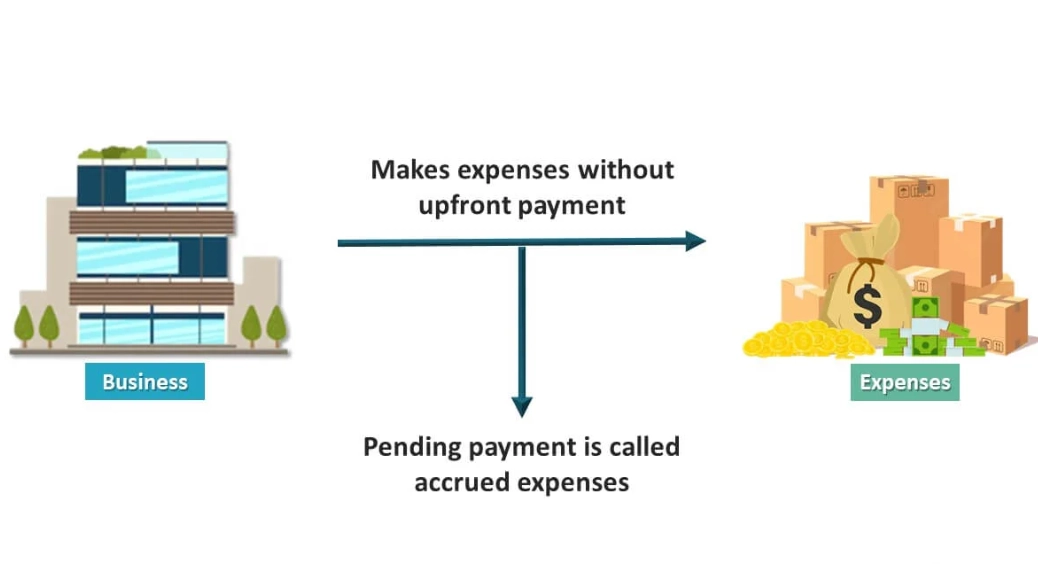
Accrued Expenses vs. The Rest of the Accounting World
It's easy to get these mixed up. Let's clear the air.
Accrued Expenses vs. Accounts Payable: This is the big one. They're both liabilities, but the difference is in the paperwork. Accounts Payable is for expenses where you have already received a supplier's invoice. The bill is in hand. Accrued Expenses are for costs where you have received the benefit (the electricity, the labor) but have not yet received an invoice. No paperwork yet. Some people call accrued expenses "accrued liabilities" to make the distinction clearer. Honestly, I think that's a better term.
Accrued Expenses vs. Prepaid Expenses: Total opposites. A prepaid expense (like insurance paid a year in advance) is an asset. You've paid cash, but you haven't received the benefit yet. An accrued expense is a liability. You've received the benefit, but you haven't paid cash yet. One's a future cost you've already covered (asset), the other's a past cost you still need to cover (liability).
| Concept | What is it? | Accounting Treatment | Example |
|---|---|---|---|
| Accrued Expense | Expense incurred, not yet invoiced/paid. | Debit Expense, Credit Liability | December utilities used, bill arrives in January. |
| Accounts Payable | Expense invoiced, not yet paid. | Debit Expense, Credit Accounts Payable | Receive office supply invoice, pay it in 30 days. |
| Prepaid Expense | Expense paid for, not yet incurred. | Debit Prepaid Asset, Credit Cash | Pay one year of insurance upfront. |
The Five Most Common Mistakes (And How to Avoid Them)
I've audited enough books to see these patterns over and over. Avoiding these will put you ahead of 80% of businesses.
- Forgetting to Accrue at All: The "out of sight, out of mind" error. You must have a closing checklist that forces you to ask: "What did we use but not get billed for?"
- Incorrect Reversal: You make the initial accrual entry but then mess up the reversing entry when you pay the bill. This can double-count an expense. Using accounting software that auto-reverses entries on the first day of the new period is a lifesaver here.
- Estimating Poorly: Sometimes you have to estimate an accrual (like a utility bill). The mistake is using a wild guess instead of a reasoned estimate based on past history. A bad estimate is worse than no accrual because it gives a false sense of precision.
- Missing Small, Recurring Items: You remember the big wage accrual but forget the small monthly service fee that hasn't been invoiced. Over time, these add up.
- Confusing Accruals with Prepayments: This goes back to the mix-up we talked about. Putting a cost in the wrong bucket throws off both your profit and your understanding of what cash is really needed soon.

Answering Your Burning Questions
Are accrued expenses a debit or credit?
This is the classic accounting student question. When you record the accrued expense, you debit the expense account and credit a liability account (like Accrued Expenses Payable). So the accrued expense itself, as a liability on the balance sheet, has a credit balance. But remember, the initial entry has both a debit and a credit.
What's the journal entry for an accrued expense?
We covered the wages example, but the skeleton is always: Debit [Specific Expense Account], Credit [Accrued Liabilities / Accrued Expenses Payable]. When you pay it, you reverse that liability: Debit [Accrued Liabilities], Credit [Cash], and also expense any new costs incurred in the new period.
Do accrued expenses go on the income statement or balance sheet?
Both, but in different ways. The expense part hits your Income Statement, reducing net income. The liability part (the amount you owe) sits on your Balance Sheet under Current Liabilities. That's the magic of the double-entry—it affects two key reports simultaneously.
How do you adjust accrued expenses?
At the end of the next period, if the actual bill differs from your estimate, you make an adjusting entry. Say you accrued $1,000 for utilities, but the bill comes for $1,100. You would accrue an additional $100 in the new period. The initial accrual was for the old period's expense and was correct based on your best estimate at the time.
Is accrued expense a current liability?
Almost always, yes. Since these are expenses expected to be paid within a year (usually within a few weeks or months), they are classified as a current liability on the balance sheet, right alongside accounts payable.
Putting It All Together: Why This Isn't Just Busywork
Look, I get it. For a small business owner wearing ten hats, adding "accrual accountant" to the list feels like a pain. You might think, "My bank balance is what matters." But that's short-term thinking.
Accurate accrued expense tracking is what separates a hobby from a professionally managed business. It's the foundation for:
- Realistic Budgeting: You can't forecast next year's utility costs if you only look at when cash left your account.
- Clean Audits: If you're ever audited, clean accruals show diligence and reduce scrutiny.
- Smart Financing: Lenders want to see that you understand your true obligations, not just your cash flow.
- True Profitability: You finally see what it actually costs to make your revenue each month, without timing distortions.
The goal isn't to make accounting more complicated. It's to use these principles—recording accrued expenses being a cornerstone—to make your business less complicated to understand and manage. You stop being surprised by bills and start being in control of your costs. And that's a feeling worth the extra bit of month-end work.
Start small. Pick one recurring expense you know gets billed in arrears, like your internet bill. Next month-end, make an entry to accrue for it. See how it changes your profit number for that month. That one hands-on experiment will teach you more than any textbook ever could about the real power of getting your accrued expenses right.
Reader Comments