Your Quick Navigation
So you're trying to wrap your head around the market economy definition. Maybe it's for a class, maybe it's for work, or maybe you're just tired of hearing the term thrown around on the news without really knowing what it means. I get it. Economics can feel like a jargon-filled maze sometimes.
Let's cut through the noise. At its absolute simplest, a market economy is one where people, not governments, are mostly in the driver's seat. What gets made? How much does it cost? Who gets to buy it? The answers to those questions come from the countless daily decisions of buyers and sellers, not from a central planning committee. It's the economic system behind everything from your local coffee shop deciding to offer oat milk to a tech startup betting millions on a new app.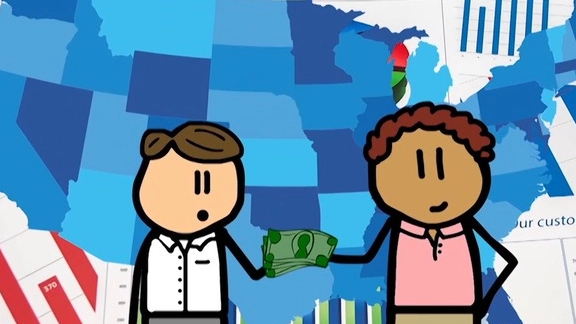
But that's just the elevator pitch. The real definition of a market economy is packed with nuance, history, and real-world consequences. It's not some perfect, theoretical model that exists in a vacuum. It's messy, it's powerful, and it shapes our daily lives in ways we often don't even notice.
The Nuts and Bolts: What Makes a Market Economy Tick?
If you strip a market economy down to its engine, you'll find a few core parts working together. It's not magic; it's mechanics.
The Big Three: Private Property, Freedom of Choice, and Self-Interest
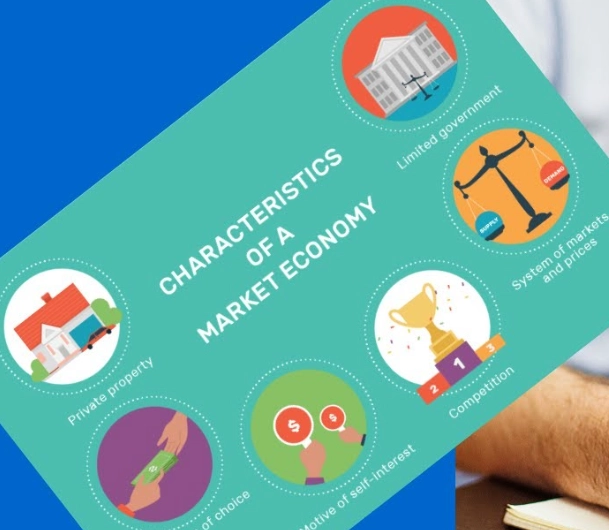
First up, private property. This is huge. It means you can own stuff—land, a factory, a patent for an invention, the laptop you're reading this on. That ownership comes with rights (you can use it, sell it, rent it out) and responsibilities. This ownership incentive is the fuel. Why build a better mousetrap if you can't profit from it?
Next, freedom of choice. Consumers choose what to buy with their dollars. Producers choose what to make and how to make it. Workers choose where to apply their skills. This freedom creates a constant, decentralized conversation about what society values.
And then there's self-interest. Now, before you think "that sounds selfish," let's be clear. In an economic sense, self-interest just means actors are trying to achieve their own goals. A consumer's self-interest is getting the best value. A worker's self-interest is finding a good job. A business's self-interest is making a profit. Adam Smith, the godfather of this thinking, called it the "invisible hand"—where individuals pursuing their own gain often end up benefiting society as a whole by creating goods, jobs, and innovation. It's a controversial idea, but it's central to the free market economy model.
The Magic (and Mayhem) of Supply and Demand
This is the pricing mechanism, the heart of the market economic system. It's beautifully simple in theory.
- High demand + low supply = Prices go up. (Think concert tickets for a superstar, or graphics cards during a crypto boom). Higher prices signal producers to make more and encourage some consumers to wait or seek alternatives.
- Low demand + high supply = Prices go down. (Think last year's smartphone model). Lower prices clear out inventory and signal producers to make less.
It's a constant feedback loop. No central planner sets the price of a cheeseburger or a car. It emerges from this dance. When it works well, it allocates resources efficiently. But sometimes the music stops. What about essential things like life-saving medicine? Should pure supply and demand dictate that price? This is where the ethical debates kick in.
It's Not All the Same: Types of Market Economies in the Real World
Here's where textbook definitions meet reality. You won't find a "pure" market economy (often called laissez-faire) anywhere. Every real-world system is mixed. The real question is: how mixed?
The spectrum runs from more market-oriented to more government-involved. To make sense of it, let's look at how different places blend the ingredients.
| Model / Country Example | Core Idea | Role of Government | A Real-World Trait |
|---|---|---|---|
| Free-Market Capitalism (Historical example: 19th-century US & UK) |
Minimal government intervention. "Laissez-faire" reigns. | Protects property rights, enforces contracts, provides national defense. That's mostly it. | Led to incredible innovation and growth, but also to brutal working conditions, monopolies, and boom/bust cycles. Most modern economies have moved away from this pure form. |
| Social Market Economy (Germany, Nordic countries) |
Market drives production, but society cushions the outcomes. | Active! Provides robust social safety nets (healthcare, unemployment), strong labor regulations, and antitrust enforcement, all while supporting competitive private industry. | Often cited as a "compassionate capitalism" model. Aims for both efficiency and equity. High taxes fund extensive public services. |
| State-Directed Capitalism (Singapore, China to a significant extent) |
The government plays a heavy strategic role in guiding the market. | Government owns key industries, makes strategic investments (e.g., in tech), sets long-term economic goals, and heavily influences credit allocation. | Can achieve rapid, targeted growth. Critics argue it stifles political freedom and can lead to cronyism and misallocation of capital if state planning fails. |
| Mixed Economy with Strong Welfare State (Canada, France, Australia) |
A broad middle ground, blending private enterprise with significant public services and regulation. | Regulates industries (finance, environment), provides universal healthcare/education in many cases, uses fiscal policy to manage economic cycles. | The most common model among developed nations. The endless political debate is about finding the "right" mix between market freedom and social protection. |
Looking at this table, it's obvious that the clean market economy definition from a textbook gets messy fast in practice. The US, often held up as the bastion of capitalism, has a massive government that regulates, subsidizes (from agriculture to green energy), and provides social security. It's a mixed economy, just with a different flavor than Germany's.
The Good, The Bad, and The Ugly: Weighing the Pros and Cons
No system is perfect. Understanding the market economy pros and cons is crucial to having an intelligent opinion about it. Let's be brutally honest.
Why People Champion It (The Pros)
- Efficiency and Innovation: This is its superpower. Competition forces businesses to cut waste, improve quality, and invent new things. The profit motive is a relentless engine for progress. My smartphone today has more power than a room-sized computer from 50 years ago—that didn't happen because a government committee planned it.
- Economic Freedom and Consumer Choice: You have a say with your wallet. If you don't like a company's product or ethics, you can buy from a competitor. This power is real. It's why we have 50 types of cereal and countless streaming services (for better or worse!).
- Wealth Creation and Growth: Historically, market-oriented systems have lifted more people out of poverty than any other. They generate the economic pie that can, in theory, be shared. The dynamism attracts investment and creates jobs.
Where It Stumbles (The Cons and Criticisms)
- Inequality: This is the big one, and in my view, the most valid criticism. Markets tend to reward skill, capital, and luck disproportionately. Wealth begets more wealth. Without some form of redistribution or intervention (like progressive taxes), the gap between the top and the bottom can grow to socially destabilizing levels. Trickle-down economics? In practice, it often feels more like a trickle.
- Market Failures: The invisible hand isn't all-seeing. Markets fail in clear cases:
- Public Goods: Things like clean air, national defense, or street lights. No one can be excluded from using them, so private companies won't provide them efficiently. That's a job for government.
- Externalities: Costs (or benefits) imposed on third parties. Pollution is the classic negative externality. A factory profits, but everyone downstream breathes dirty air. The market price of its goods doesn't include that social cost.
- Monopolies: Competition is the lifeblood of a healthy market. But left unchecked, successful firms can crush or buy competitors, leading to monopolies that jack up prices and stifle innovation. That's why antitrust laws exist.
- Boom and Bust Cycles: Markets can be irrational and prone to bubbles (housing, tech stocks) and subsequent crashes. The 2008 financial crisis was a catastrophic market failure, enabled by deregulation and reckless behavior. The human cost was immense.
- Neglect of Social Goods: A pure market might not adequately provide healthcare for the poor, education in unprofitable areas, or care for the elderly. These are moral choices a society makes, often outside pure market logic.
So, when you ask for a market economy definition, you're really asking about a powerful but flawed tool. It's incredibly good at generating wealth and innovation but pretty bad at ensuring fair outcomes or providing public goods on its own. That's why the "mix" in a mixed economy is so fiercely debated.
Clearing Up the Confusion: Your Market Economy Questions Answered
Is the USA a market economy?
Yes, but it's a mixed market economy. It's one of the world's most market-oriented large economies, with a deep culture of entrepreneurship. However, the US government plays a massive role: it regulates industries (FDA, EPA, SEC), provides social security and Medicare, subsidizes agriculture and energy, and intervenes in crises (like the 2008 bailouts). Calling it a "pure" free market is a myth.
What's the difference between a market economy and capitalism?
They're siblings, not twins. Capitalism focuses on the ownership of capital (the means of production) being privately held. A market economy focuses on the mechanism for coordinating economic activity (markets and prices). You can't really have capitalism without markets, but in theory, you could have market mechanisms in a system with significant cooperative or state ownership (like some forms of market socialism). In everyday talk, they're used interchangeably, but capitalism carries more ideological and historical baggage.
Can a market economy have government intervention?
Absolutely, and all real-world ones do. The question is the degree and purpose. Intervention to correct market failures (breaking up monopolies, taxing pollution) is widely accepted by most economists. Intervention to provide social welfare or steer industrial policy is more politically contentious. The debate is never "market vs. government" but "what's the right balance?"
What is the opposite of a market economy?
The textbook opposite is a command economy or planned economy. Here, a central government makes all the major economic decisions: what to produce, how much, at what price, and who gets it. The former Soviet Union and North Korea are extreme examples. Resources are allocated by decree, not by price signals. History has shown these systems to be notoriously inefficient at delivering consumer goods and adapting to change, though they can sometimes mobilize resources for single goals (like space races or heavy industry) in the short term.
Wrapping It Up: The Market Economy in Your Life
Understanding the market economy definition isn't just an academic exercise. It's a lens to understand the world. Why is your rent so high? (Supply, demand, and zoning laws). Why did that cool local store close? (Competition from big chains or online giants). Why are electric cars becoming cheaper and better? (Innovation driven by profit motive and, yes, government subsidies).
The market system is this incredible, adaptive, and often unforgiving force. It gives us phenomenal choice and convenience but can also feel impersonal and unequal. It's not a natural law; it's a human invention with rules we set.
So the next time you hear a politician promise to "unleash the free market" or "rein in corporate power," you'll have a better sense of what that actually means. You'll know they're talking about adjusting the dials on a complex machine—a machine that generates both incredible prosperity and significant problems. The work isn't in choosing for or against a market economy; it's in the endless, messy, and vital task of building one that works for as many people as possible.
And honestly, that's a conversation worth having, armed with more than just a simplistic textbook definition of market economy.
Reader Comments