Quick Guide to Monopolies
- How Does a Monopoly Even Happen? The Path to Total Control
- Not All Monopolies Are Created Equal: The Different Flavors
- The Infamous Examples: Learning from History's Monopolies
- Why Should You Care? The Real-World Impact of a Monopoly
- The Watchdogs: How Governments Fight Monopoly Power
- The Modern Dilemma: Big Tech and the New Monopoly Debate
- Your Questions Answered: Monopoly FAQs
- Wrapping Up: The Never-Ending Battle
You hear the word thrown around a lot. "That company has a monopoly!" "They're monopolizing the market!" It sounds bad, right? But what does it actually mean? At its absolute core, a monopoly is when one company or entity is the only supplier of a particular product or service. There's no real competition. If you want that thing, you have to go to them, and you have to pay their price. Simple enough? Well, it gets more interesting from there.
Think about it like this. Imagine the only bridge across a massive river. You need to get to the other side for work, to see family, for everything. The owner of that bridge can charge whatever toll they want. Need to cross? Pay up. That's the raw power of a monopoly—complete control over supply. The consumer has zero bargaining power. This is the fundamental answer to the question "what is a monopoly?" It's about market power, pure and simple.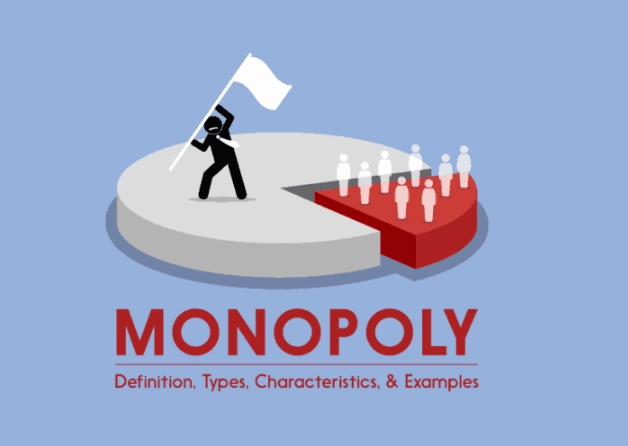
The Textbook Definition: In economics, a monopoly is a market structure characterized by a single seller (the monopolist) selling a unique product in the market, facing no competition because of barriers to entry that prevent other firms from entering the market. The monopolist becomes the price maker.
But here's where people get tripped up. Not every big company is a monopoly. Just because a company is huge and successful doesn't automatically mean it fits the strict definition. The key is the lack of substitutes and those barriers to entry. Can you easily switch to a different, comparable product? If the answer is no, you might be dealing with a monopoly situation.
How Does a Monopoly Even Happen? The Path to Total Control
Companies don't just wake up one day with a monopoly (well, mostly). They get there through specific paths. Understanding these is crucial if you want to grasp the full picture of what a monopoly is.
Sometimes, the government hands it out. This is called a legal or statutory monopoly. Think of your local water utility or the old postal service. The government says, "You're the only one allowed to provide this essential service." The idea is often to avoid wasteful duplication of infrastructure—imagine five different companies digging up your street to lay water pipes. Inefficient, right? But it comes with heavy regulation to prevent abuse.
Then there's controlling the resource. If you own the only mine of a rare, critical mineral, congratulations, you have a resource-based monopoly. De Beers and diamonds is the classic, almost cliché example. For decades, they controlled the vast majority of the world's diamond supply. That's not a strategy you see as often today, but it's a pure form of what a monopoly represents.
The modern path is often through technology and network effects. This is the sticky one. A company creates a product or platform that becomes so dominant, so essential, that it's nearly impossible for competitors to gain a foothold. Why? Because the value of the platform increases with every user. Everyone is on it, so you need to be on it too. This creates a massive barrier to entry. It's not that others are legally barred; it's that they can't attract users away from the established network. This is a central debate in today's tech world.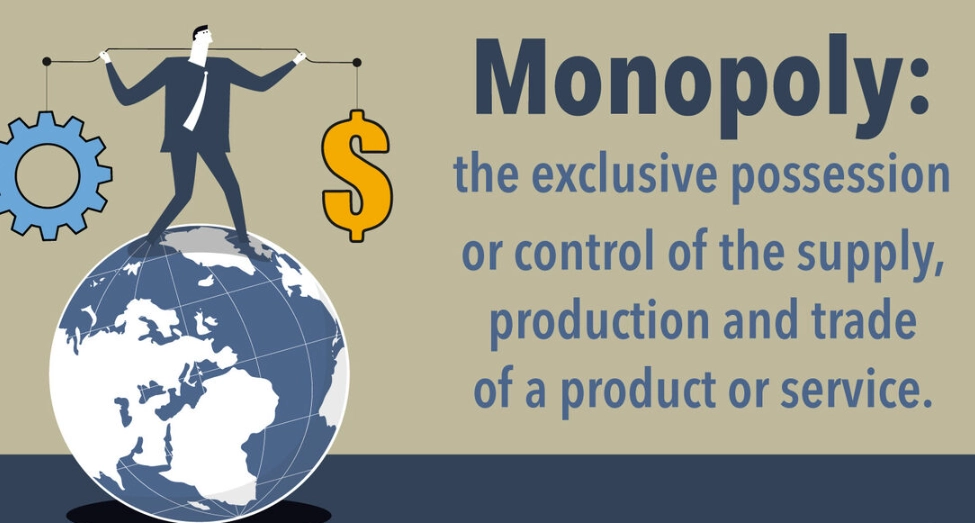
Barriers to entry are the bedrock of any lasting monopoly. Without them, high profits would just attract new competitors like flies. These barriers can be legal patents, insane startup costs, control of key resources, or simply the overwhelming advantage of an established network.
Let's be honest, sometimes monopolies form through just ruthless, clever, or sometimes shady business tactics. Buying up all the competitors (horizontal integration). Controlling the entire supply chain from raw material to store shelf (vertical integration). Aggressive pricing to undercut rivals until they go bankrupt, then jacking up prices later (predatory pricing). The history of American industry is littered with these stories.
Not All Monopolies Are Created Equal: The Different Flavors
When you ask "what is a monopoly?", you might get a one-size-fits-all definition. But in reality, they come in different types. Knowing the difference helps you analyze real-world situations more clearly.
| Type of Monopoly | How It Forms | Real-World Example (Historical or Conceptual) | Key Characteristic |
|---|---|---|---|
| Natural Monopoly | It's most efficient for one firm to serve the entire market due to massive fixed costs and lower costs at scale. | Electrical grid, water supply, railway networks in a specific region. | High infrastructure costs make competition impractical. |
| Government Monopoly | Created by law; the government grants exclusive rights. | First-class mail delivery (USPS), public water utilities, national lottery. | Legally enforced, often for public goods or revenue. |
| Technological Monopoly | Control over a unique invention or process, often protected by patents. | A pharmaceutical company with the patent for a life-saving drug. | Temporary (for the patent period), based on innovation. |
| Geographic Monopoly | Only provider in a specific physical location. | The only gas station for 100 miles on a remote highway; the only movie theater in a small town. | Limited by geography, not necessarily intent. |
| Pure Monopoly | The ideal (or worst-case) type: a single seller with no close substitutes at all. | Extremely rare in practice. Historical examples like Alcoa in aluminum pre-WWII. | 100% market share, no alternatives exist. |
You see, the "gas station in the desert" is a geographic monopoly, but it's not evil—it's just a fact of location. The drug company with a patent has a temporary technological monopoly, which is meant to reward innovation. The problem, in my view, starts when these situations are abused or last too long without any checks.
I remember reading about small towns with one internet provider. The prices were outrageous, the service was terrible, but what could people do? Move? That's the frustration a geographic or natural monopoly can cause when it's not properly regulated. It perfectly illustrates why people need to understand what a monopoly is—it directly hits their wallet and quality of life.
The Infamous Examples: Learning from History's Monopolies
You can't talk about this topic without the ghosts of monopolies past. They're like cautionary tales in an economics textbook.
Standard Oil is the big one. John D. Rockefeller didn't start with a monopoly. He built it through relentless efficiency, secret deals with railroads, and buying competitors. At its peak, it controlled around 90% of oil refining in the U.S. The result? Lower prices initially (controversial, I know), but ultimately, the power to crush any potential rival and control the market. The U.S. government broke it up in 1911 under the Sherman Antitrust Act. Was it a textbook example of what a monopoly is? Absolutely.
American Tobacco Company did the same thing with cigarettes. Consolidate, control, dominate. Broken up the same year as Standard Oil.
Then you have AT&T (Ma Bell). For most of the 20th century, it was *the* telephone company in the U.S. It owned the phones, the lines, the network. A regulated natural monopoly. But by the 1970s, arguments mounted that this monopoly was stifling innovation (ever see a phone from that era? They were all black, rotary, and rented from AT&T). The government broke it up in 1982, leading to the regional "Baby Bells." This case is fascinating because it shows a monopoly that was once considered natural and necessary eventually being seen as an impediment.
It's worth noting that these historical break-ups are often debated. Some economists argue that Standard Oil's market share was already declining due to new oil discoveries before the break-up. Others point out that the mere threat of antitrust action can curb monopolistic behavior. The story isn't always black and white.
More recent? The U.S. vs. Microsoft case in the 1990s. The government argued Microsoft was using its monopoly in PC operating systems (Windows) to squash competition in the web browser market (by bundling Internet Explorer). It wasn't broken up, but it faced heavy restrictions. This case is a cornerstone for understanding modern tech monopolies—it's about leveraging dominance in one area to control another.
Frankly, a lot of these old examples feel... old. The modern questions are about companies like Google in search, Amazon in e-commerce and cloud, and Meta in social networking. Are they monopolies? The legal battles rage on. The definitions from the era of oil barons are being tested in the digital age, which makes asking "what is a monopoly?" more relevant than ever.
Why Should You Care? The Real-World Impact of a Monopoly
Okay, so one company controls a market. Big deal? Actually, yeah, it is. The effects ripple out to everyone.
First and most obvious: Higher Prices. With no competition, what's stopping the monopolist from charging more? Sure, they might not go crazy—they still need people to afford the product—but they have far more power to set prices above competitive levels. This is called monopoly pricing, and it's a direct transfer of wealth from consumers to the monopolist's profits.
Second: Lower Quality and Less Innovation. Why bother making a better product if your customers have nowhere else to go? The incentive to innovate plummets. I've seen this firsthand with software that becomes the industry standard—updates get slower, customer service gets worse, and new features feel like an afterthought. The monopolist can get lazy.
Third: Less Choice. This is the most visible effect for consumers. You get what the monopoly offers, in the way they offer it. Want a different design, a different feature set, a different business model? Tough luck. The market stagnates.
Beyond hurting consumers, monopolies can hurt other businesses. They can squeeze suppliers by demanding lower prices (because where else will the supplier sell?). They can also block new, innovative companies from entering the market, either by buying them up early or using their deep pockets to undercut them. This kills potential competition before it can even start. When you think about what a monopoly is, remember it's not just about one big company—it's about the absence of all the other companies that could have been.
The Watchdogs: How Governments Fight Monopoly Power
Because the downsides are so clear, most countries have laws to prevent or regulate monopolies. In the U.S., this is called "antitrust" law.
The granddaddy is the Sherman Antitrust Act of 1890. It's surprisingly short and broad. Section 1 bans contracts or conspiracies that restrain trade (like price-fixing cartels). Section 2 is the big one—it makes it illegal to "monopolize, or attempt to monopolize" trade. Notice the language: it doesn't outlaw having a monopoly if you got there by sheer skill and efficiency (the so-called "innocent monopoly"). It outlaws the *act* of monopolizing—the aggressive, anti-competitive behavior. This nuance is everything.
Then came the Clayton Act (1914) and the Federal Trade Commission Act (1914). These added more specifics: banning certain types of mergers that would "substantially lessen competition," prohibiting predatory pricing, and creating the FTC as an enforcement agency alongside the Department of Justice.
So how do they enforce it? Through investigations and lawsuits. If the DOJ or FTC believes a company is violating antitrust laws, they can sue. The remedies can include:
- Blocking a proposed merger (like when the FTC tried to block Meta from buying Within).
- Forcing a company to sell off parts of its business (divestiture).
- Imposing behavioral rules (e.g., you must allow competitors to interoperate with your platform).
- In extreme cases, breaking the company up (dissolution), though this is rare today.
The enforcement is not constant. It comes in waves. There was a big wave in the early 1900s, another in the 1980s (AT&T), and we seem to be in another wave now targeting Big Tech. The current cases are incredibly complex, arguing that companies like Google maintain a monopoly in online search through exclusive contracts with device makers and browsers. You can read the details of the U.S. Department of Justice's case against Google on their official site to see the modern arguments in action.
It's not just the U.S., either. The European Union has been aggressive with its antitrust enforcement, slapping huge fines on companies like Google and Microsoft for abusing dominant positions. The European Commission's competition website details their approach, which sometimes seems even stricter than America's.
The Modern Dilemma: Big Tech and the New Monopoly Debate
This is where the theoretical meets the road. Is Amazon a monopoly? In online retail? In cloud services? Is Google a monopoly in search? Is Facebook (Meta) a monopoly in social networking?
The companies argue: No, because competition is "just a click away." They point to other retailers, other search engines, other social apps. They say their low prices (or free services) benefit consumers, and their size allows for amazing innovation. They claim the old frameworks of what a monopoly is don't apply to dynamic, multi-sided tech platforms.
Critics and regulators counter: The competition isn't real. Google has around 90% of the search market globally. Try launching a new search engine—good luck getting anyone to use it. The network effects and data advantages are insurmountable barriers. They also argue these companies use their dominance in one area (like Amazon's marketplace) to unfairly promote their own products (like Amazon Basics), squeezing out independent sellers. This is the core of the current antitrust lawsuits.
My take? It's messy. The consumer harm isn't always in direct price increases (Google Search is free). It's more subtle: in privacy erosion, in the quality of information we receive, in the fate of small businesses that depend on these platforms, and in the long-term stagnation of innovation. Proving that in court under laws written over a century ago is the monumental challenge. Understanding what a monopoly is in the 21st century requires updating our mental models.
Your Questions Answered: Monopoly FAQs
Is a monopoly always bad?
Not necessarily, but it's risky. A natural monopoly (like a water company) regulated by the government can be efficient. A temporary technological monopoly from a patent rewards innovation. The problem is the potential for abuse. Without checks, the power to exploit consumers and squash rivals is almost always too tempting. So while not inherently evil, monopolies require intense scrutiny.
What's the difference between a monopoly and an oligopoly?
Great question. A monopoly is one seller. An oligopoly is a market dominated by a few sellers (think cellular carriers: Verizon, AT&T, T-Mobile). They are highly interdependent—if one cuts prices, the others usually follow. Oligopolies can sometimes act like a monopoly (tacit collusion) but competition, while limited, does exist.
How can I tell if a company is a monopoly?
Look for: 1) Very high, sustained market share (think 70%+). 2) Significant barriers preventing new companies from entering. 3) Consumers having no close substitute products. 4) Evidence the company is using its power to harm competition (predatory pricing, exclusive contracts). It's not just about size; it's about power and the lack of alternatives.
Are there any benefits to a monopoly?
Proponents argue they can lead to: Economies of scale that lower production costs (though these savings may not be passed to consumers). Stability in certain essential industries. And the potential for large-scale R&D that only a giant, profitable firm can fund. However, the historical record suggests these potential benefits are often outweighed by the negatives unless there's strong regulation.
What can I do as a consumer facing a monopoly?
If it's a regulated utility (electric, water), you can petition your public utilities commission. For others: support smaller competitors if they exist, even if it's slightly less convenient. Advocate for stronger antitrust enforcement by contacting your representatives. Consumer awareness and political pressure are the main tools when market competition has failed.
Wrapping Up: The Never-Ending Battle
So, what is a monopoly? It's more than a board game. It's a fundamental market structure with immense power and a high potential for harm. It's the story of industrial titans and modern tech giants. It's the reason we have antitrust laws that are constantly being tested and debated.
The core idea is simple—one controller of a market. But the reality is endlessly complex, evolving from oil and tobacco to operating systems and social networks. The battle between the efficiency of scale and the dynamism of competition never ends.
For you, the consumer or the curious mind, understanding what a monopoly is gives you a lens to interpret the business world. It explains why your choices are limited, why prices are high in some sectors, and why governments are constantly suing the biggest companies. It's not just economics; it's about power, control, and the rules of the game we all play in the marketplace.
Keep asking questions. The next time you hear "monopoly," you'll know exactly what's at stake.
Reader Comments