Quick Navigation
- The Building Blocks: What Makes a Free Market Tick?
- The Good, The Bad, and The Complicated: Weighing It Up
- Free Market vs. The Alternatives: A Side-by-Side Look
- Busting Some Common Myths About Free Markets
- Free Markets in the Real World: The Digital Age and Global Challenges
- Your Questions Answered: Free Market Economy FAQ
- So, What's the Bottom Line?
Let's talk about the free market economy. You hear the term thrown around a lot—in political debates, news segments, maybe even at the dinner table. It's often painted as either a utopia of innovation and choice or a dystopia of inequality and chaos. But what is it, really, when you strip away the ideology and look at the mechanics? I'm not here to sell you on it or bash it. I want to unpack it, to see what makes this economic engine tick, where it shines, and where it frankly stumbles. Because understanding this isn't just academic; it shapes the price of your groceries, the job opportunities in your town, and the gadgets in your pocket.
At its simplest, a free market economy is a system where most property and resources are owned by private individuals or companies. The prices for goods and services, and the rules of the game, are set primarily by the open competition between these players, not by a central government plan. Supply and demand call the shots. If lots of people want something (high demand) and it's scarce (low supply), the price goes up. That high price signals to others, "Hey, there's money to be made here!" and encourages more production. It's a constant, decentralized conversation between buyers and sellers.
Core Idea: Think of it less as a "free-for-all" and more as a self-organizing system. No single person is in charge of deciding how many smartphones get made or how much bread costs. Instead, millions of individual decisions—what you choose to buy, what a factory owner chooses to produce—add up to create the economic landscape. It's messy, unpredictable, and incredibly dynamic. The role of government in a pure free market model is supposed to be limited to protecting property rights, enforcing contracts, and ensuring national defense—basically, setting the rules of the road so people can drive their own economic cars without crashing into each other (too often).
The Building Blocks: What Makes a Free Market Tick?
You can't have a free market economy without a few key ingredients. These are the non-negotiables, the foundation. Miss one, and the whole thing starts to look like something else.
Private Property is King
This is the biggest one. The right to own stuff—land, a factory, an idea (intellectual property)—and to decide what to do with it. You can use it, sell it, rent it, or even let it sit idle. This ownership is what gives people the incentive to improve things. Why would you build a better mousetrap, plant a crop, or invent a new app if you thought someone could just take it away? This sense of ownership is the fuel for investment and innovation. It's why you paint your house or upgrade your business software.
The Freedom to Choose and Compete
As a buyer, you can choose between different sellers. As a seller (whether you're a freelance designer or a massive corporation), you're free to enter a market and try to win customers. This competition is the magic sauce. It pushes companies to lower prices, improve quality, and innovate. If one coffee shop charges too much for a lousy brew, another can open across the street offering a better deal. That constant pressure keeps everyone on their toes. Without it, you get stagnation and complacency. I've seen small towns with only one internet provider—trust me, the lack of choice is felt in both the price and the service.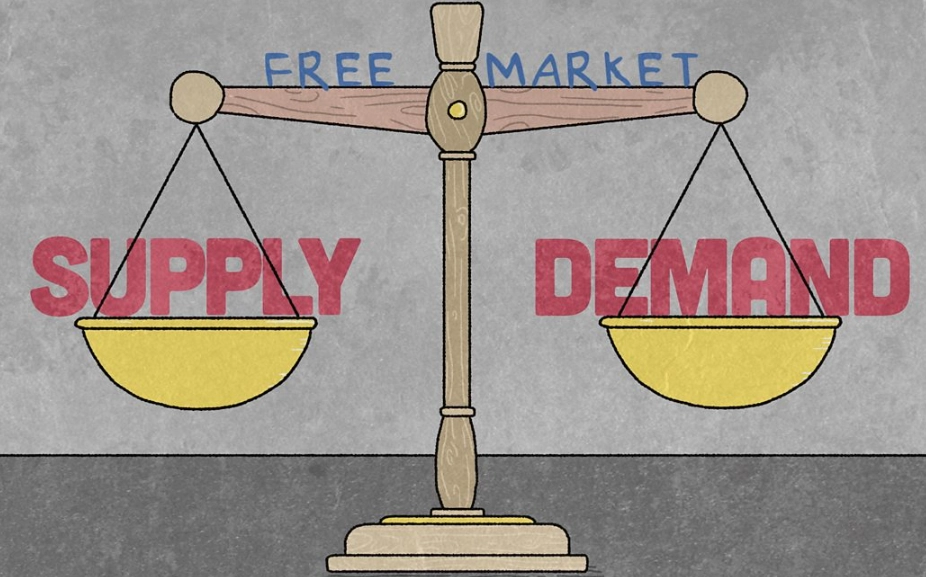
Prices as Messengers
In a free market, prices aren't just numbers on a tag. They're information. A soaring price for lithium tells miners and battery makers, "The world needs more of this!" A plummeting price for DVD players screams, "This technology is becoming obsolete; shift your resources!" This price mechanism coordinates the actions of millions of strangers across the globe more efficiently than any central planner ever could. It's a real-time feedback loop. When gas prices spike, some people start carpooling, others look at electric vehicles, and oil companies might explore more expensive drilling sites. The market adjusts.
The Good, The Bad, and The Complicated: Weighing It Up
Let's be honest, no system is perfect. The free market economy has some powerful advantages, but it also comes with significant trade-offs and problems that its most ardent cheerleaders sometimes gloss over. A balanced look is crucial.
The Upsides (Where It Shines)
- Efficiency & Innovation: This is its superpower. The profit motive is a relentless driver. Companies and individuals are constantly looking for ways to do things cheaper, faster, and better to gain an edge. This has given us everything from smartphones to life-saving medicines. The pace of change in a competitive free market is breathtaking.
- Consumer Sovereignty: You, the buyer, have the ultimate power. You vote with your wallet every day. Businesses that fail to provide what people want, at a price they're willing to pay, go under. This forces producers to be incredibly responsive to consumer desires.
- Economic Growth & Wealth Creation: By channeling resources into their most valued uses (as signaled by prices), free markets have historically generated immense wealth and raised living standards on a massive scale. Look at the economic transformation of countries that have embraced market-oriented reforms.
- Personal Freedom & Responsibility: It's tied to a broader philosophy of individual liberty. You have the freedom to pursue your economic dreams, but you also bear the responsibility for your choices and their consequences.
The Downsides (The Real Problems)
- Inequality: This is the big, ugly elephant in the room. Free markets tend to reward skill, innovation, and capital disproportionately. They don't guarantee a fair starting line or a safety net. Wealth can concentrate, leading to vast gaps between the rich and the poor. This isn't just a moral issue; extreme inequality can destabilize societies and undermine the very system that created it.
- Market Failures: Markets are great at providing private goods (like shoes), but they often fail at providing "public goods" (like clean air, national defense, or basic research) that everyone benefits from but no single person wants to pay for alone. They also struggle with "externalities"—the side effects of transactions that affect third parties. Pollution is the classic example: a factory profits, but the community bears the health and cleanup costs.
- Business Cycles & Instability: The same dynamism that drives growth can lead to bubbles and busts. Periods of irrational exuberance are followed by painful recessions. The 2008 financial crisis was a brutal reminder that unregulated or poorly regulated markets can spin out of control, with devastating human costs.
- Short-Termism: The pressure for quarterly profits can discourage long-term investment in things like worker training, infrastructure, or sustainable environmental practices. What's best for a company's stock price next quarter isn't always what's best for society in 20 years.
Free Market vs. The Alternatives: A Side-by-Side Look
It's impossible to understand a free market economy in a vacuum. Its shape becomes clearer when you hold it up against other ways of organizing economic life. Most real-world economies are hybrids, but the poles of the spectrum are instructive.
| Feature | Free Market Economy (Capitalism) | Centrally Planned Economy (e.g., Socialism/Communism) | Mixed Economy (Most Common Today) |
|---|---|---|---|
| Resource Ownership | Primarily private individuals & firms. | Primarily the state (government). | Mix of private and public (state) ownership. |
| Price Determination | Set by supply and demand in the market. | Set by central government planners. | Mostly market-based, with government regulation/control in key areas (utilities, healthcare). |
| Key Driver | Profit motive & competition. | Fulfilling state economic plans & quotas. | Mix of profit motive and social welfare goals. |
| Consumer Choice | High. Wide variety of goods/services. | Limited. Often scarcity and long queues for basic goods. | Generally high, but may be limited in government-run sectors. |
| Income Distribution | Can be highly unequal, based on market outcomes. | Aimed at being more equal, but often leads to shortages and black markets. | Moderated by taxes and social welfare programs to reduce inequality. |
| Innovation & Efficiency | Typically very high due to competition. | Often low due to lack of competition and price signals. | Varies; can be high in competitive sectors, lower in monopolized or heavily regulated ones. |
| Real-World Example | 19th-century USA (closer to pure), modern Hong Kong. | Soviet Union (historical), North Korea. | United States, Canada, Germany, Sweden, etc. |
The table makes it obvious, I think. The pure forms are mostly theoretical. The 20th century was a giant experiment in central planning, and its record on delivering prosperity and freedom is, frankly, poor. But the purely unregulated free market also has a track record of brutal working conditions, monopolies, and environmental degradation—think of the early Industrial Revolution. That's why almost every successful modern nation uses a mixed economy. They harness the power of the free market but use government to address its failures: providing a safety net, regulating pollution, breaking up monopolies, and funding public goods. The debate is never really "market vs. state" anymore. It's about where you draw the line between them.
Busting Some Common Myths About Free Markets
Myth: A free market economy means no rules and no government.
Fact: This is a huge misconception. A functioning free market requires strong, clear rules enforced by a government. You need laws against fraud, enforcement of contracts, protection of property rights, and standards for weights and measures. Imagine a market where anyone could sell poisoned food or counterfeit money with no legal consequence—it would collapse instantly. The question is the type and extent of regulation, not its absence. Organizations like the International Monetary Fund (IMF) often discuss the importance of sound institutions for market economies to thrive.
Myth: Free markets always lead to monopolies that crush competition.
Fact: It's a real risk, but not an inevitability. While successful companies can grow dominant, the free market's own forces of innovation and entrepreneurship often disrupt monopolies (think of how Netflix disrupted Blockbuster, or digital cameras disrupted film). However, this process isn't automatic or guaranteed. That's why most mixed economies have antitrust laws (like those enforced by the U.S. Department of Justice) to prevent companies from using unfair tactics to squash competition and maintain a monopoly. A healthy free market economy needs vigilant protection of the competitive process itself.
Myth: Free market outcomes are always "fair."
Fact: Markets are amoral. They are mechanisms for allocating resources based on willingness and ability to pay, not on any abstract notion of fairness or need. Is it "fair" that a brilliant app developer becomes a billionaire while a dedicated nurse struggles with student debt? The market doesn't care. It simply reflects what people are willing to pay for at a given time. Deciding what's fair and addressing unfair outcomes is a job for society, often acting through its political and governmental systems—that's the realm of social policy, not market mechanics.
Free Markets in the Real World: The Digital Age and Global Challenges
The classic model of a free market economy is being tested and transformed by new realities. The digital revolution has created markets that look nothing like the textbook examples.
Take tech platforms. Companies like Google, Amazon, and Meta operate in markets with powerful "network effects"—the service becomes more valuable the more people use it. This can lead to natural monopolies or oligopolies that are incredibly hard to challenge. The product (your data and attention) is often "free" to the user, which completely scrambles traditional price signals. How do you regulate that? How do you ensure competition in a space where the winner often takes most? These are unanswered questions that traditional free market theory struggles with.
Then there's globalization. A truly global free market economy means capital and goods flow freely across borders, but labor often does not. This creates complex winners and losers. A factory worker in Michigan might compete directly with a worker in Vietnam, but they can't move to where the new jobs are being created with the same ease that a company can move its factory. This puts downward pressure on wages in some sectors and contributes to political backlash against free trade agreements. Research from institutions like the World Bank details both the aggregate growth benefits and the disruptive distributional effects of globalized markets.
And we can't ignore climate change. The free market, left to its own devices, has massively failed to price in the negative externality of carbon emissions. The cost of pollution has been borne by society, not the polluters. Fixing this requires deliberate, collective action—like carbon taxes or cap-and-trade systems—to "correct" the market signal. It's a prime example of where government intervention is necessary to make the market account for its true social costs.
Your Questions Answered: Free Market Economy FAQ
Does a free market economy inevitably lead to boom and bust cycles?
It has a strong tendency in that direction, yes. The dynamism and animal spirits that drive growth can also fuel speculative bubbles (in housing, tech stocks, etc.). When the bubble pops, the crash can be severe. However, modern mixed economies use monetary policy (controlled by central banks like the Federal Reserve) and fiscal policy (government spending and taxes) to try to smooth out the worst of these cycles—to cool down an overheating economy and stimulate a slumping one. They can't prevent cycles entirely, but they aim to mitigate their severity.
Can a free market provide adequate healthcare and education?
This is one of the fiercest debates. Pure free-marketeers argue yes, that competition would drive down costs and improve quality. Critics point out that healthcare and education are not typical commodities. In a health crisis, you can't shop around for the best deal. Information asymmetry is huge (the doctor knows more than the patient). For basic education, society has a vested interest in an educated citizenry, regardless of their parents' income. Because of these unique characteristics, almost every developed country—even those with strong free market traditions like the US—has heavy government involvement in these sectors, through public funding, regulation, or direct provision. It's a clear area where the pure free market model is seen as inadequate by most societies.
What's the difference between a free market and capitalism?
They're closely linked but not identical. Capitalism refers to an economic system based on private ownership of the "means of production" (factories, tools, capital). A free market economy describes how goods and services are exchanged within that system—via decentralized, competitive markets. You could theoretically have capitalism with heavily regulated markets (not very free). And you could have free markets with significant worker-owned cooperatives (a different form of ownership). In practice, though, they almost always go together. Modern capitalism relies on market mechanisms to function.
How does the free market handle poverty?
By itself, not very well. A growing free market economy can lift the overall tide, but it doesn't guarantee that every boat will rise. It may even crush some boats. The theory is that growth creates jobs and opportunities, which should reduce poverty over time. And historically, this has happened on a global scale. But the transition can be harsh, and pockets of deep, persistent poverty often remain due to lack of skills, location, discrimination, or bad luck. Addressing poverty directly usually requires redistributive measures outside the pure market mechanism, like progressive taxation, social security, unemployment benefits, and public assistance programs. Data from the U.S. Census Bureau on poverty rates is often analyzed in the context of market performance and social policy.
Is any country a truly "free" market economy?
No. Every country has a mixed economy to some degree. Indexes like the Heritage Foundation's Index of Economic Freedom rank countries based on factors like property rights, government size, regulatory efficiency, and market openness. Even the top-ranked countries (like Singapore or Switzerland) have significant government spending, regulations, and social safety nets. They are just relatively more market-oriented than others. The "free" in free market economy is a relative term, describing a principle of organization, not an absolute state of anarchy.
So, What's the Bottom Line?
Look, the free market economy isn't a religion. It's a tool—a remarkably powerful and productive one for creating wealth and fostering innovation. Its core mechanism of decentralized decision-making through prices and competition is genius at solving complex coordination problems. We'd be foolish to discard it.
But it's also an incomplete tool. It has blind spots—to inequality, to environmental costs, to public goods, to human suffering that isn't reflected in a price tag. Expecting the unfettered market to solve all social problems is like expecting a hammer to fix a leaky pipe.
The real wisdom, in my view, lies in the messy, never-finished work of the mixed economy. It's about harnessing the incredible energy of the free market while building a strong, smart framework around it to channel that energy toward broadly shared prosperity and sustainability. It's about understanding that a healthy free market economy needs more than just entrepreneurs and consumers; it needs an effective government to set fair rules, protect the vulnerable, and invest in the future. The debate shouldn't be about choosing one over the other, but about finding the right, dynamic balance between them. That balance is what ultimately determines the quality of life in any society.
And that's a conversation worth having, with less ideology and more clear-eyed pragmatism.
Reader Comments