You hear it on the news all the time. "The GDP grew by 2.3% this quarter." Politicians brag about it, investors watch it, and it's the go-to scorecard for a nation's economic health. But what is it, really? And more importantly, how do you actually calculate GDP? Most explanations get lost in textbook jargon. I've spent years analyzing economic data, and the truth is, the core idea is simpler than you think. Let's strip away the complexity and get to the heart of how to calculate GDP.
What You'll Learn in This Guide
- What GDP Actually Means (And What It Misses)
- The Expenditure Approach: Adding Up What We Spend
- The Income Approach: Adding Up What We Earn
- The Production Approach: Adding Up What We Make
- A Simple Case Study: Calculating GDP for "Tinyland"
- Common Mistakes and Why GDP Isn't Everything
- Your Burning Questions Answered
What GDP Actually Means (And What It Misses)
Gross Domestic Product (GDP) is the total monetary value of all final goods and services produced within a country's borders in a specific time period. Notice the key words: final, within borders, and specific time.
Why "final" goods? This is the first big stumbling block. If we counted the value of wheat, then the flour, then the bread, we'd be triple-counting. GDP only counts the bread sold to the consumer. The value of the intermediate goods (wheat, flour) is already embedded in the final price. This avoids what economists call "double counting."
Here’s what GDP famously does not include, which is just as important to understand:
- Non-market activities: The value of you cooking dinner at home, mowing your own lawn, or caring for a family member. If you pay a chef, a landscaper, or a nurse, it counts.
- The underground economy: Cash-only transactions, barter, and illegal activities. This can be a massive blind spot.
- Environmental costs or depletion: If a country cuts down all its forests to sell timber, GDP shoots up. The destruction of natural capital isn't subtracted.
- Quality of life or income distribution: A country with soaring GDP could have extreme inequality. The number says nothing about who gets the money.
Knowing these limitations upfront saves you from misinterpreting the headline number later.
The Expenditure Approach: Adding Up What We Spend
This is the most common and intuitive way to calculate GDP. It adds up all the spending on final goods and services in the economy. Think of it as tracking where the money goes. The formula is iconic:
Let's break down each component with real-world examples, not just textbook definitions.
C: Personal Consumption Expenditures
This is all spending by households. It's the biggest chunk, usually 60-70% of GDP in countries like the US.
- Durable goods: Cars, refrigerators, furniture (things that last years).
- Non-durable goods: Food, clothing, gasoline (used up quickly).
- Services: This is the giant one—rent, healthcare, education, haircuts, Netflix subscriptions, banking fees.
If you buy a new phone for $1,000, that's +$1,000 to GDP under "C."
I: Gross Private Domestic Investment
This is business spending on future production. It's the economy's engine for growth.
- Business fixed investment: Companies buying machinery, building new factories, buying software.
- Change in private inventories: This is subtle. If a car company produces 100 cars this quarter but only sells 80, the 20 unsold cars are added to inventory. They represent produced value, so they increase GDP. If they sell from inventory next quarter, it doesn't add to GDP then (it was already counted).
- Residential investment: Building new houses or apartment buildings. Note: Buying an existing house doesn't count—it's just an exchange of an existing asset.
G: Government Consumption Expenditure and Gross Investment
Spending by all government levels on goods, services, and infrastructure. This includes salaries for public servants, military equipment, and building roads.
Critical distinction: It does NOT include "transfer payments" like Social Security, unemployment benefits, or stimulus checks. Why? Because no new good or service is produced in exchange for that money. It's just a redistribution of existing income. When the recipient spends that money (on C), it gets counted then.
(X - M): Net Exports
Exports (X) minus Imports (M). Goods and services produced here but sold abroad (exports) add to our GDP. Goods and services produced abroad but bought here (imports) subtract from our GDP, because the spending (C, I, or G) was on foreign production.
If the US imports more than it exports (a trade deficit), (X - M) is negative, which pulls down the GDP total. This isn't inherently bad—it's just an accounting reality.
The Income Approach: Adding Up What We Earn
Every dollar spent on a final good (the expenditure side) becomes someone's income. This approach flips the perspective and adds up all the income generated by production within the borders. The logic should give you the same GDP number.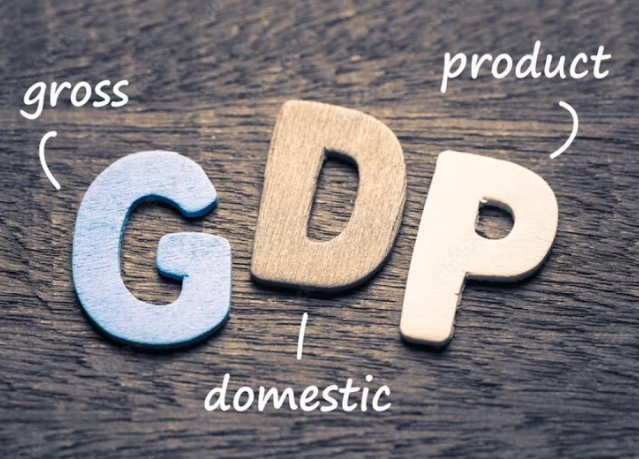
The core formula here is:
Let's translate that from bureaucrat-speak.
- Compensation of Employees: Wages, salaries, and benefits (like employer-paid health insurance).
- Gross Operating Surplus: This is basically corporate profits (before tax) plus depreciation. It's the income accruing to capital.
- Gross Mixed Income: The income of unincorporated businesses (like your local family-owned restaurant or a freelance consultant). It's "mixed" because it's the owner's labor and capital income combined.
- Taxes on Production and Imports: Sales taxes, property taxes, import tariffs. These are income for the government from production.
- Less Subsidies: Government payments to businesses (e.g., farm subsidies) are subtracted because they are not earned from selling goods.
A common mistake is to think "National Income" equals GDP. It doesn't. You must add back depreciation (the wearing out of machines and buildings) and those indirect taxes minus subsidies to get from income to the gross domestic product.
The Production Approach (Value-Added Method)
This method calculates GDP by adding up the value added at each stage of production for all industries. It directly tackles the double-counting problem head-on.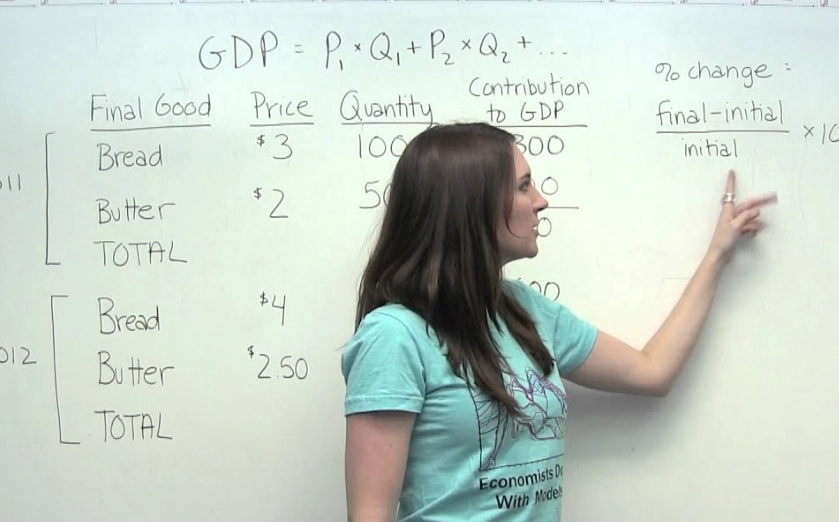
Value Added = Sales Revenue - Cost of Intermediate Goods
| Production Stage | Seller | Buyer | Sale Price | Value Added |
|---|---|---|---|---|
| Wheat | Farmer | Miller | $1.00 | $1.00 |
| Flour | Miller | Baker | $1.50 | $0.50 ($1.50 - $1.00) |
| Bread | Baker | Consumer | $2.50 | $1.00 ($2.50 - $1.50) |
| Total Value Added (GDP) | $2.50 | |||
See? The sum of the value added ($1.00 + $0.50 + $1.00) equals the final sale price of the bread ($2.50). This method is data-intensive, as it requires surveying every industry, which is why statistical agencies like the U.S. Bureau of Economic Analysis use it to cross-check the other methods.
A Simple Case Study: Calculating GDP for "Tinyland"
Let's apply the expenditure approach to a fictional island economy in one year. This makes the theory concrete.
Scenario:
- Households spent $65,000 on local goods and services (C).
- A business built a new workshop for $15,000 and added $5,000 worth of unsold crafts to its inventory (I = $20,000).
- The island government paid its lighthouse keeper $10,000 and built a new dock for $5,000 (G = $15,000). It also gave $2,000 in welfare payments (NOT included in G).
- Tinyland sold $8,000 worth of handmade boats to tourists from other islands (X).
- Tinyland households and businesses imported $7,000 worth of tools and coffee (M).
Now, let's calculate:
GDP = $65,000 + $20,000 + $15,000 + ($8,000 - $7,000)
GDP = $65,000 + $20,000 + $15,000 + $1,000
GDP = $101,000
The $2,000 welfare payment? When the recipient spends it, it will be part of "C" in the quarter they spend it. The inventory change? It's production that happened but wasn't sold yet, so it's included. This simple example shows how all the pieces fit together.
Common Mistakes and Why GDP Isn't Everything
After years of looking at this data, here's where most people—even analysts—slip up.
1. Confusing GDP with stock market performance. They can diverge for years. The stock market reflects expectations of future profits of publicly traded companies (which can be global). GDP measures current domestic production. Japan in the 1990s had stagnant GDP but a crashing stock market. The US in the early 2000s had rising GDP with a flat market.
2. Overreacting to a single quarterly report. GDP data is heavily revised. The initial "advance" estimate is based on incomplete data. It can be revised significantly two months later. Always look at the trend.
3. Forgetting about population. A 3% GDP growth is great. But if your population grew by 3.5%, the average person is actually worse off. That's why GDP per capita is a much better measure of living standards.
4. Ignoring "real" vs. "nominal" GDP. This is the big one. Nominal GDP uses current prices. If prices double and output stays the same, nominal GDP doubles—but nothing real changed. Real GDP adjusts for inflation, using the prices from a base year. It measures actual changes in the volume of goods and services. When people say "the economy grew," they mean real GDP growth. Organizations like the International Monetary Fund always emphasize real GDP in their global assessments.
Reader Comments