In This Guide
- How Does a Ponzi Scheme Actually Work? The Nuts and Bolts
- Ponzi Scheme vs. Pyramid Scheme: What's the Real Difference?
- The Top Red Flags: How to Spot a Ponzi Scheme Before You Invest
- Famous Examples: The Ponzi Scheme Meaning in Real Life
- The Aftermath: Legal Consequences and Recovery (The Hard Part)
- Protecting Yourself: Action Steps Beyond Knowing the Meaning
Let's cut through the jargon. When someone searches for the ponzi scheme meaning, they're not usually looking for a dry, textbook definition. They're worried. They've probably heard a scary story, seen a headline about someone losing their life savings, or maybe even been approached with an "investment opportunity" that sounds a bit too good to be true. I get it. The world of finance is confusing enough without adding deliberate deception into the mix.
So, here's the deal. I'm going to explain exactly what a Ponzi scheme is, in plain English. No fluff, no complex economic theories. Just a straightforward breakdown of how this old-school scam works, why it still tricks people today, and—most importantly—how you can spot one from a mile away. Because understanding the true meaning of a Ponzi scheme is your first and best line of defense.
How Does a Ponzi Scheme Actually Work? The Nuts and Bolts
Imagine you're pouring water into a bucket that has a giant hole at the bottom. To keep the water level up, you need to pour water in faster than it drains out. That's a Ponzi scheme. The "water" is new investors' money, and the "hole" is the payments being made to earlier investors. There's no real profit-making activity—just a constant, desperate need for fresh cash.
The process usually follows a painfully predictable cycle:
The Hook: The scammer, often a charismatic and seemingly trustworthy figure, promotes a "can't-miss" opportunity. They'll talk about exclusive access to secret forex strategies, revolutionary crypto trades, or private real estate deals. The promised returns are consistently high—think 10-20% per month, or 100% per year. They'll downplay the risk, saying things like "it's practically guaranteed" or "we've never had a down month."
The Illusion: The first wave of investors puts in money. The scammer uses some of the money from the second wave to pay the promised returns to the first wave. Those early investors get their checks, see the profits in their account statements (which are completely fake, by the way), and they're thrilled. They become the scam's best advertisers, telling friends and family about this amazing investment.
The Growth & Greed Phase: Word spreads. More money pours in from new investors, lured by the success stories and the fear of missing out (FOMO). The scammer lives lavishly, using the money for luxury cars and homes, which further convinces people of his "success." The paperwork gets more sophisticated—fake audits, glossy brochures, a professional-looking website.
The Cracks Appear: The need for new cash becomes insatiable. The scammer might start offering even higher returns to attract money, or pressure existing investors to "reinvest" their profits. Sometimes, investors who want to withdraw a large sum are given the runaround—delays, excuses about "liquidity events," or even accusations of being disloyal.
The Collapse: It's mathematical. Eventually, the scheme can't recruit new investors fast enough to cover the withdrawals. A major investor pulls out, the economy dips and people get nervous, or a regulator starts asking questions. The flow of new money stops. The scammer disappears or announces massive, unexpected "losses." The house of cards falls, and the vast majority of investors are left with nothing but worthless account statements.
Ponzi Scheme vs. Pyramid Scheme: What's the Real Difference?
People mix these up all the time. I did too, before I dug into it. Both are scams, but their structures are different, and understanding this can help you identify what you're dealing with.
In a Ponzi scheme, the focus is on the investment. You give your money to a central operator (the scammer) who claims to be investing it in something. You're promised returns based on that fictional investment's performance. You're not usually required to recruit others, though you might be encouraged to. The central lie is about the nature of the underlying business.
In a pyramid scheme, the focus is on recruitment. You pay money to join, and your way to earn is primarily by recruiting other people below you, who then pay to join. There might be a token product involved (like cheap vitamins or motivational tapes), but it's just a front. The money comes from the entrance fees of new recruits, not from selling products. The central lie is that you can make money from recruitment alone.
The line can blur. Many modern scams are hybrids. But the key question is this: Where is the money actually coming from? If the answer seems to be "from new people joining" rather than from a legitimate business selling goods or services, run.
| Feature | Ponzi Scheme | Pyramid Scheme |
|---|---|---|
| Primary Mechanism | Fake investment operation | Recruitment of new members |
| Source of Payouts | Money from newer investors | Money from new recruits' entry fees |
| Core Lie | "We have a secret, profitable investment strategy." | "You can get rich by building a team underneath you." |
| Product/Service | Often none, or a complex financial product as a cover | Often a low-value product used as a legal fig leaf |
| Structure | Centralized. All money flows to/from the operator. | Decentralized, multi-level. Money flows up the chain. |
The Top Red Flags: How to Spot a Ponzi Scheme Before You Invest
This is the part you really need. Knowing the ponzi scheme meaning is theory. Spotting one is practice. Here are the glaring warning signs, based on how every major scheme in history has operated.
Unrealistic and Consistent Returns
This is the number one sign. The market goes up and down. Legitimate investments have good years and bad years. If someone is promising you high returns (like 10% or more annually) with no volatility, your scam detector should be screaming. I don't care how smart they claim to be; consistently high returns in any market condition are a fantasy, and in finance, fantasies are usually someone lying to you.
Secretive or Complex Strategies
"It's proprietary." "It's too complex to explain." "You just have to trust me." These are massive red flags. A legitimate investment professional can and will explain the general premise of how they aim to make money in terms you can understand. If they're using a blizzard of jargon to confuse you or refusing to provide clear details, they are likely hiding the fact that there is no real strategy.
Pressure to Act Fast and Exclusive Offers
Scammers create artificial scarcity. "This offer is only open for the next 48 hours." "I can only take a few more clients." They use high-pressure sales tactics to short-circuit your critical thinking. Legitimate investments don't disappear if you take a week to do your homework. Taking your time is your right.
Issues with Paperwork and Payments
Be wary of difficulty receiving payments, even small ones. Excuses about "administrative delays" or being encouraged to reinvest all profits are classic signs. Also, watch for account statements that look homemade or come from an unknown third party. Check if the firm and individual are properly registered with regulators. In the U.S., you can verify an investment adviser on the SEC's Investment Adviser Public Disclosure website and check a broker on FINRA's BrokerCheck.
Let me be blunt. If you see even two of these red flags together, walk away. No investment is worth that risk.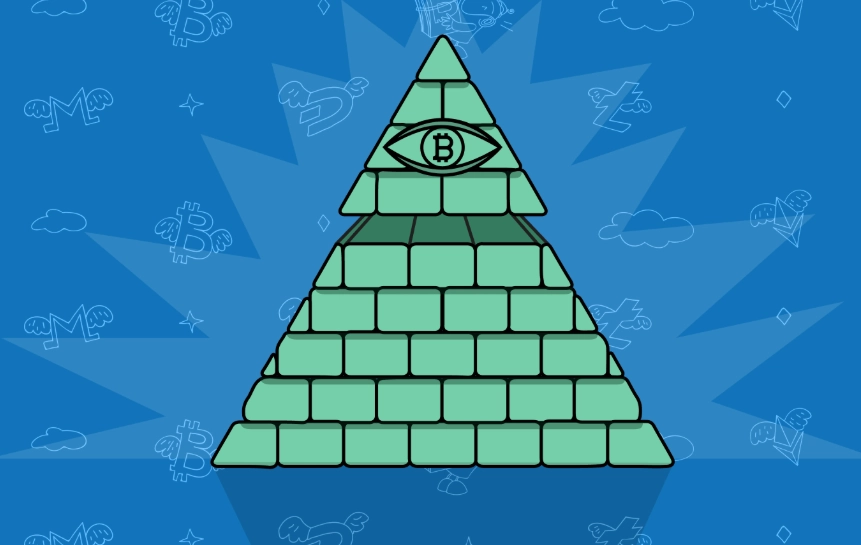
Famous Examples: The Ponzi Scheme Meaning in Real Life
History is the best teacher. Looking at real cases cements our understanding of the meaning of Ponzi schemes.
Charles Ponzi (1920): The namesake. He promised 50% returns in 45 days by exploiting differences in international reply coupons for postage stamps. There was a tiny kernel of a real idea, but it was utterly unworkable at the scale he promised. He was paying old investors with money from new ones within months. His scheme collapsed in less than a year, ruining thousands.
Bernie Madoff (2008): The big one. For decades, Bernie Madoff ran the largest Ponzi scheme in history, estimated at $64.8 billion. He was a former chairman of NASDAQ, which gave him immense credibility. He promised steady, moderate returns (around 10% annually) using a "split-strike conversion" strategy he refused to explain. He cultivated an aura of exclusivity—getting in was a privilege. The 2008 financial crisis triggered withdrawal requests he couldn't meet, exposing the fraud. The scale and duration of his scam shattered trust in the entire financial system. The U.S. Department of Justice's summary of the case is a sobering read on the consequences.
Allen Stanford (2009): Another massive one. He sold billions in fraudulent Certificates of Deposit (CDs) through his offshore Stanford International Bank, promising improbably high and fixed interest rates. He used the money to fund a lavish lifestyle and various loss-making businesses. His scheme unraveled shortly after Madoff's.
These cases show that the core ponzi scheme meaning never changes—only the packaging does. In the 1920s it was postal coupons; in the 2000s, it was complex financial instruments.
The Aftermath: Legal Consequences and Recovery (The Hard Part)
What happens after the collapse? It's messy. The scammer is usually prosecuted for crimes like wire fraud, securities fraud, and money laundering. Prison sentences are long—Madoff got 150 years. But for victims, the legal process is just the beginning of a painful journey to recover cents on the dollar.
A court-appointed trustee will try to "claw back" money to distribute to all victims fairly. This means even if you were an early investor who made a profit and withdrew it, the trustee can sue you to return those "fictitious profits" so they can be shared with those who lost their principal. It's a brutal but necessary process for equity.
Recovery rates are often dismally low—sometimes 10% or less of the original investment, and it can take a decade or more. This is why prevention is infinitely better than hoping for recovery. The SEC's guide on Ponzi schemes has resources for victims, but the information is stark.
Honestly, the legal aftermath is a nightmare for everyone involved except the lawyers. It's a drawn-out, expensive process that adds insult to injury.
Protecting Yourself: Action Steps Beyond Knowing the Meaning
So you know the ponzi scheme meaning. What now? Turn that knowledge into action.
Verify, Verify, Verify: Before giving anyone a single dollar, check their credentials. Use the SEC and FINRA tools mentioned above. Search the person's name and the company name along with words like "scam," "complaint," or "lawsuit." A clean search doesn't guarantee safety, but a bad one is a sure stop sign.
Understand the Investment: If you can't understand how the money is being made, you shouldn't invest. Period. Don't be embarrassed to ask simple questions. A good advisor welcomes them.
Question Consistency: Ask to see audited financial statements from a reputable, independent accounting firm. Madoff used a tiny, unknown firm for his "audits." Be deeply suspicious of any investment that has never had a down period.
Slow Down: Reject any pressure to invest immediately. A legitimate opportunity will still be there next week. Use that time to do independent research.
Diversify: This is the golden rule of all investing. Never put all your money in one place, no matter how good it looks. A Ponzi scheme can only wipe you out if you let it hold all your assets.

Common Questions About the Ponzi Scheme Meaning
Let's tackle some specific questions that pop up when people are digging into this topic.
Are Ponzi schemes illegal everywhere?
Absolutely. They are a form of fraud, which is illegal in every country with a functioning legal system. The specific charges may vary (securities fraud, wire fraud, obtaining money under false pretenses), but the activity is universally criminal.
Can cryptocurrency be a Ponzi scheme?
Cryptocurrency itself is a technology, not a scam. However, the anonymity and hype around crypto have made it a perfect breeding ground for Ponzi schemes. Countless "investment platforms" and "yield farming programs" promising guaranteed daily returns have turned out to be pure Ponzis. The rule remains the same: if a crypto project promises high, guaranteed returns from unclear sources, it's highly likely you're looking at a scam. The SEC's Investor Alert on Crypto Asset Scams is an essential read.
What should I do if I think I'm in one?
Stop investing more money immediately. Do not confront the operator, as they may destroy evidence. Gather all your documents—account statements, emails, contracts, bank records. Report it to authorities: in the U.S., file a complaint with the SEC and the FTC. Consult with a lawyer who specializes in securities fraud or financial litigation. Acting quickly can help regulators freeze assets and improve the chances, however slim, of some recovery.
How is this different from a multi-level marketing (MLM) company?
This is a hot-button issue. Legitimate MLMs focus on selling actual products or services to real customers outside the distributor network. Income should primarily come from those retail sales, not from recruiting. However, many MLMs blur the line by heavily emphasizing recruitment and requiring large upfront purchases of inventory (which can sit in a garage unsold). The key is to look at the money flow. If the company's policies encourage recruiting over selling, and if distributors mainly make money from the people they recruit rather than from product sales to end-users, it may be an illegal pyramid scheme masquerading as an MLM. It's a gray area that requires careful scrutiny.
Look, the financial world can feel like a minefield. But you don't need a finance degree to stay safe. You just need a clear understanding of the ponzi scheme meaning and the courage to say "no" when your gut tells you something is off. Protect your money like you'd protect anything else valuable in your life—with caution, research, and a dose of healthy doubt. It's the least exciting part of investing, but it's the part that lets you sleep soundly at night.
And that's really what it's all about, isn't it?
Reader Comments