Let's be honest. You probably learned the percentage change formula in school. You might even use it now and then. But if you're like most people I've coached over the years, you hit the calculation, get a number, and then a tiny voice whispers... "am I reading this right?" That doubt is the real problem. Calculating the change is the easy part. Understanding what it means for your business, your investment, or your project report—that's where the value is, and that's where most guides fall short.
I remember early in my career, presenting a 200% increase in website traffic. My boss just stared. "A 200% increase from what? From 5 visitors to 15?" He was right. The raw percentage, without context, was borderline meaningless. That lesson stuck. This guide isn't just about the math. It's about developing the instinct to use it correctly and communicate it powerfully.
Quick Navigation: What You'll Learn
Why Getting This Right Actually Matters
Think of percentage change as a universal translator for data. Raw numbers are noisy. Revenue was $125,000 last quarter and $150,000 this quarter. Good? A $25,000 increase sounds nice. But if your competitor, starting from a base of $1 million, also added $25,000, your story is completely different. Your 20% growth dwarfs their 2.5% growth. The percentage change cuts through the noise and creates a fair playing field for comparison.
It's the language of performance. Investors scan for YoY (Year-over-Year) revenue growth percentages. Managers track month-over-month sales percentage changes. Marketers live and die by conversion rate percentage lifts. A misunderstanding here doesn't just cause a math error; it can lead to misallocated budgets, poor strategic decisions, and missed opportunities. I've seen a team chase a "50% improvement" that was actually a rounding error on a tiny base, while ignoring a "10% slip" on their core product that was bleeding millions.
The Bottom Line: Mastering percentage change isn't about passing a test. It's about making better decisions with numbers you already have. It turns data from a static report into a dynamic story.
The Core Formula, Demystified
You subtract the old from the new, divide by the old, and multiply by 100 to get a percentage. Simple. But the devil is in the details of execution.
Here’s the step-by-step breakdown I give to my team:
Step 1: Identify Your Anchor (The Old Value). This is the most critical, and most often messed up, step. Your "old value" is your baseline, your point of comparison. Is it last month? Last year? The control group in an experiment? Be ruthlessly clear. If you're comparing Q2 sales to Q1 sales, Q1 is your old value.
Step 2: Do the Subtraction. New minus Old. This gives you the absolute change. A positive number means an increase; a negative number means a decrease. Don't lose the sign.
Step 3: The Division (This is the "change relative to what?" step). You divide by the old value, not the new one. Dividing by the new value is a classic rookie error that gives you a different, often misleading, metric. This step answers: "How big is this change compared to where we started?"
Step 4: The Conversion to Percentage. Multiply by 100. This is just scaling. 0.2 becomes 20%. It's easier for our brains to grasp "20%" than "0.2".
Let’s apply it. Your social media followers went from 1,000 (Old) to 1,500 (New).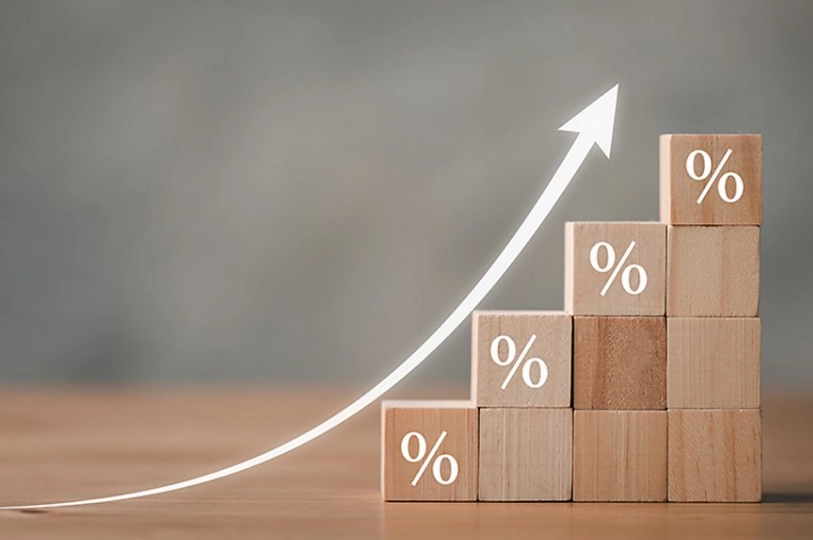
Absolute Change: 1,500 - 1,000 = 500.
Division: 500 / 1,000 = 0.5.
Percentage: 0.5 × 100 = 50% increase.
A Quick Note on Decreases
The formula handles decreases automatically. If followers dropped from 1,500 to 1,000:
(1,000 - 1,500) / 1,500 = (-500) / 1,500 ≈ -0.333.
Multiply by 100: -33.3% (or a 33.3% decrease).
Watch Out: Never say "a -33.3% increase." That's confusing. Say "a 33.3% decrease" or "a change of -33.3%." Clarity is king.
Where You'll Actually Use This (With Examples)
The formula is static. Its applications are everywhere. Let's walk through three concrete scenarios where the interpretation matters as much as the calculation.
Scenario 1: Business & Sales Analysis
You run an e-commerce store. Last November (Black Friday month), you had $80,000 in sales. This November, you hit $110,000.
Calculation: (($110,000 - $80,000) / $80,000) × 100 = 37.5% increase.
Good news, right?
But wait. What was your marketing spend? If last year's spend was $10,000 and this year's was $25,000, your percentage increase in spend was 150%. A 37.5% sales lift for a 150% spend increase might not be so great. This is where you move beyond the single percentage and start calculating things like return on ad spend (ROAS). The percentage change is the starting point for a much deeper conversation.
Scenario 2: Investment Returns
You invest $10,000 in a stock. A year later, it's worth $12,000.
Simple Return: (($12,000 - $10,000) / $10,000) × 100 = 20% return.
This is the most common use. But be careful with time. If that 20% gain happened over 5 years, it's not a 20% annual return. It's a much smaller compounded annual growth rate (CAGR). Always state the time period. "The investment gained 20% over 5 years" is correct. "The investment gained 20%" alone is vague and can be misleading.
Scenario 3: Tracking Performance Metrics (The Dashboard)
This is where automated tools like Excel are essential. Let's say you're tracking weekly website users.
| Week | Users | Weekly Change | Calculation (Example) |
|---|---|---|---|
| Week 1 | 5,000 | — | Baseline |
| Week 2 | 5,800 | +16% | ((5800-5000)/5000)*100 |
| Week 3 | 6,500 | +12.1% | ((6500-5800)/5800)*100 |
| Week 4 | 5,900 | -9.2% | ((5900-6500)/6500)*100 |
See the story? Strong growth in Weeks 2-3, then a drop in Week 4. The percentage changes, calculated correctly against the immediately preceding week (the proper old value for a weekly series), highlight the trend and pinpoint where to investigate. Why the drop in Week 4? A technical error? A competitor's campaign?
The Mistakes Everyone Makes (And How to Avoid Them)
After a decade, you see the same errors on repeat. Here’s your cheat sheet to avoid them.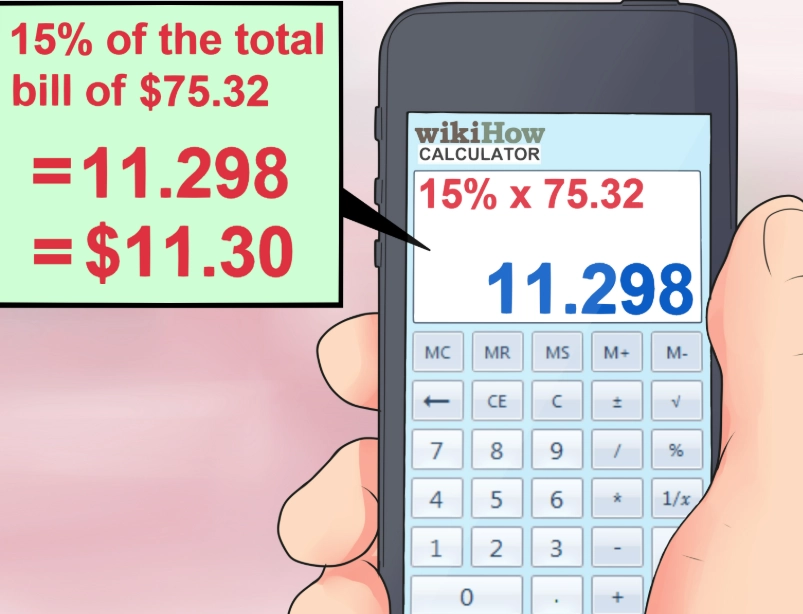
Pitfall 1: The "Dividing by the Wrong Number" Blunder. The single biggest error. You calculate change from Year 1 to Year 2, but then accidentally divide by the Year 2 number when calculating the percentage. This artificially shrinks the percentage increase or exaggerates a decrease. Always divide by the older, original, or baseline value.
Pitfall 2: Ignoring the Base Effect (The "Small Number" Trap). Going from 1 user to 2 users is a 100% increase. Going from 10,000 users to 10,001 users is a 0.01% increase. Both added one user. The percentage change is wildly different because the starting points are wildly different. Always ask: "Is this a big percentage of a small thing, or a small percentage of a big thing?" Contextualize the raw percentage with the absolute numbers.
Pitfall 3: Confusing Percentage Point Change with Percentage Change. This one trips up even seasoned professionals. If your interest rate increases from 5% to 7%, it has increased by 2 percentage points. But the percentage change in the rate is ((7-5)/5)*100 = 40%. In finance and economics, this distinction is crucial. The Federal Reserve raises rates by basis points (hundredths of a percentage point), not by percentages of the old rate.
Pitfall 4: Calculating a Series of Changes Incorrectly. If sales are up 10% one month and another 10% the next month, is the total growth 20%? No. It's compounded. From 100 units: Month 1: 110 units (10% up). Month 2: 121 units (10% up from 110). The total two-month percentage change is ((121-100)/100)*100 = 21%. You can't just add sequential percentage changes.
Handling Tricky Situations
What happens when the old value is zero or negative? The standard formula breaks.
Starting from Zero: You can't divide by zero. If you had $0 in sales last month and $100 this month, the percentage change is undefined. The only honest way to report this is: "Sales increased from $0 to $100" or "We started generating revenue this period." Any percentage you fabricate is meaningless.
Negative to Positive (or Vice Versa): This gets weird. If you had a net loss of $100 (Old = -100) and a net profit of $150 (New = 150), the standard formula gives: ((150 - (-100)) / (-100)) × 100 = (250 / -100) × 100 = -250%. A positive result turning negative? It's nonsense. In these cases, the percentage change metric loses its usefulness. Stick to explaining the absolute shift: "We turned a $100 loss into a $150 profit, a $250 improvement."
Your Specific Questions, Answered
=IFERROR((B2-A2)/A2, "N/A"). And always, always include the raw numbers next to the percentage in your report. A 10,000% increase from 0.01 to 1.01 needs that context to be understood.The goal isn't to be a human calculator. It's to be a savvy interpreter. You now have the formula, the real-world applications, and the list of traps to avoid. The next time you see a percentage change—in a news article, a company report, or your own spreadsheet—pause. Ask the three key questions: Change from what? Is the base large or small? What story does this number tell when combined with other data? That's the mark of someone who truly understands the numbers, not just calculates them.
Reader Comments