Let's cut to the chase. Interest isn't some abstract economic concept you learned in school and forgot. It's the most powerful, silent force acting on every dollar in your bank account, your investment portfolio, and your credit card statement. Understanding what interest is, and more importantly, how it works, is the single most important piece of financial literacy you can possess. It's the difference between watching your savings grow on autopilot and feeling like you're running on a treadmill trying to pay off debt.
At its absolute core, interest is the price of using money. Think of it as rent. If you borrow money (like a loan), you pay rent (interest) to the lender for the privilege of using their cash. If you lend money (by putting it in a savings account), you charge rent (interest) to the bank for using your cash. That's the fundamental exchange.
But here's where most explanations stop, and where most people get tripped up. The real magic—and the real danger—lies in the mechanics and the time. A tiny difference in the rate or how it's calculated can mean gaining or losing tens of thousands of dollars over a decade. I've seen people meticulously budget their groceries but completely ignore the 22% APR on their store card, effectively wiping out any savings they scrounge. Let's break it down so you're never one of them.
Your Quick Navigation Map
How Does Interest Actually Work?
You need to visualize two parties: a lender and a borrower. The deal always involves three key numbers:
- Principal: The original amount of money borrowed or invested.
- Interest Rate: The percentage charged on the principal, usually expressed per year (Annual Percentage Rate, or APR).
- Time: The length of the loan or investment period.
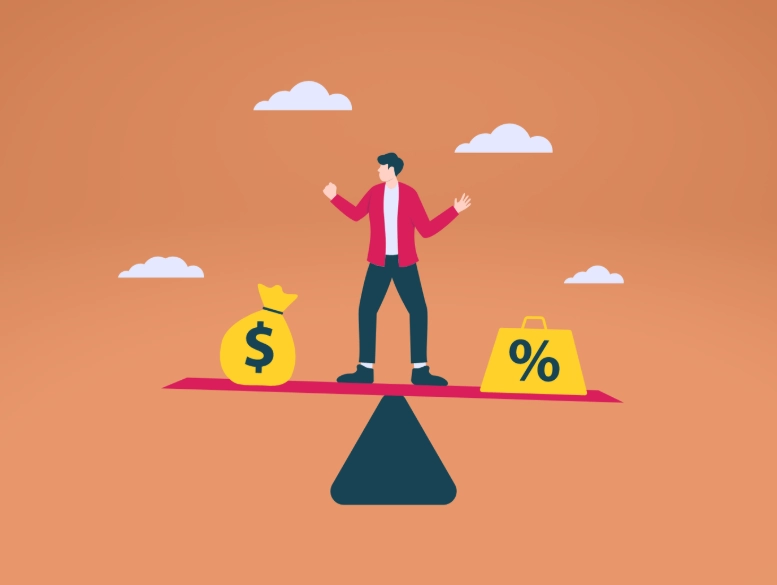
The basic formula is: Interest = Principal x Rate x Time.
Example: You deposit $1,000 (Principal) into a savings account with a 5% annual interest rate (Rate) for 1 year (Time). Using simple interest, you'd earn $1,000 x 0.05 x 1 = $50 in interest.
Seems straightforward, right? This is where the first major pitfall appears. Almost no financial product in the modern world uses simple interest for long-term holdings. They use compound interest. If that account compounded annually, you'd still get $50 in year one. But in year two, you'd earn interest on $1,050, not $1,000. That small shift changes everything.
A Non-Consensus Point Most Guides Miss: People fixate on the rate but ignore the compounding frequency. A 5% rate compounded monthly will grow your money faster than a 5% rate compounded annually. Always check if an account compounds daily, monthly, or annually. For debt, this is a nightmare—your balance can balloon if compounding is frequent. For savings, it's a quiet superpower.
Simple vs. Compound Interest: The Engine of Wealth
This is the heart of the matter. Confusing these two is the most common and costly mistake beginners make.
Simple Interest is linear. It's calculated only on the initial principal. It's rare today but sometimes used for short-term personal loans or some auto loans. Your interest cost or earnings are predictable and easy to calculate.
Compound Interest is exponential. It's calculated on the initial principal and on the accumulated interest from previous periods. Albert Einstein supposedly called it the "eighth wonder of the world." He was right. It's the reason retirement accounts can grow so large and why credit card debt can become unmanageable so quickly.
Let's make this painfully clear with a comparison. Suppose you invest $10,000 at a 7% annual return.
| Year | Simple Interest Value | Compound Interest Value | Difference |
|---|---|---|---|
| 1 | $10,700 | $10,700 | $0 |
| 5 | $13,500 | $14,026 | $526 |
| 10 | $17,000 | $19,672 | $2,672 |
| 20 | $24,000 | $38,697 | $14,697 |
| 30 | $31,000 | $76,123 | $45,123 |
See that gap in year 30? That's the power of compounding. The money you earned in years 1-10 starts earning its own money in years 11-30. My biggest financial regret isn't a bad stock pick; it's not starting my first Roth IRA just two years earlier in my 20s. Those two years of missed compounding on a small sum have a surprisingly large long-term cost.
What Factors Determine Your Interest Rate?
Why does a mortgage have a 6% rate while a credit card has 24%? It's not random. Lenders and institutions (like the Federal Reserve) set rates based on a cocktail of factors:
- Central Bank Policy: The U.S. Federal Reserve sets the federal funds rate, the baseline for all other borrowing costs. When the Fed raises rates to fight inflation, savings account yields and loan rates generally go up.

- Inflation: Lenders need to charge a rate that outpaces expected inflation, or they lose purchasing power. If inflation is 3%, a 2% savings account means you're effectively losing 1% per year.
- Credit Risk (For You): This is the big one for personal loans and cards. Your credit score is a direct measure of risk. A low score screams "I might not pay this back," so lenders charge a high rate (a "risk premium") to compensate. A high score gets you the best rates.
- Loan Type & Term: Secured loans (backed by an asset like a house or car) have lower rates than unsecured loans (like credit cards). Longer-term loans usually have higher rates than short-term ones due to increased uncertainty.
- Economic Conditions: In a recession, rates often fall to stimulate borrowing. In a booming economy, they may rise to cool things down.
How Can You Make Interest Work For You?
Knowledge is useless without action. Here’s how to flip interest from a foe to your most loyal ally.
For Savings & Investments:
Start Early, Even With Little. Don't wait for the "perfect" amount. A $200 monthly investment at 7% from age 25 beats a $400 monthly investment starting at age 35. Time is your greatest asset here.
Seek High-Yield, FDIC-Insured Accounts. Ditch the big bank savings account paying 0.01%. Online banks and credit unions offer high-yield savings accounts (HYSA) paying 4-5% APY as of this writing. Your money is just as safe (FDIC/NCUA insured) and works harder. I moved my emergency fund to one years ago and the extra interest now pays for a nice dinner out each year—for doing nothing.
Employ Tax-Advantaged Compounding. Use retirement accounts like 401(k)s and IRAs. The gains compound tax-deferred or tax-free, supercharging the effect. It's compounding without the annual tax drag.
For Debt:
Attack High-Interest Debt First (The Avalanche Method). List your debts by interest rate, highest to lowest. Pay minimums on all, but throw every extra dollar at the top one. Mathematically, this saves the most money on interest. That 24% credit card debt is an emergency—treat it like one.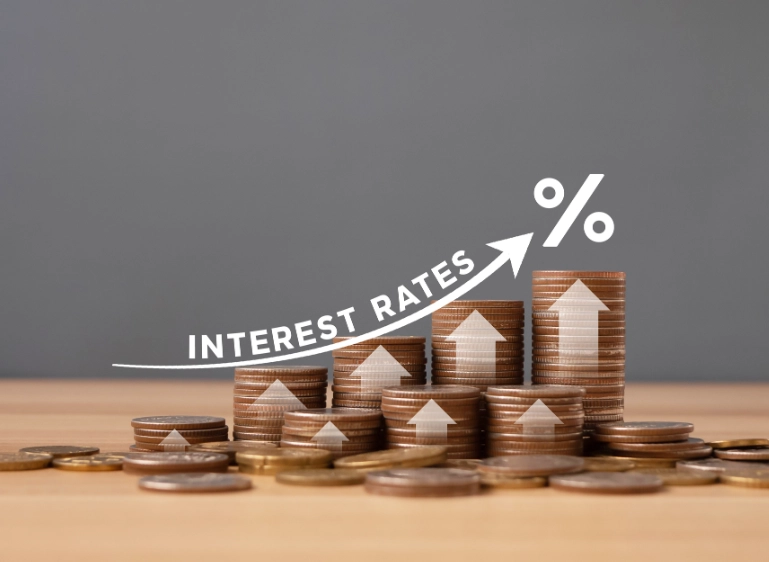
Consider Balance Transfers or Consolidation. If you have good credit, you might qualify for a 0% APR balance transfer card to pause interest for 12-18 months, allowing you to pay down principal faster. Just read the fine print on fees.
Never Just Pay the Minimum. Credit card minimums are designed to keep you in debt for decades, paying mostly interest. It's a trap.
Reader Comments