Let's be honest. Most people think of an organizational structure as that boring box-and-line chart hanging in the HR department or buried in an employee handbook. You glance at it once when you're hired and then forget it exists. But here's the thing most founders and managers miss: that chart, or the lack of one, is silently dictating everything. It decides who gets information, who makes decisions, how projects move forward, and why some teams feel empowered while others are stuck in endless approval loops.
I've worked with companies from 5-person startups to 500-person scale-ups. The single biggest source of internal friction I see isn't a bad product or a weak market. It's a structure that no longer fits how the company actually needs to work. They outgrow their initial, informal setup and the cracks start to show. Projects stall. Decisions take weeks. Good people get frustrated and leave.
Choosing the right organizational model isn't an academic exercise. It's a practical decision about speed, clarity, and accountability. This guide cuts through the textbook definitions. We'll look at the real-world pros, cons, and—most importantly—the hidden pitfalls of each major structure. My goal is to give you a clear framework so you can diagnose your own company's pains and choose a design that fuels growth instead of stifling it.
What’s Inside This Guide
What is an Organizational Structure, Really?
Forget the boxes for a second. Think of your organizational structure as the rules of the road for your company. It answers fundamental questions:
- Who reports to whom? (Formal reporting lines)
- How are tasks and responsibilities grouped together? (Departmentalization)
- Where do decisions get made? (Centralized vs. decentralized authority)
- How does information flow? (Formal and informal communication channels)
It's the framework that turns a group of individuals into a coordinated team. A great structure aligns with your strategy. If your strategy is to innovate rapidly, you need a structure that allows for autonomy and experimentation. If your strategy is operational excellence and cost leadership, you need a structure that emphasizes efficiency and clear control.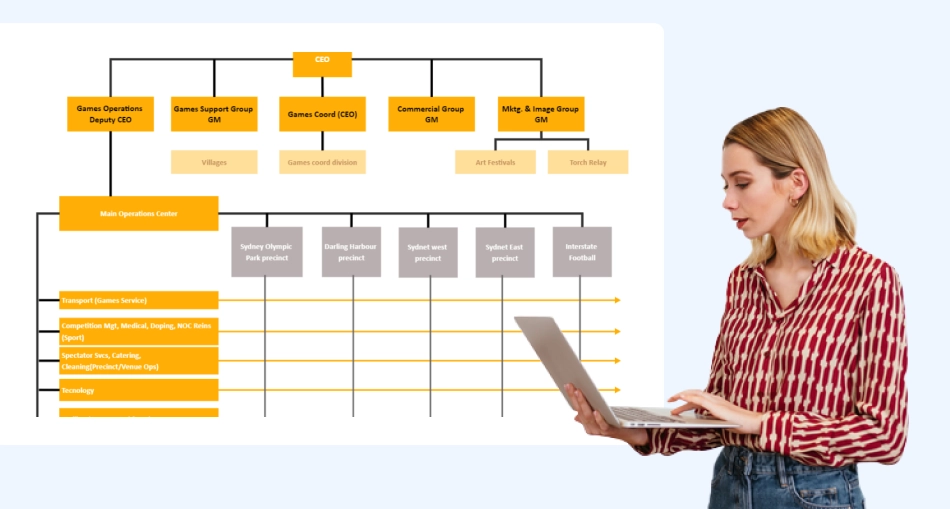
The subtle error many leaders make is copying a structure from a famous company (like Google's former "20% time" or Spotify's "Squads") without understanding the underlying management principles and cultural norms that make it work. The chart is the visible tip of the iceberg. The real substance—the roles, processes, and reward systems—is hidden below the waterline.
The 5 Core Organizational Structure Models (With Real Examples)
Most structures are variations or hybrids of these five. Let's break them down not by textbook definition, but by when they work, when they break, and what they feel like to work inside.
1. The Functional Structure (The Department Silos)
This is the classic. You group people by their specialized function: Marketing, Sales, Engineering, Finance, Customer Support. It's the default for most small to mid-sized businesses that have moved past the pure startup chaos.
When it shines: Early growth phase (20-150 employees). It builds deep expertise, creates clear career paths within functions, and is relatively simple to manage. Resources are pooled efficiently. The head of engineering manages all engineers.
Where it cracks: Cross-functional collaboration becomes a nightmare. The product team (under Engineering) battles with the go-to-market team (under Marketing). Priorities conflict. I've seen companies where launching a simple feature requires 8 meetings across 4 departments, each with their own goals. It creates slow, internal-facing organizations.
Real-world feel: "I need to get approval from three different VPs just to change a button color on the website."
2. The Divisional Structure (The Independent Business Units)
Here, you group people based on the product, customer, or geography they serve. Each division has its own functional teams (its own marketing, sales, engineering). Think of a large conglomerate like Procter & Gamble with separate divisions for Tide, Pampers, and Gillette. Each runs almost like its own company.
When it shines: Large companies with diverse products or markets. It allows each unit to focus intensely on its specific customers and move fast. Accountability is crystal clear—the P&L sits with the division head.
Where it cracks: Massive duplication of effort and cost. Every division needs its own HR, finance, and IT support. Knowledge and talent don't easily flow between divisions. It can become internally competitive and wasteful.
Real-world feel: "Our division nailed its target, but the company overall missed its numbers because two other divisions failed."
3. The Matrix Structure (The Two-Boss Dilemma)
This is the attempt to get the best of both functional and divisional worlds. Employees have two reporting lines: one to a functional manager (e.g., VP of Engineering) and one to a project or product manager. Common in consulting firms, aerospace, and complex product companies.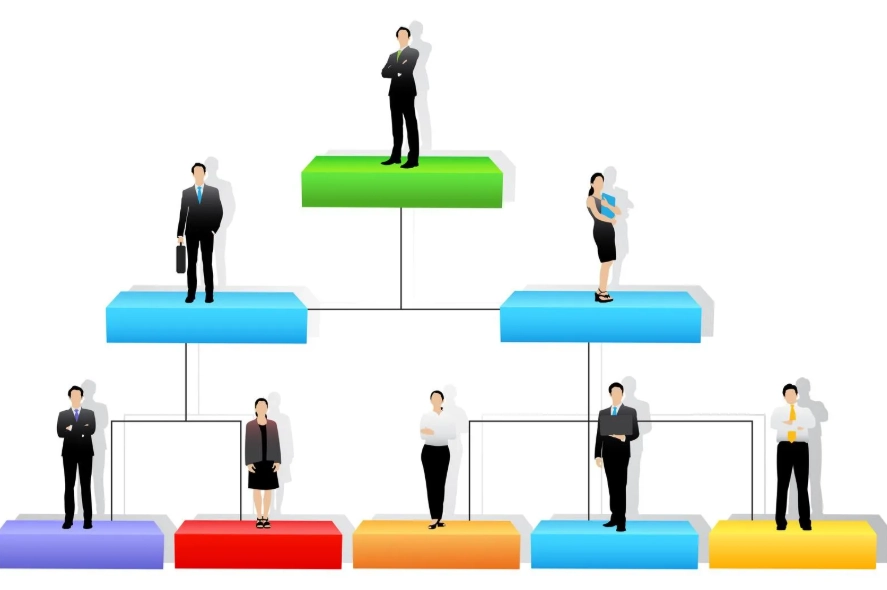
When it shines: For complex projects that require deep expertise from multiple functions. It's designed for flexibility and resource sharing.
Where it cracks: Constantly. It's notoriously difficult to manage. Employees get conflicting priorities from their two bosses. Decision-making gets muddy. It requires exceptionally strong communication and a culture of negotiation. Without that, it leads to confusion and power struggles. Most companies that try a pure matrix end up watering it down.
A non-consensus point here: The matrix fails not because of the structure itself, but because companies implement it without training managers how to share authority. They promote great functional experts into matrix manager roles and are shocked when they act like territorial dictators.
4. The Flat Structure (The Startup Dream)
Few or no levels of middle management. Everyone reports directly to a handful of leaders or even the CEO. Communication is direct, decisions are fast. Common in early-stage startups (under 20-30 people).
When it shines: The very early days. It maximizes agility, transparency, and autonomy. Everyone wears multiple hats.
Where it cracks: It scales horribly. Once you pass 40-50 people, the CEO becomes a massive bottleneck. Career progression is unclear (how do you grow if there's no one to manage?). Lack of clear ownership leads to things falling through the cracks. The promise of autonomy becomes chaos.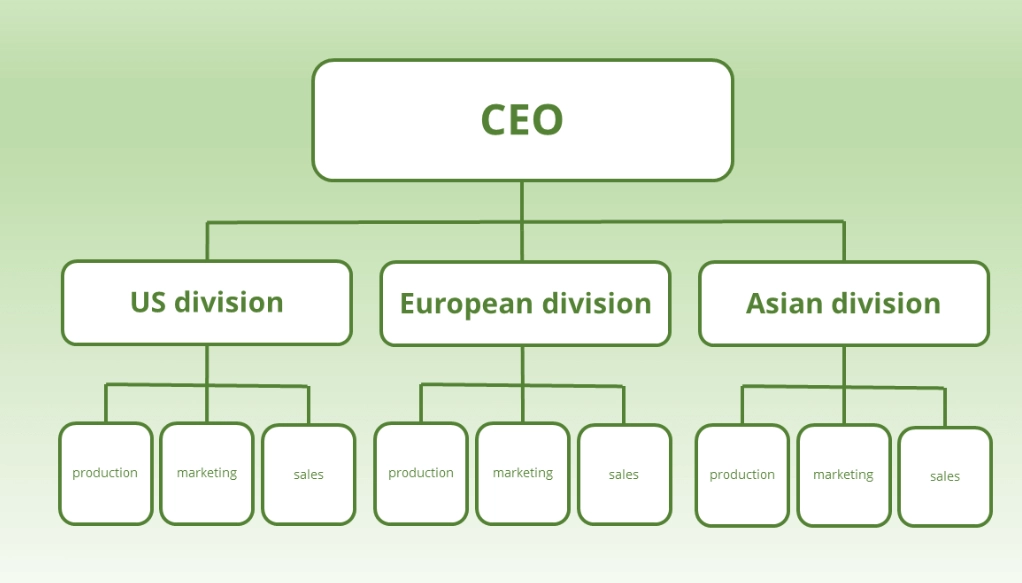
5. The Team-Based (or Network) Structure
Groups of employees (teams, squads, pods) are formed around specific projects, products, or problems. These teams are cross-functional and have a high degree of autonomy. Popularized by tech companies like Spotify (with its Squads, Tribes, Chapters model).
When it shines: For companies in fast-moving, innovative industries where speed and customer focus are paramount. It empowers teams to own outcomes.
Where it cracks: Requires immense cultural maturity. Without strong alignment on overall company vision and strategy, teams can diverge and build incompatible things. It can feel unstable for employees who crave clear, long-term functional homes.
| Structure Model | Best For... | Biggest Risk | Feels Like... |
|---|---|---|---|
| Functional | Building deep expertise, simple scaling to ~150 people | Slow, siloed decision-making | Working in a well-defined department |
| Divisional | Large companies with distinct products/markets | Costly duplication, internal competition | Running your own small business within a big one |
| Matrix | Complex projects needing diverse, shared expertise | Confusion, power struggles, employee burnout | Having two bosses with different agendas |
| Flat | Early-stage startups ( | CEO bottleneck, chaos at scale | A collaborative free-for-all |
| Team-Based | Innovation-driven, adaptive companies | Strategic misalignment, lack of career clarity | Being on a mission-focused SWAT team |
How to Choose the Right Organizational Structure for Your Company
Don't start with the chart. Start with your pain points. Audit what's actually breaking.
Ask your team these questions:
- Where do decisions get stuck? Is it because too many people need to sign off, or because no one knows who should sign off?
- Do we have problems coordinating between departments? (A functional structure issue).
- Are our product teams waiting on shared service teams like IT or Design? (A resource bottleneck issue).
- Are our leaders spending more time managing internal boundaries than serving customers?
Then, match the pain to the structural fix.
Scenario: You're a 60-person SaaS company. Your engineering team builds features the product team requests, but the marketing and sales teams complain the features aren't what customers are asking for. Everything is slow. The functional silos are killing you.
Potential structural shift: Move from a pure functional structure to a hybrid. Create cross-functional "product pods" focused on key customer journeys (e.g., "Onboarding Pod," "Monetization Pod"). Each pod has a product manager, 2-3 engineers, and a marketer. They still report to their functional heads for career development, but their day-to-day work and goals are set by the pod lead. This injects team-based agility into a functional framework.
Remember, structure follows strategy. If your strategy changes, your structure likely needs to evolve. A 2021 report by McKinsey & Company emphasized that organizational agility—the ability to reconfigure strategy, structure, and processes quickly—is a key driver of outperformance.
3 Common Mistakes That Will Cripple Your New Structure
I've seen these kill well-intentioned reorganizations time and again.
Mistake 1: Redrawing the boxes without changing the processes.
You announce a new matrix or team-based model, but you leave the old budgeting, approval, and reporting processes in place. The new structure requires decentralized spending authority, but every purchase still needs CFO approval. It collapses instantly. The processes and rewards must support the new power dynamics.
Mistake 2: Ignoring the "power middle."
In a shift from functional to divisional or team-based, middle managers (functional VPs, directors) often see their power and influence diminish. If you don't actively redefine their value—moving them from resource controllers to talent developers and system architects—they will passively (or actively) sabotage the new model.
Mistake 3: Assuming one-size-fits-all.
Your R&D department might thrive in a team-based, agile model. Your legal and compliance department almost certainly needs a clear, functional hierarchy. Forcing the same structure on every part of the company is a mistake. Hybrid models are not only acceptable, they're often necessary.
Your Burning Structure Questions Answered
We’re a tech startup growing from 10 to 50 people. Should we stay flat or move to a functional structure?
The flat structure is on borrowed time. Around 30 people, the founders will become bottlenecks and important tasks will slip. Start the transition before you hit the crisis. Begin by informally designating "leads" for key functions (Tech Lead, Marketing Lead). Don't make it about titles at first, make it about clear decision rights and accountability. By 50 people, you should have a lightweight functional structure with clear reporting lines. The goal is to move from "everyone reports to the CEO" to "the CEO manages 5-7 functional leads." This preserves some agility while introducing necessary scalability.
How do we know if our matrix structure is causing more problems than it solves?
Listen for these phrases: "I don't know who to ask," "My bosses gave me conflicting deadlines," "We spent the whole meeting deciding who owns that task." Track project cycle times. If they're increasing after implementing the matrix, it's a red flag. Survey employee sentiment on role clarity. Matrix structures require high trust and communication overhead. If your culture is conflict-averse or if middle managers are competitive rather than collaborative, the matrix will amplify those dysfunctions. Often, a clearer hybrid (e.g., solid-line reporting to a product division, dotted-line to a functional center of excellence) works better than a full, two-boss matrix.
What's the first practical step to redesigning our org structure?
Map the current informal structure before you touch the formal one. Figure out who people actually go to for decisions, information, and help. You can do this through anonymous surveys or interviews. Often, the real influencers and decision nodes aren't the ones in the boxes on the official chart. This "network analysis" will show you where your current formal structure is out of sync with reality. It also highlights your true key players—the people you must bring into the redesign process early, or risk failure. The U.S. Small Business Administration has guides on basic organizational design that stress starting with a clear needs assessment, which aligns with this practical approach.
Reader Comments