Quick Guide
- How Does a Regression Model Actually Work? Peeling Back the Layers
- The Regression Family Tree: It's Not Just One Thing
- The Unspoken Rules: Assumptions You Can't Ignore
- Regression in the Real World: Where You've Already Seen It
- Common Pitfalls and How to Dodge Them
- How to Get Started: Your First Regression Analysis
- Frequently Asked Questions (The Stuff You Actually Google)
You've probably heard the term "regression" thrown around in meetings, in data science courses, or maybe in a news article about housing prices. It sounds technical, maybe even a bit intimidating. But here's the thing – the core idea behind a regression definition is surprisingly intuitive once you strip away the jargon. I remember the first time I tried to learn it from a textbook; the formulas looked like hieroglyphics. It wasn't until I thought about it in a real-world context that it clicked.
So, let's skip the confusing part and start with a simple question. Ever tried to guess how long your commute will take based on the time of day? Or predict your final grade based on how much you've studied? You're already thinking like a regression model. At its heart, regression is just a fancy way of figuring out the relationship between things. More specifically, it's a statistical method used to understand and quantify how one variable (the thing you're trying to predict, like commute time) is affected by one or more other variables (the factors you think influence it, like time of day and weather).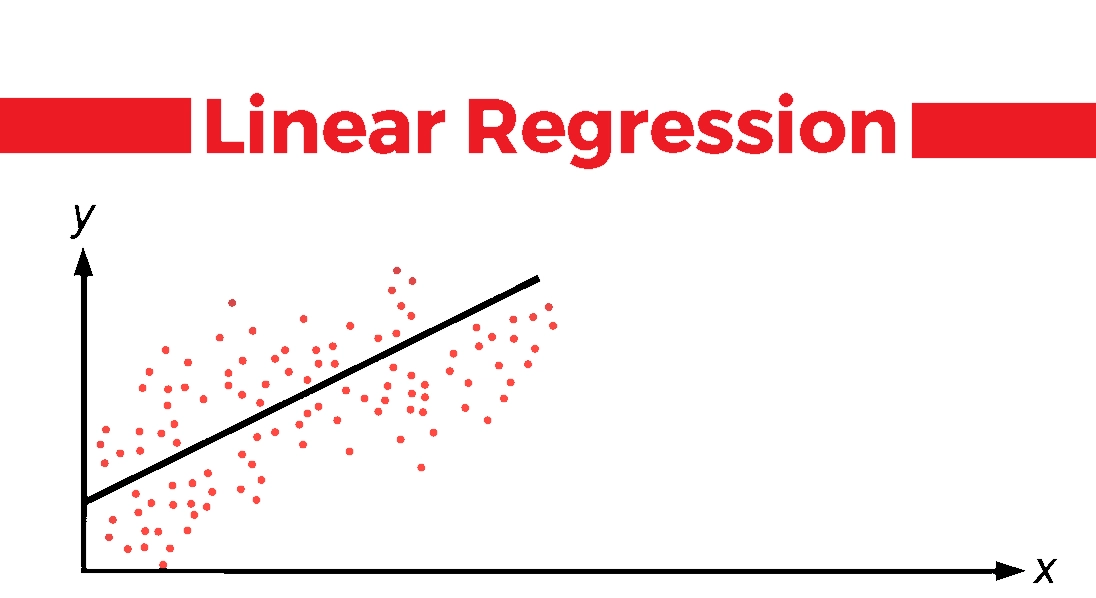
If we were to pin down a formal regression definition, it's this: a set of statistical processes for estimating the relationships between a dependent variable (often called the outcome or target) and one or more independent variables (the predictors or features). The goal is to create a model that can predict the value of the dependent variable based on the values of the independent variables. But that's the textbook version. The practical definition is about making informed guesses.
Think of it like drawing the best-fitting line through a scatter of dots on a graph. That line is your regression model. It doesn't hit every dot perfectly – life is messy – but it gives you the best possible trend. This is the essence of regression analysis. It's not about finding perfect certainty; it's about managing uncertainty with math.
How Does a Regression Model Actually Work? Peeling Back the Layers
Okay, so we know the basic regression definition. But how does it translate from a concept to something a computer can calculate? Let's break down the mechanics without getting lost in the Greek letters.
Imagine you run a coffee shop. You suspect that the outside temperature affects how many iced coffees you sell. On hotter days, you sell more. That's your hypothesis. Regression gives you a tool to test that hypothesis and put a number on it. The model might tell you: "For every 1-degree Celsius increase in temperature, you sell, on average, 5 more iced coffees." That number (5) is a coefficient. It quantifies the relationship.
The process usually involves an algorithm (most famously, Ordinary Least Squares for linear regression) that finds the line (or curve) that minimizes the overall "error." Error is just the distance between your model's prediction (a point on the line) and the actual data point you observed. The model tweaks itself until the sum of all these squared distances is as small as possible. Why squared? It penalizes large errors more heavily, which usually gives us a more robust model.
Now, here's a key point that often gets missed in a basic regression definition. The model doesn't just spit out a prediction. It gives you a whole toolkit for understanding the prediction's quality. It tells you if the relationship you found is statistically significant (or if it could just be random noise), how strong the relationship is, and how much of the variation in your data your model actually explains. This last bit is crucial. A model that explains 90% of the variation is incredibly powerful. One that explains 10% is basically useless, even if it's technically "significant." I've seen people in business get excited about a statistically significant result without checking this explanatory power, and it leads to terrible decisions.
The Jargon You Need to Know (Without the Headache)
Before we dive deeper, let's demystify the most common terms. You'll encounter these everywhere in regression analysis, so it's worth getting comfortable with them.
- Dependent Variable (Y): This is your "it depends" variable. The outcome you're interested in predicting or explaining. Sales numbers, patient recovery time, stock price – it's what you're putting on the left side of your equation.
- Independent Variable (X): These are your "influencers." The factors you think might cause changes in your dependent variable. Marketing spend, drug dosage, interest rates. You can have one (simple regression) or many (multiple regression).
- Coefficient: The golden number. It tells you the expected change in the dependent variable for a one-unit change in the independent variable, assuming all other variables are held constant. In our coffee example, it was "5 more iced coffees per degree."
- Intercept: The starting point. It's the predicted value of Y when all your X variables are zero. Sometimes it has a meaningful interpretation, sometimes it's just a mathematical necessity to position the line correctly.
- R-squared (R²): The "goodness-of-fit" meter. It ranges from 0 to 1 (or 0% to 100%) and tells you the proportion of variance in the dependent variable that's explained by your independent variables. An R² of 0.75 means your model explains 75% of the variation. It's a quick sanity check.
- P-value: The "is this real?" gauge. For each coefficient, a low p-value (typically below 0.05) suggests the relationship you observed is unlikely to be due to random chance. It's evidence for a real effect. But remember, significance doesn't equal importance. A variable can be statistically significant but have a tiny, meaningless coefficient.
Understanding these terms transforms the regression definition from abstract to actionable. You're no longer just running a model; you're interpreting a story it's telling you about your data.
The Regression Family Tree: It's Not Just One Thing
One of the biggest misconceptions is that regression is a single, monolithic technique. When people ask for a regression definition, they often picture a straight line. That's just the tip of the iceberg. The type of regression you use depends entirely on the kind of data you have and the question you're asking. Picking the wrong one is like using a hammer to screw in a lightbulb – messy and ineffective.
Here’s a rundown of the most common types you’ll encounter in the wild. I've found this table incredibly helpful for my own projects, so I'm sharing it here.
| Model Name | Core Definition & Purpose | When To Use It | A Simple Example |
|---|---|---|---|
| Linear Regression | The classic. Models a straight-line relationship between a continuous dependent variable and one/more independent variables. | Your outcome is a number that can theoretically go on forever in either direction (like weight, revenue, temperature). | Predicting a house's price based on its square footage and number of bedrooms. |
| Logistic Regression | Despite the name, it's for classification, not predicting a continuous number. It predicts the probability of an event belonging to a particular category. | Your outcome is binary (Yes/No, Pass/Fail, Spam/Not Spam) or categorical. | Estimating the probability that a customer will click on an ad (click vs. no-click). |
| Polynomial Regression | A cousin of linear regression, but the relationship is modeled as a curve (polynomial) instead of a straight line. | You can see a curved pattern in your data scatter plot (e.g., growth accelerates over time). | Modeling the relationship between speed of a car and its fuel efficiency, which often peaks at a certain speed. |
| Ridge & Lasso Regression | Advanced versions of linear regression designed to prevent overfitting, especially when you have many correlated variables. | You have a high-dimensional dataset (lots of X variables) and suspect some might be irrelevant or redundant. | Predicting stock returns using hundreds of potential financial indicators. |
| Poisson Regression | Used when your dependent variable is a count of events (non-negative integers). | Your outcome is something you "count" (number of customer visits, number of defects in a batch). | Modeling the number of daily website visits based on marketing campaigns. |
The choice matters. I once wasted a week trying to use linear regression on a yes/no problem before a colleague pointed me to logistic regression. The moment I switched, everything made sense. So, a crucial part of any practical regression definition is knowing this family tree exists.
The Unspoken Rules: Assumptions You Can't Ignore
Here's where many online explanations fall short. They give you the regression definition and the steps to run it in software, but they gloss over the critical assumptions. Violating these is like building a house on sand – your model might look great until it collapses under scrutiny. The American Statistical Association emphasizes the importance of understanding model assumptions for valid inference, which is a fancy way of saying "for your conclusions to be trustworthy." You can read more about statistical best practices on their official website.
Warning: Running a regression without checking its assumptions is the single most common mistake beginners make. The software will always give you an output, even if your data is complete nonsense for the model you chose.
Let's walk through the big ones, mainly for the workhorse, linear regression.
- Linearity: The big one. The relationship between X and Y should be linear. If it's a U-shape or a wave, a straight line will be a terrible fit. You can check this with a simple scatter plot. If it looks curved, you might need polynomial regression or transform your data.
- Independence: Your data points should be independent of each other. This is often broken in time-series data (where today's stock price depends on yesterday's) or clustered data (students from the same school). Specialized models exist for these cases.
- Homoscedasticity: A mouthful that means "constant variance." The spread of your prediction errors should be roughly the same across all values of X. If the errors fan out or form a funnel shape as X increases, you have heteroscedasticity, and your significance tests become unreliable.
- Normality of Errors: The prediction errors (residuals) should be roughly normally distributed. This is less critical for large sample sizes due to the Central Limit Theorem, but for small samples, it matters for confidence intervals and hypothesis tests.
- No Perfect Multicollinearity: In multiple regression, your independent variables shouldn't be perfectly correlated with each other. If, for example, you use both "height in inches" and "height in centimeters," the model can't untangle their individual effects. High multicollinearity makes coefficients unstable and hard to interpret.
Checking these isn't just academic box-ticking. It's the difference between a credible insight and statistical garbage. Resources like Penn State's open STAT 501 course material go deep into diagnosing and fixing these issues, which is fantastic for self-learners.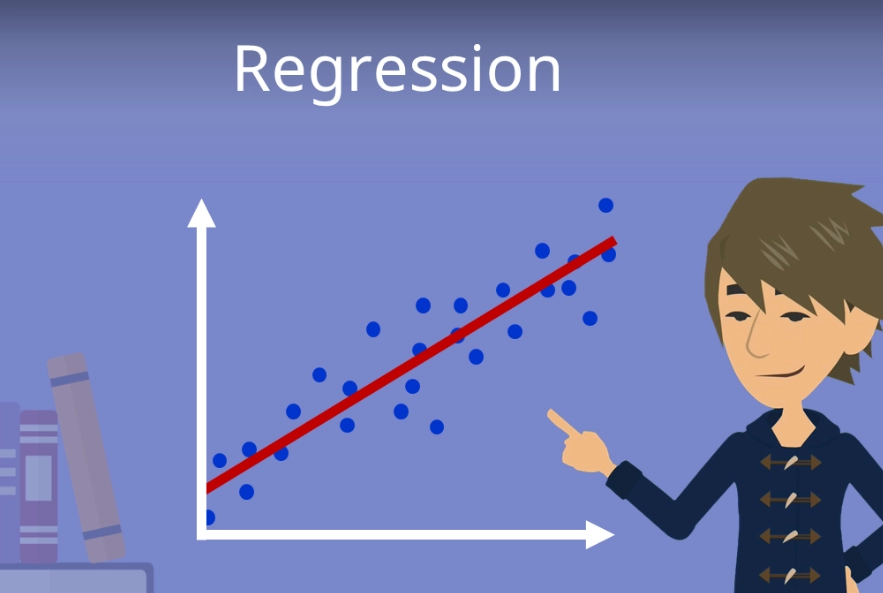
Regression in the Real World: Where You've Already Seen It
Once you know the regression definition, you start seeing it everywhere. It's the engine under the hood of so many everyday predictions and analyses.
Real-World Spotlight: When a real estate website like Zillow gives you a "Zestimate," that's a massively complex regression model at work, using features like square footage, location, number of bathrooms, and recent sale prices of comparable homes to predict a house's market value.
Let me list a few areas where it's absolutely fundamental:
- Business & Economics: Forecasting sales, understanding the impact of pricing or advertising, modeling risk in finance, analyzing consumer behavior. Economists use it to test theories about things like the relationship between education and income.
- Healthcare & Medicine: Predicting patient outcomes based on treatment, age, and biomarkers. Identifying risk factors for diseases. It's foundational in epidemiological studies.
- Science & Engineering: Modeling physical processes, calibrating instruments, optimizing manufacturing processes (like finding the ideal temperature and pressure for a chemical reaction).
- Social Sciences: Studying the effects of social policies, analyzing survey data to understand public opinion drivers.
The power of a clear regression definition and proper regression analysis is that it turns vague hunches into testable, quantifiable hypotheses. It moves you from "I think this might work" to "The data suggests that for every $1,000 we increase the marketing budget, we can expect approximately 50 new customers, with a 95% confidence interval of 40 to 60." That's a powerful statement for any decision-maker.
Common Pitfalls and How to Dodge Them
I've made my share of mistakes, and I see others make them all the time. Knowing the regression definition isn't enough; you need to know the traps.
- Confusing Correlation with Causation: This is the king of all pitfalls. Regression can show a strong relationship, but it doesn't prove that X causes Y. There might be a hidden third variable (a confounding variable) causing both, or the direction of causality might be reversed. Just because ice cream sales and shark attacks are correlated (they both go up in summer) doesn't mean buying ice cream causes shark attacks. Always think critically about the causal story.
- Overfitting: Creating a model that's too complex, fitting the noise in your specific dataset perfectly but failing to generalize to new data. It has a great R-squared on your training data but performs terribly in the real world. Techniques like cross-validation and regularization (Ridge/Lasso) are your best defense.
- Ignoring Outliers: A single, extreme data point can dramatically tilt your regression line, giving you a misleading picture of the overall trend. Always visualize your data first to spot these influential points.
- Extrapolation Beyond the Data: Your model is only reliable within the range of your observed data. Predicting house prices for a 10,000 sq. ft. mansion when your data only includes homes up to 4,000 sq. ft. is a recipe for nonsense. The relationship might not hold at those extremes.
The field of machine learning, which heavily relies on these concepts, constantly grapples with these issues. For a deeper look at modern applications and challenges, the scikit-learn documentation is an incredible, practical resource that shows how these principles are implemented in code.
How to Get Started: Your First Regression Analysis
Feeling overwhelmed? Don't be. The best way to internalize the regression definition is to do it. Here’s a minimal, practical roadmap.
Step 1: Define Your Question. Be specific. "I want to see if the number of hours studied predicts the final exam score for students in my class." Clear dependent variable (exam score), clear independent variable (hours studied).
Step 2: Get and Clean Your Data. This is 80% of the work. Get your data into a spreadsheet or a tool like Python (Pandas) or R. Check for missing values, obvious errors, and format everything consistently.
Step 3: Visualize, Visualize, Visualize. Before any math, make a scatter plot. Put hours studied on the X-axis and exam score on the Y-axis. Do you see a rough upward trend? A cloud? A curve? This tells you if linear regression is even appropriate.
Step 4: Run the Model. Use a tool. Excel has basic linear regression. For more power and flexibility, I personally prefer Python with libraries like statsmodels or scikit-learn, or R. They're free and industry-standard. MIT's OpenCourseWare has fantastic free lectures on using these tools for probability and statistics, which include regression.
Step 5: Interpret the Output. Look at the coefficient for hours studied. Is it positive? What's its value? Check its p-value. Is it significant? Look at the R-squared. How much of the variation in scores does hours studied explain?
Step 6: Check the Assumptions. Plot the residuals. Do they look random and evenly spread? Or is there a pattern? This is your model's health check.
Start with a simple, clean dataset like this. It builds confidence before you tackle messier, real-world problems.
Frequently Asked Questions (The Stuff You Actually Google)
Choosing Your Tools: A Quick Comparison
You have options. Here’s my blunt take on the common ones.
- Excel/Google Sheets: Perfect for your very first try. The tools are built-in and visual. But they become limiting and error-prone for anything beyond simple linear regression. I don't trust it for serious work.
- R: Built by statisticians, for statistics. It has unparalleled depth and variety of statistical packages. The learning curve is steeper, and the syntax can feel quirky. If your primary goal is deep-dive statistical analysis, R is a powerhouse.
- Python (with Pandas, statsmodels, scikit-learn): My personal go-to. It's a general-purpose language, so you can do data cleaning, analysis, and even build web apps around your models. The syntax is generally cleaner than R, and it integrates seamlessly into larger data science and engineering pipelines. The community is massive.
- SPSS, SAS, Stata: Traditional, powerful, and expensive commercial software. Great for specific academic or industry fields where they are the standard (like some parts of social science or pharmaceuticals). They often have more guided, point-and-click interfaces.
My advice? Start with what you know. If you live in spreadsheets, use Excel to get the concept. But if you're serious about building a skill for the future, invest time in learning Python or R. The freedom they give you is worth the initial effort.
Final Thought: Understanding the true regression definition is less about memorizing formulas and more about adopting a mindset. It's a framework for asking "how are these things related?" and then rigorously answering that question with data. It won't give you crystal balls, but it will give you a powerful, evidence-based compass for navigating a world full of uncertainty. Start simple, check your assumptions, and always, always question the story the numbers are telling you.
Reader Comments