Let's cut through the legal jargon. A right of first refusal (ROFR or RFR) isn't just a line in a contract that lawyers argue about. In the right hands, it's a strategic tool that can lock in future opportunities, protect your investments, and give you a decisive edge in competitive situations. Think of it as a legally binding "call dibs" on an asset before anyone else can buy it. I've seen too many entrepreneurs and investors treat it as a standard checkbox, only to regret it later when a golden opportunity slips away—or worse, when the clause backfires and paralyzes their own plans.
What You'll Find in This Guide
- What Is a Right of First Refusal? (Beyond the Textbook Definition)
- Where You'll Actually Encounter ROFR Clauses
- The Strategic Trade-Off: Advantages vs. Hidden Costs
- How to Negotiate a Powerful ROFR Clause (The Non-Obvious Details)
- The 3 Most Common (and Costly) ROFR Mistakes
- Your ROFR Questions Answered (Beyond the Basics)
What Is a Right of First Refusal? (Beyond the Textbook Definition)
Legally, a ROFR is a contractual right that gives its holder the option to enter into a business transaction with the owner of an asset, on the same terms as offered by a third party, before the owner can sell that asset to that third party. That's the dry version.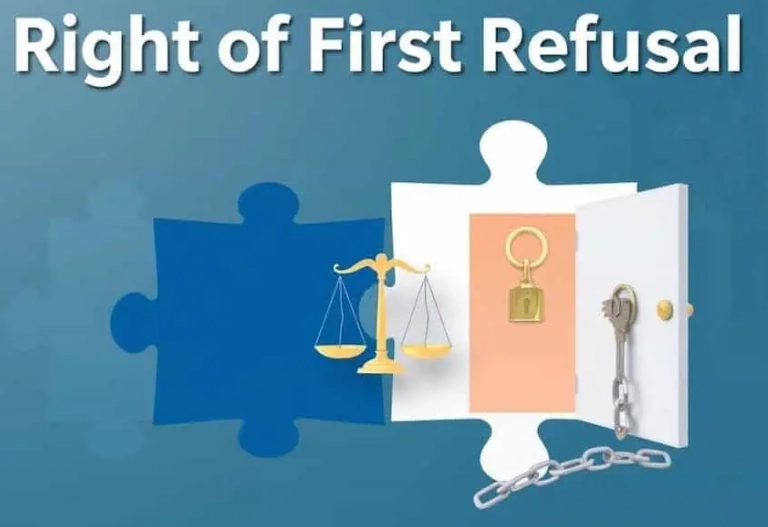
Practically, it's a form of insurance and a source of leverage. It's insurance against missing out on something valuable you're already connected to—like the office space next door that would perfect for your expansion, or your co-founder's shares if they decide to leave. It's leverage because its mere existence can influence the behavior of both the asset owner and potential outside buyers.
The Core Mechanism: A Step-by-Step Walkthrough
How does it actually play out? Let's use a concrete example. Imagine you run a successful cafe, "Bean There," and you rent one unit in a small three-unit strip. You have a ROFR on the unit next door in your lease.
- The Trigger: Your landlord gets a bona fide offer from another business, "Juice Bar Heaven," to lease the empty unit next to you for $3,000/month on a 5-year term.
- The Notice: The landlord is legally obligated to present you with that exact offer—all the terms, not just the price.
- The Decision Window: You now have a predefined period (say, 30 days) to decide. This is critical. You must either:
- Exercise your ROFR: Say "I'll take it on those exact terms," and you get the lease.
- Waive your ROFR: Say "no thanks," and the landlord is free to proceed with Juice Bar Heaven.
- The Match: If you exercise, you must match the offer exactly. You can't say "I'll take it but only for $2,800." It's a take-it-or-leave-it on the third party's terms.
The subtle point everyone misses? The ROFR holder is reacting. You don't set the price or terms; you just get the right to match what someone else has negotiated. This passive nature is both its strength and its biggest weakness.
Where You'll Actually Encounter ROFR Clauses
ROFRs aren't confined to one industry. They pop up anywhere future control or access is valuable.
Real Estate is the classic arena: Commercial tenants use it to secure adjacent space (like our cafe example). Homeowners in co-ops or condos may have a ROFR on their neighbor's unit. In joint land ownership, a ROFR prevents an unwanted stranger from becoming your new co-owner.
Startups and Private Companies: This is where it gets intense. Founders often have ROFRs on each other's shares. Why? If your co-founder is leaving, the last thing you want is for their 30% stake to be sold to a competitor or a difficult investor. The ROFR lets the remaining founders or the company itself buy those shares first. Investors might also negotiate a ROFR on future funding rounds to maintain their percentage ownership.
Joint Ventures and Partnerships: In a 50/50 joint venture, a ROFR is almost mandatory. If your partner wants out, you have the right to buy their half before they can shop it to anyone else. It's a fundamental stability mechanism.
Intellectual Property and Licensing: A company licensing a patent might have a ROFR if the owner decides to sell the patent outright. A franchisee might have a ROFR on the franchise rights for a neighboring territory.
The Strategic Trade-Off: Advantages vs. Hidden Costs
Let's move past the simple "it's good to have one" talk. Everything in a contract is a trade-off. Here’s a clear breakdown of what you're really getting into.
| Advantages (For the Holder) | Disadvantages & Hidden Costs (For Both Sides) |
|---|---|
| Future-Proofing: Secures a potential path for expansion, acquisition, or consolidation without an immediate commitment. | Chills the Market: For the seller/owner, a ROFR can deter potential buyers who don't want to spend time and money on due diligence only to be matched. |
| Control Over Your Environment: Prevents a competitor or incompatible party from moving in next door or buying into your company. | Financing Headaches: When you exercise a ROFR, you often have very little time to arrange financing for the full amount. That scramble can be expensive. |
| Potential Bargaining Power: The threat of exercising can sometimes lead the third-party buyer to offer you (the holder) a side payment to waive your right. | Management Burden: You must be organizationally ready to evaluate and act on a ROFR notice quickly. Miss a deadline, and you lose the right forever. |
| Simplifies Succession: In partnerships, it provides a clear, pre-agreed mechanism for buyouts. | Can Create Strategic Rigidity: You might feel forced to buy an asset (like your partner's shares) just to block someone else, even if it's not the optimal use of your capital at that time. |
| Cost Certainty (Kind Of): You pay the "market price" as defined by a third party's arm's-length offer. | Litigation Magnet: Poorly drafted clauses lead to fights over what constitutes a "bona fide offer," whether proper notice was given, or if the terms were exactly matched. |
The hidden cost I see most often? Opportunity cost and strategic paralysis. A company with a ROFR on a piece of land might hold off on other expansion plans, waiting for a trigger that never comes, while better opportunities pass by.
How to Negotiate a Powerful ROFR Clause (The Non-Obvious Details)
If you're asking for a ROFR, you're asking for a significant concession. The other side will push back. Here’s what to fight for, beyond just getting the clause included.
1. Define the "Trigger Event" with Surgical Precision. Vague language is your enemy. Does the ROFR apply only to a full sale, or also to a transfer of partial interest? What about transfers to a family trust or an affiliate company? You want the trigger to be broad enough to cover the scenarios you fear, but you need to define it clearly to avoid arguments later. Cite specific examples in the clause.
2. Negotiate the Longest Feasible Exercise Period. The standard 30 days is often insufficient for serious due diligence and financing. For a major asset, argue for 45, 60, or even 90 days. Your counter-party will want it short. Your compromise might be a shorter period for a simple review and a "letter of intent" to exercise, followed by a longer period to close.
3. Insist on a "Right to Match" Not Just "Right of First Refusal." This is a pro-tip. In a pure ROFR, if the third-party offer changes before closing (price drops due to inspection issues, for example), the seller could theoretically come back with the new, lower offer, restarting your clock. A "Right to Match" or "Last Look" provision states that if the final, executed agreement with the third party differs from the offer presented to you, you get one final chance to match those final terms. It closes a major loophole.
4. Clarify the "Bona Fide Offer" Requirements. The clause should require that any third-party offer be in writing, accompanied by proof of funds, and with all material terms specified. This prevents the seller from fabricating an offer just to "test" your interest at an inflated price.
5. Address the "What If We Don't Exercise" Scenario. The clause should explicitly state that if you waive your ROFR for a specific offer, the seller has a limited time (e.g., 6-12 months) to close that specific deal. If they don't, the ROFR revives for any future offer. This stops them from using your waiver as a permanent release.
The 3 Most Common (and Costly) ROFR Mistakes
After reviewing hundreds of deals, these are the errors I see repeated.
Mistake #1: Treating it as a passive right and not preparing. People get the ROFR, file the contract away, and forget about it. Then, a notice arrives, and panic ensues. You must have a pre-approved internal process: Who gets the notice? Who evaluates it (legal, finance, operations)? What are our financial thresholds? Run hypothetical exercises. If you get the notice for your partner's $2 million stake tomorrow, do you have a plan?
Mistake #2: Failing to do independent due diligence because "the terms are set." Just because you're matching someone else's offer doesn't mean you should skip due diligence. That other buyer might have missed something crucial in the property inspection or the company's financials. You must still do your own work to confirm the asset is worth the price to you. I've seen a company exercise a ROFR on a warehouse based on a third-party's offer, only to discover massive environmental remediation costs the original buyer had missed.
Mistake #3: Letting emotion drive the decision. The fear of a competitor getting the asset or the desire to "win" can cloud judgment. You must evaluate the exercise purely as a new investment decision. Does this asset, at this price, under these terms, make strategic and financial sense for us right now? If not, waiving the ROFR is the correct, if difficult, business decision. Don't let a clause written years ago force you into a bad deal today.
Your ROFR Questions Answered (Beyond the Basics)
They can try, but it's extremely risky for them. If they sell in violation of a valid ROFR, you (the holder) can sue for specific performance—asking a court to force the sale to be undone and transferred to you instead. You can also sue for damages. The legal system generally enforces these clauses strictly because they are seen as creating a vested property interest. The new buyer also faces risk, as they could lose the asset they just bought. Most reputable buyers' lawyers will insist on proof that any ROFRs have been waived before closing.
This confusion costs people money. They are opposites in a key way.
- Right of First Refusal (ROFR): Seller finds a buyer and negotiates a deal. Then they bring it to you to match. You're reactive.
- Right of First Offer (ROFO) or First Right of Refusal: Seller must come to you first before marketing to anyone else. You make an offer. If the seller rejects it, they can then shop for a better deal, but usually only if it's significantly better (e.g., 10-15% higher) than your offer. You get to set the opening price.
A ROFO is generally more powerful for the holder but much harder to get a seller to agree to. Know which one you're negotiating.
It's tricky because its value is contingent on a future event. However, it has real economic value. Think of it as a form of a financial option. Valuation methods often look at the probability of the trigger event occurring (e.g., a partner leaving) and the potential upside or protection value if it does. In acquisitions, if the target company has granted a ROFR on a key asset to a third party, that reduces the target's value to you, the acquirer, because you can't fully control that asset. It's a liability. Always have your financial model account for the constraints or opportunities created by ROFRs, both those you hold and those held by others on your assets.
Only if the contract specifically says so. Most standard ROFR clauses are personal to the original holder and are not automatically assignable. This is a critical drafting point. If you are the holder, try to include language that the ROFR is transferable to your affiliates or to any successor entity in a merger or sale of your business. If you are the grantor (seller), you will want to prohibit assignment to keep control over who you might have to deal with in the future.
The right of first refusal is a deceptively simple concept with profound strategic implications. It's not a set-it-and-forget-it clause. It demands forethought, preparation, and clear-eyed analysis when triggered. Used wisely, it's a shield and a strategic option. Used poorly, it's an illusion of security that can lead to rushed decisions and wasted capital. The key is to move beyond seeing it as just "legal stuff" and start treating it as an integral part of your business growth and risk management toolkit.
Reader Comments