Quick Guide
- What Exactly Is Return on Investment (ROI)?
- Walking Through a Real ROI Calculation (Step-by-Step)
- What Makes a "Good" ROI? It's All About Context
- Common ROI Mistakes (And How to Avoid Them)
- Beyond the Basics: Advanced ROI Analysis for Better Decisions
- Actionable Strategies to Improve Your ROI (Before You Even Invest)
- Frequently Asked Questions About ROI
- Putting It All Together: Your ROI Action Plan
Let's talk about money. Specifically, let's talk about figuring out if the money you put into something—a marketing campaign, a new piece of equipment, an employee training program—was actually worth it. That's the whole game, right? You don't just spend and hope. You need to know. That's where the concept of return on investment, or ROI, comes in. It's the flashlight in the dark room of business spending.
I remember the first time I had to present a return on investment analysis to a skeptical manager. My palms were sweating. I had all the numbers, but I felt like I was just throwing a percentage at them without any real context. Was 15% good? Was it terrible? I fumbled through it. Since then, I've learned that ROI isn't just a formula you plug numbers into. It's a story. A story about efficiency, foresight, and sometimes, hard lessons learned.
Think of ROI as your financial compass. It doesn't tell you exactly where to go, but it sure tells you if you're heading north or south after you've taken a few steps.
This guide is for anyone who's ever stared at a spreadsheet wondering, "Did that work?" We're going to break down the ROI formula (it's simpler than you think), explore why it sometimes lies to you, and most importantly, show you how to use it to make decisions you won't regret later. We'll look at real examples, common traps, and advanced tactics that go beyond the basic math.
What Exactly Is Return on Investment (ROI)?
At its core, ROI is a performance measure. It's used to evaluate the efficiency or profitability of an investment. In plain English, it tells you how much bang you got for your buck. You compare the money you gained (or lost) from an investment to the amount of money you invested. The result is usually shown as a percentage.
Why a percentage? Because it lets you compare apples to oranges. You can compare the return ROI from a $1,000 Facebook ad campaign to the return from a $50,000 machine upgrade. The percentage creates a common language for efficiency.
The beauty—and sometimes the curse—of ROI is its simplicity. That's what makes it so popular. But that simplicity can also mask a lot of complexity, which we'll get into later. For now, let's just get comfortable with the idea.
The Fundamental ROI Formula (And Its Many Faces)
Here's the classic equation you'll see everywhere:
Net Profit is your gain from the investment minus the cost of the investment. So, if you spend $100 and make $150 back, your net profit is $50. Plug it in: ($50 / $100) x 100% = a 50% return on investment.
Simple. But life isn't always simple. What if your returns and costs are spread over time? What about ongoing costs? That's where variations come in. The formula is a starting point, not a holy text.
| Scenario | Formula Variation | When to Use It |
|---|---|---|
| Basic, Single-Period | (Current Value of Investment - Cost of Investment) / Cost of Investment | Quick, back-of-the-napkin calculations for a project with a clear end point. |
| Including All Costs | (Gain from Investment - Total Cost of Investment) / Total Cost | When hidden costs (labor, maintenance, software) are significant. This is the one you should usually use. |
| Annualized ROI | [(1+ROI)^(1/n)] - 1, where n=number of years | To compare investments held for different time periods. A 20% return over 2 years isn't the same as 20% over 5 years. |
See? The basic ROI formula is just the doorway. The annualized version is crucial. I once compared two projects: one gave a 60% return over 3 years, another gave 40% over 18 months. Using the basic formula, the first looked better. But annualizing them showed the second had a much higher annual return ROI, making it the more efficient use of capital per year.
Walking Through a Real ROI Calculation (Step-by-Step)
Let's make this concrete. Say you run a small bakery and you're thinking of buying a new, faster oven for $10,000. You believe it will allow you to fulfill more custom cake orders.
Step 1: Define the "Gain from Investment." This isn't just revenue. You estimate the new oven will let you take on 4 more elaborate cakes per month. Each cake nets you $150 profit (after ingredients and box). That's $600 extra profit per month. Over a year, that's $7,200. But maybe the oven also saves 5 hours of labor per week at $20/hour. That's $100/week or $5,200 a year. Your total annual gain: $7,200 + $5,200 = $12,400.
Step 2: Define the Total Cost of Investment. It's not just the $10,000 sticker price. The new oven uses more electricity—about $50 more per month ($600/year). It might need a special maintenance contract for $300/year. The total cost isn't $10,000. It's $10,000 + $600 + $300 = $10,900 in the first year.
Step 3: Calculate Net Profit. Gain ($12,400) - Total Cost ($10,900) = $1,500.
Step 4: Plug into the Formula. ROI = ($1,500 / $10,900) × 100% = 13.76%.
So, in the first year, your return on investment for the oven is about 13.8%. Is that good? We'll talk about benchmarks soon. But notice what we did? We included the ongoing costs. If we'd just used the $10,000, the ROI would have been a rosy-looking 24%, which would have been misleading. This is where most people slip up—they're overly optimistic about gains and forgetful about costs.
The Forgotten Cost Trap: I can't tell you how many times I've seen software subscription fees, extra training time, or increased utility bills left out of an ROI calculation. It makes the project look amazing on paper and then a headache in reality. Always ask: "What else will this make me spend money on?"
What Makes a "Good" ROI? It's All About Context
This is the million-dollar question. Is 10% good? Is 50%? The frustratingly accurate answer is: it depends.
A 5% ROI might be fantastic for a low-risk, stable investment like a government bond. But for a high-risk startup marketing campaign, you'd probably want to see a potential return ROI of 300% or more to justify the gamble. The "goodness" of an ROI is judged against three main things:
- Your Hurdle Rate: This is your minimum acceptable return. It's often based on your cost of capital (what it costs you to get money) plus a risk premium. If borrowing money costs you 6%, any investment needs to return significantly more than 6% to be worthwhile.
- Alternative Investments: What else could you do with that money? If you have another project on deck that's forecasted for a 20% return, then the 13.8% oven project might get shelved. This is the concept of opportunity cost, and it's critical for good ROI analysis.
- Industry Benchmarks: What are others in your field achieving? A 15% ROI might be stellar for a grocery store (thin margins) but poor for a software company. Resources like industry reports from IBISWorld or sector analysis from financial news can give you a ballpark.
Personally, I think we get too hung up on chasing astronomical ROI percentages. Sometimes, a solid, reliable 12% return that builds your brand reputation (an intangible) is better than a volatile 50% return from a spammy tactic that might burn customer trust.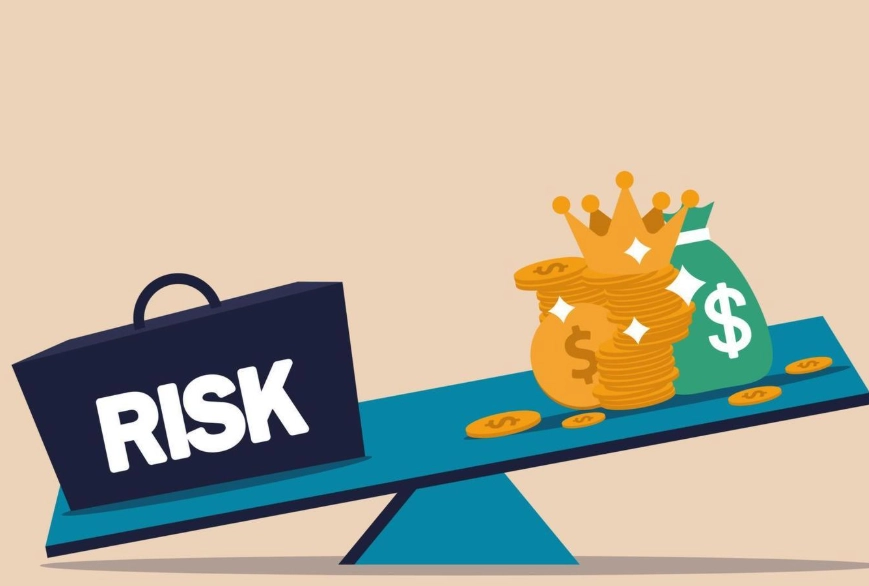
The Factors That Secretly Control Your ROI
Your ROI isn't just a number that magically appears. It's the direct result of several levers you can pull (or that get pulled for you). Understanding these lets you move from measuring to managing.
- Time Horizon: How long does it take to see the return? A project with a longer payback period is riskier—more things can go wrong—so it typically requires a higher projected ROI to be greenlit.
- Risk Level: High risk demands the potential for high reward. No one would invest in a biotech startup (extremely high risk of failure) for a 10% potential return. They want 10x or 100x.
- Cost Structure Accuracy: This is the big one. As our oven example showed, underestimating costs is the fastest way to turn a positive projected ROI into a real-world loss. Be brutally honest here. Add a 10-15% "unforeseen cost" buffer if you're unsure.
- Measurement Capability: Can you actually track the gain? If you launch a brand-awareness campaign, how do you tie a specific sales increase directly back to it? If you can't measure the gain accurately, your ROI calculation is a guess. This is a huge pain point in marketing.
Common ROI Mistakes (And How to Avoid Them)
I've made some of these. You probably will too. But knowing the traps is half the battle.
Mistake 1: Ignoring the Time Value of Money (TVM). The basic ROI formula treats a dollar today the same as a dollar next year. It's not. A dollar today is worth more because you could invest it. For longer-term projects, you should use Net Present Value (NPV) or Internal Rate of Return (IRR) alongside ROI. The U.S. Securities and Exchange Commission's investor site has great primers on these concepts. Not using TVM can make a long, drawn-out project look better than it is.
Mistake 2: Focusing Only on the Short-Term, Direct ROI. Some investments pay off in ways that are hard to quantify immediately. That employee training program might not boost sales next quarter, but it reduces turnover, improves morale, and builds a skilled team over 3 years. A narrow focus on immediate financial return on investment can kill strategic initiatives.
Mistake 3: Using Inconsistent Formulas. If you calculate ROI differently for every project, you can't compare them. Standardize your approach within your organization. Decide what costs are always included and how you'll attribute gains.
Mistake 4: Letting ROI Be the Only Decision-Maker. ROI is a powerful tool, not an oracle. Strategic alignment, brand impact, regulatory requirements, and ethical considerations also matter. I once saw a company reject a project with a modest ROI that would have made them an industry leader in sustainability, a core part of their mission. They regretted it later when competitors seized that narrative.
Beyond the Basics: Advanced ROI Analysis for Better Decisions
Once you're comfortable with basic ROI, you can start using more nuanced frameworks. These help you deal with uncertainty and compare complex options.
1. Scenario Analysis: Playing the "What If" Game
Don't just calculate one ROI. Calculate three:
- Best-Case Scenario ROI: Everything goes perfectly. Costs are low, gains are high.
- Most-Likely Scenario ROI: Your realistic, middle-ground estimate.
- Worst-Case Scenario ROI: Everything that can go wrong does. Delays, cost overruns, lower-than-expected gains.
This gives you a range. If the worst-case scenario still gives you a positive return, it's a very safe bet. If the most-likely scenario is only slightly positive, the investment is risky.
2. Using ROI with Other Metrics
ROI shouldn't fly solo. Pair it with:
- Payback Period: How long until you recoup the initial investment? A short payback period reduces risk, even if the long-term ROI isn't the highest.
- Net Present Value (NPV): This accounts for the time value of money by discounting future cash flows back to today's dollars. A positive NPV generally means go.
- Internal Rate of Return (IRR): The discount rate that makes the NPV of a project zero. It's useful for comparing projects of different sizes. Generally, you want IRR to exceed your hurdle rate.
Honestly, I find IRR can be a bit tricky to interpret sometimes, and it can give weird results with unconventional cash flows. NPV is often more straightforward.
Actionable Strategies to Improve Your ROI (Before You Even Invest)
Calculating ROI is reactive. Improving it is proactive. Here's how to design your projects for a better return ROI from the start.
Before the Investment:
- Negotiate Harder: A 10% reduction in your initial cost directly improves your ROI percentage. Don't just accept the first quote.
- Pilot and Test: Run a small-scale version of the project first. A pilot campaign on one social platform can give you real data to refine your gain estimates for a full roll-out, making your ROI projection more accurate.
- Clarify Objectives and Metrics: Know exactly how you'll measure success before you spend a dime. If you can't define how to measure the gain, you can't calculate a real ROI later.
During the Investment:
- Track Religiously: Monitor costs and early indicators of gain in real-time. Use tools to track campaign performance, project management software for hours logged, etc.
- Be Ready to Pivot: If mid-way tracking shows costs ballooning or gains not materializing, have the courage to cut losses or change course. Don't throw good money after bad just because the initial ROI projection was pretty.
After the Investment:
- Conduct a Post-Mortem: Compare your actual ROI to your projected ROI. Where were you off? Was it costs? Gains? Timing? This analysis is pure gold for improving your future forecasts and decision-making.
- Document and Share: Create a case study, even if it's just an internal memo. What worked? What didn't? This builds organizational knowledge and prevents the same mistakes from being repeated.
Frequently Asked Questions About ROI
Let's tackle some of the specific, gritty questions people actually search for.
Putting It All Together: Your ROI Action Plan
Feeling overwhelmed? Don't be. Start simple and build from there.
For your next potential investment, do this:
- Write down the goal. Be specific. "Increase qualified leads by 20% in Q3."
- List every single cost. Sticker price, subscriptions, labor hours, extra utilities, training time. Everything.
- Define how you'll measure the gain. What metric proves the goal was met? How will you track it? (e.g., CRM data for leads).
- Estimate the financial value of that gain. What is a 20% increase in leads worth in actual dollars? (Average lead value x number of new leads).
- Run the numbers. Use the full-cost formula. Do a best-case/worst-case range.
- Compare. Does the most-likely ROI beat your hurdle rate? Is it better than your other options?
- Decide, track, and review. Make the call. Then, actually track the real costs and gains. Compare them to your forecast. Learn.
Mastering return on investment thinking changes you from a spender into an investor. Every dollar becomes a seed you're planting, and ROI is the measure of your harvest. It's not always perfect, and it doesn't capture everything, but it's the most widely understood language we have for answering the fundamental business question: Was it worth it?
Start with your next small decision. Run the numbers. Get a feel for it. You'll be surprised how quickly this lens changes the way you see every opportunity that comes across your desk.
Reader Comments