Quick Guide
Let's talk about book value. You've probably seen it tossed around on financial websites, mentioned in analyst reports, maybe even heard Warren Buffett talk about it. But if you're like I was when I first started digging into stocks, you might have a fuzzy idea at best. Is it what the accounting books say a company is worth? Is that the same as what it's actually worth? And why should you even care?
I remember looking at two companies years ago—one a flashy tech startup, the other a dusty old manufacturer. The tech company's share price was sky-high compared to its book value, while the manufacturer's stock was trading for less. My first thought was, "What a steal!" That was before I learned the hard way about the massive gaps in this metric. It's a foundational concept, but it's far from a complete picture.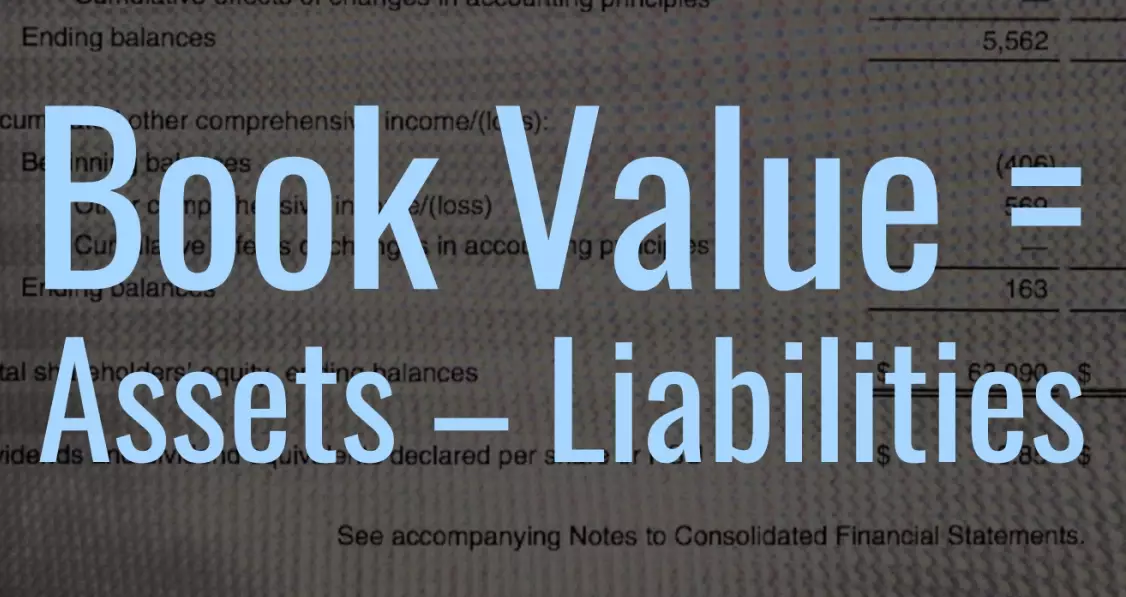
At its core, a company's book value is simply its total assets minus its total liabilities, as reported on the balance sheet. It's the net accounting value of the shareholders' equity. If the company sold everything it owned and paid off all its debts, this is roughly what would be left for the owners. That's the textbook definition, anyway. The reality of using it is messier and much more interesting.
Unpacking the Book Value Calculation: It's Not Just Subtraction
So, how do you actually find this number? It's not hidden. You'll head straight to the balance sheet. The formula is straightforward:
Book Value = Total Assets - Total Liabilities
But here's where it gets real. Those "assets" on the balance sheet aren't what you might think. They're not listed at their current market price. They're listed at their historical cost, minus things like depreciation and amortization. That factory bought in 1998? It's on the books for its purchase price, slowly being depreciated to zero, even if the land underneath it is now worth ten times more. This is the first big crack in the book value facade.
Let's break it down with a concrete example. Imagine a simple company, "Widget Co."
| Account | Amount (in $ millions) | Important Note |
|---|---|---|
| Total Assets | 500 | Includes cash, inventory, property/plant/equipment at historical cost, intangible assets (like patents). |
| Total Liabilities | 300 | Includes loans, accounts payable, long-term debt. |
| Shareholders' Equity (Book Value) | 200 | 500 - 300 = 200. This is the accounting net worth. |
| Shares Outstanding | 10 million | The number of shares in the market. |
| Book Value Per Share (BVPS) | 20 | 200 / 10 = $20 per share. |
That book value per share (BVPS) is the magic number for most investors. You compare it directly to the current stock price. If the stock trades at $15 and the BVPS is $20, the company is trading below its book value. On paper, that looks like a discount. But is it?
The Devil's in the Details: What Assets Get Counted (And How)
Assets aren't created equal on a balance sheet.
- Cash & Receivables: Pretty solid. $1 in cash is $1 in value.
- Inventory: Trickier. It's valued at cost or market value, whichever is lower. That pile of unsold last-season gadgets might be on the books for far more than it can be sold for.
- Property, Plant & Equipment (PP&E): This is where the distortion often happens. As mentioned, it's carried at historical cost minus accumulated depreciation. A prime piece of Manhattan real estate bought decades ago might be on the books for a pittance.
- Intangible Assets: This is the big one for modern companies. Things like brand value (Coca-Cola's brand is worth billions, but it's not on the balance sheet unless acquired), patents, software, and customer relationships. Under standard accounting rules (like U.S. GAAP), internally generated intangibles are usually expensed, not capitalized. They can be a massive source of hidden value—or overvaluation if they're from an acquisition.
I once got excited about a pharmaceutical company with a low price-to-book ratio. Seemed cheap. Then I realized most of its "assets" were goodwill from overpriced acquisitions, and its key drug patent was expiring next year. The book value was an accounting fiction. Lesson learned.
Why Book Value Matters (And When It Really, Really Doesn't)
Okay, so it's flawed. Why do we still talk about it? Because in certain contexts, it's incredibly useful.
For "asset-heavy" businesses—think banks, insurance companies, industrial manufacturers, utilities—book value can be a decent anchor. Their assets (loans for banks, machinery for manufacturers) are more tangible and sometimes closer to their actual economic value. Regulators even use it to assess bank stability. You can find great resources on how analysts use it for banks on the Federal Reserve website.
But for "asset-light" companies—software firms, consulting businesses, many tech companies—book value is almost meaningless. What's the book value of Microsoft's Windows codebase or Google's search algorithm? Not much on the balance sheet. Their value is in their intellectual property, network effects, and human capital, none of which get a proper line item. Comparing a SaaS company's stock price to its book value is a waste of time.
The Big Warning: A low price-to-book ratio (P/B ratio) is not an automatic "buy" signal. It can be a value trap. It might mean the market thinks the assets are overvalued on the books (like outdated inventory), the liabilities are understated, or the business model is broken. A high P/B isn't always "overvalued" either—it could reflect valuable intangible assets the balance sheet misses.
The Investor's Toolkit: How to Actually Use Book Value
Forget about using it in isolation. Here’s how I think about weaving it into a broader analysis.
A Practical Framework
- Identify the Business Type: Is it asset-heavy or asset-light? If it's the latter, mentally downgrade the importance of book value immediately.
- Calculate Book Value Per Share (BVPS): Get the latest shareholders' equity from the 10-K or 10-Q (find these on the SEC's EDGAR database). Divide by diluted shares outstanding.
- Dissect the Equity: Open the balance sheet. What makes up the assets? Scan for large "Goodwill" or "Intangible Assets" lines. High goodwill means past acquisitions are inflating the book value. Look at the notes to the financial statements for details on asset valuations.
- Adjust Mentally (or on Paper): Try to make rough adjustments. Could the real estate be sold for more? Is the inventory obsolete? Are the patents valuable? This gives you a more realistic "tangible book value" or an estimated intrinsic value.
- Compare to Price & Peers: Look at the P/B ratio. Then, compare it to the company's own historical average and to direct competitors. A bank trading at 0.8x book while its peers trade at 1.2x might warrant a deeper look—or it might signal a specific problem.
- Cross-Check with Other Metrics: Never rely on book value alone. Look at earnings (P/E), cash flow (P/CF), and return on equity (ROE). A high ROE paired with a low P/B can be a powerful combination, suggesting a profitable company trading cheaply relative to its equity base.
It's a piece of the puzzle, not the picture on the box.
Common Questions Investors Have About Book Value
 .
.The Final Verdict: A Useful Tool, Not a Magic Bullet
So, where does this leave us with book value?
It's an essential starting point for understanding a company's financial foundation. It gives you a snapshot, frozen in accounting time, of what's left for owners after all bills are paid. For certain old-economy industries, it remains a vital benchmark. The book value per share calculation is a basic literacy test for any serious investor.
But its limitations are severe. The failure to account for the true market value of assets and, more critically, the almost complete omission of internally created intangible assets, makes it a blurry lens through which to view modern businesses. Relying on it alone is like trying to navigate with a map from the 1980s—some landmarks are still there, but the new highways and cities are missing.
Combine it with other metrics, dig into the footnotes of the financial statements, and always, always ask what story the balance sheet numbers aren't telling you. The real skill isn't in calculating book value; it's in knowing when that number matters and when you should look right past it to find what a company is truly worth.
Reader Comments