You find a company. Revenue is exploding. The story is fantastic. Everyone's talking about it. The price-to-earnings (P/E) ratio is sky-high at 50. Your gut says it's too expensive, but what if that growth justifies the price? This is the exact moment where the P/E ratio fails you, and the PEG ratio becomes your most useful tool.
I remember early in my investing days, I'd dismiss any stock with a P/E over 25. I missed out on some monumental winners because I didn't understand how to price growth. The PEG ratio, popularized by Peter Lynch, bridges that gap. It's not a magic bullet—far from it—but it forces a crucial comparison: price versus growth rate.
What You’ll Learn in This Guide
What Exactly is the PEG Ratio?
The PEG ratio stands for Price/Earnings to Growth ratio. In simple terms, it takes the standard P/E ratio and divides it by the company's earnings growth rate. The formula is:
PEG Ratio = (Price-to-Earnings Ratio) / (Earnings Growth Rate)
The core idea is elegant: it tries to measure how much you're paying for each unit of future growth. A stock with a P/E of 30 growing at 30% per year (PEG = 1.0) could be considered fairly valued relative to a stock with a P/E of 30 growing at only 15% per year (PEG = 2.0).
Peter Lynch viewed a PEG of 1.0 as a baseline for fair value. Below 1.0 suggested potential undervaluation relative to its growth prospects, and above 1.0 suggested potential overvaluation.
How to Calculate the PEG Ratio: A Step-by-Step Walkthrough
Let's get our hands dirty with a fictional example, "TechGrow Inc." This is where most investors trip up by using mismatched data.
Scenario: TechGrow stock trades at $100 per share. Its earnings per share (EPS) for the last 12 months were $4. Analysts, on average, expect the company to grow its EPS by 20% annually over the next 3-5 years.
Step 1: Calculate the P/E Ratio
P/E Ratio = Stock Price / EPS = $100 / $4 = 25.
Step 2: Identify the Correct Growth Rate
This is critical. We're using the *forward-looking, annualized EPS growth rate estimate*, which is 20%, or 0.20. Never use revenue growth here—it must be earnings (EPS) growth. Using the wrong growth figure is the most common data error.
Step 3: Perform the Division
PEG Ratio = P/E Ratio / Growth Rate = 25 / 20 = 1.25.
So, TechGrow has a PEG ratio of 1.25. According to the traditional Lynch view, it might be slightly overvalued relative to its growth rate, but it's in the ballpark. A value hunter might wait for a lower price, while a growth investor might be comfortable with it.
Here’s a quick reference table for interpreting the results: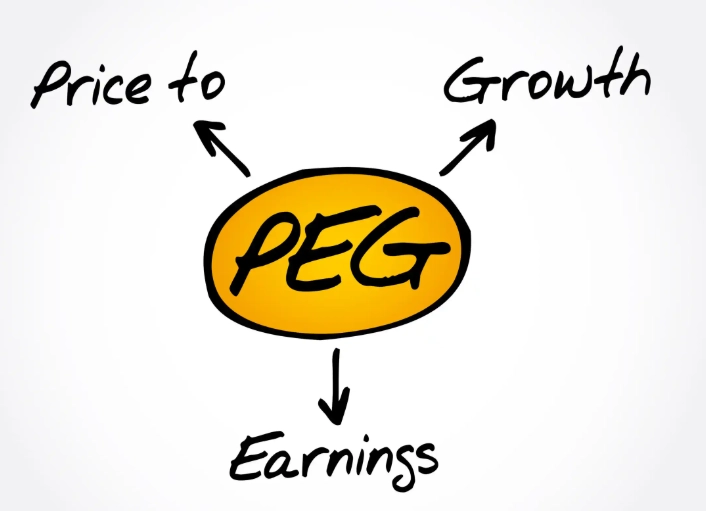
| PEG Ratio Range | Traditional Interpretation | Important Nuance |
|---|---|---|
| Below 0.75 | Potentially Undervalued | Could be a steal, or the market doubts the growth (a value trap). Requires deep due diligence. |
| 0.75 to 1.25 | Fairly Valued | The sweet spot for many. The price reasonably reflects growth expectations. |
| 1.25 to 2.0 | Potentially Overvalued | Market is optimistic. May be justified for exceptional quality or durable moats. |
| Above 2.0 | Significantly Overvalued / Speculative | High risk. Implies expectations for perfect, uninterrupted growth. Often seen during market manias. |
The Biggest Pitfalls and Limitations of the PEG Ratio
If you use the PEG ratio as a standalone buy/sell signal, you will lose money. I've seen it happen. It's a helpful lens, not the entire camera.
1. The Growth Rate is a Guess. The "G" in PEG is almost always a forward-looking analyst estimate. These estimates are frequently wrong, especially for high-growth companies in rapidly changing industries. Basing your entire thesis on a consensus estimate from Wall Street is a risky proposition.
2. It Ignores Quality of Growth. A company growing EPS by 30% through aggressive cost-cutting and share buybacks is not the same as one growing by 30% through organic sales of a revolutionary product. The PEG ratio treats them identically. It says nothing about profit margins, competitive advantages, or balance sheet health.
3. It Breaks Down at Low or No Growth. Try calculating the PEG for a stable utility company with 2% growth and a P/E of 18. PEG = 9.0. That screams "catastrophically overvalued," but it's meaningless. The model wasn't built for no-growth or dividend stocks. Don't force it.
4. It's Useless for Unprofitable Companies. No earnings? No P/E. No P/E? No PEG. It has nothing to say about the many high-growth, pre-profitability companies in tech or biotech.
My personal rule: A suspiciously low PEG ratio (below 0.6) is often a bigger red flag than a high one. It usually means the market believes the projected growth rate is a fantasy. The stock is cheap for a reason.
How to Use the PEG Ratio Effectively in Your Research
So how should you actually use it? Think of it as a screening and comparison tool within a specific context.
Use Case 1: Comparing Apples to Apples. The PEG ratio shines when comparing companies within the same industry. Let's say you're looking at two cloud software companies. Company A has a P/E of 40 and expected growth of 25% (PEG=1.6). Company B has a P/E of 55 and expected growth of 40% (PEG=1.38). Based purely on PEG, Company B offers more growth for your dollar, despite its higher absolute P/E. This directs your deeper research effort.
Use Case 2: Spotting Sentiment Shifts. Track a company's PEG over time. If the stock price runs up dramatically but growth estimates stay flat, the PEG will expand. Watching it climb from 1.1 to 1.8 tells you the market is getting increasingly optimistic (or frothy) without a fundamental change in the growth outlook. It's a warning light to check your thesis.
Use Case 3: As a Reality Check for Growth Stories. Before getting swept up in a exciting growth narrative, run the numbers. If the story implies 50% growth for the next decade but the current PEG is already 3.0, the market has priced in perfection. Any stumble will be punished severely. It helps you gauge the margin of safety, which for growth stocks is often minimal.
Always, always pair the PEG with other analysis. Look at the company's return on invested capital (ROIC), free cash flow growth, and debt levels. Read the management commentary in quarterly reports to see if their guidance aligns with the analyst estimates you're using.
For authoritative data on earnings estimates, I rely on aggregations from sources like Refinitiv or FactSet, which power many professional platforms. While you might not have direct access, knowing your brokerage's data source (e.g., "consensus from Refinitiv IBES") adds credibility to your process.
Your PEG Ratio Questions, Answered
Is a PEG ratio below 1 always a buy signal?
How reliable is the PEG ratio for mature, slow-growth companies?
Where do investors commonly find faulty PEG ratio data?
Can the PEG ratio help me avoid buying at the peak of a growth cycle?
The PEG ratio is a powerful tool for introducing discipline into growth stock investing. It forces you to quantify the growth you're paying for. But never forget: the "G" is an estimate, not a guarantee. Use it to compare, to question, and to direct your research—not as a final verdict. Combine it with a thorough understanding of the business itself, and you'll be miles ahead of investors who just look at the P/E or, worse, just follow the hype.
Reader Comments