Quick Guide to the Dow
You see it scrolling on the bottom of every financial news channel. You hear it mentioned on the radio. "The Dow is up 200 points" or "The Dow plunged today." It's part of our daily vocabulary, but how many of us actually know what it is? I mean, really know. I remember when I first started paying attention to the markets, I'd nod along like I understood, but honestly, I had only a vague idea. It was just "the stock market" to me. That changed when I tried to explain it to a friend and realized I couldn't. So let's fix that gap, for both of us.
The Dow Jones Industrial Average, often just called the Dow or the Dow Jones share index, isn't the entire stock market. Far from it. It's a specific, curated list of 30 massive, publicly-traded companies. Think of it as a snapshot—a very influential snapshot—of how the biggest of the big corporations in America are doing. When people talk about "the market" hitting a new high, they're usually talking about the Dow. Its movements influence pension funds, retirement accounts, and the general mood of the economy. It's a big deal.
But why only 30 companies? And who picks them?
What Exactly Is the Dow Jones Industrial Average (DJIA)?
Let's strip away the mystique. Created in 1896 by Charles Dow and Edward Jones (yes, of the Wall Street Journal), the Dow was a revolutionary idea. Back then, getting a sense of the overall market was messy. The Dow provided a single, easy-to-understand number by averaging the stock prices of a handful of major industrial companies—hence "Industrial" in the name, even though its composition has evolved dramatically.
The core thing that trips people up is how it's calculated. It's not a simple average, and it's not weighted by market capitalization (the total value of all a company's shares) like the S&P 500. The Dow Jones share index is a price-weighted average. This is crucial.
Here's the simple way to think about price-weighting: In the Dow, a company with a stock price of $300 per share has ten times more influence on the index's movement than a company with a stock price of $30. The actual size or total value of the company is secondary to its share price. This is a quirky, often-criticized feature of the Dow that makes it unique.
Because of this, a 5% move in a high-priced stock like UnitedHealth Group (which often trades above $500) will jerk the Dow Jones index around much more than a 5% move in a lower-priced stock like Intel. Critics say this doesn't accurately reflect the market's structure, where a giant like Apple (by total market value) should have more sway. The committee that manages the Dow, run by S&P Dow Jones Indices, handles stock splits and other corporate actions using a special divisor to keep the index consistent over time. You can read about their meticulous methodology directly on the S&P Dow Jones Indices official website.
So, if it's so quirky, why does it still matter? History and habit. It's the second-oldest U.S. market index (after the Dow Jones Transportation Average) and has been reporting that number for over 125 years. That gives it an unparalleled track record for showing long-term economic trends. When you see a chart of the Dow Jones Industrial Average from the Great Depression to today, you're looking at the story of American industry and finance.
Who's In the Club? The Dow 30 Companies
The membership of the Dow Jones share index isn't static. Companies get added and removed to (theoretically) best represent the U.S. economy. Gone are the railroad and tobacco giants of yesteryear. Today's list is a mix of technology, finance, healthcare, consumer goods, and, yes, some industrial companies. Being added to the Dow is a huge vote of confidence and prestige. Being removed? Well, it's not a great sign about your perceived relevance.
Here’s a look at the 30 components as of my last update. Remember, this can change, so it's always good to check the latest list. I've grouped them loosely by sector to make sense of the lineup.
| Company | Ticker Symbol | Core Business Sector | Why It's Likely in the Dow |
|---|---|---|---|
| Apple Inc. | AAPL | Information Technology | Largest publicly traded company, consumer tech dominance. |
| Microsoft Corp. | MSFT | Information Technology | Enterprise software & cloud computing leader. |
| UnitedHealth Group | UNH | Health Care | Largest health insurer, represents the massive healthcare sector. |
| Goldman Sachs Group | GS | Financials | Iconic investment banking and financial services. |
| Home Depot Inc. | HD | Consumer Discretionary | Barometer for housing and consumer spending on homes. |
| McDonald's Corp. | MCD | Consumer Discretionary | Global consumer staple, franchise model success. |
| Visa Inc. | V | Financials | Global electronic payments network, critical financial infrastructure. |
| Johnson & Johnson | JNJ | Health Care | Healthcare and consumer products conglomerate with long history. |
| Walmart Inc. | WMT | Consumer Staples | World's largest retailer, a gauge of everyday consumer health. |
| JPMorgan Chase & Co. | JPM | Financials | Largest U.S. bank, cornerstone of the financial system. |
The table above just covers a third of them. You also have giants like Boeing (aerospace), Disney (entertainment), and Chevron (energy). The committee looks for companies with an excellent reputation, sustained growth, and wide investor interest. They also try to balance sectors, though tech and finance have a heavy weight. It's not perfect. Some argue Amazon and Google's parent Alphabet (both in the S&P 500) should be in the Dow, but their extremely high stock prices would distort the price-weighted index too much unless they split their stock.
That's the lineup. But what do you do with this information?
How to Invest in the Dow Jones Index (You Can't Buy the Number)
This is a key point of confusion. You cannot directly invest in the Dow Jones Industrial Average itself. It's just an index, a calculation. You can't buy a share of the "Dow." What you can do is buy pieces of the companies that make it up, or—much more efficiently—buy a product that tracks it.
The most popular and accessible way for everyday investors to get exposure to the performance of the Dow Jones share index is through Exchange-Traded Funds (ETFs) and index mutual funds. These funds pool money from many investors to buy all 30 stocks in the exact proportions needed to mirror the index.
The biggest and most famous ETF tracking the Dow is the SPDR Dow Jones Industrial Average ETF Trust, which trades under the ticker symbol DIA. Because of its ticker, it's often called the "Diamonds" ETF. Buying a single share of DIA is essentially like buying a tiny, fractional piece of all 30 Dow companies in one go.
Other options include the iShares Dow Jones U.S. ETF (IYY) or mutual funds from providers like Vanguard or Fidelity that track the Dow. The beauty of this approach is instant diversification. Instead of trying to pick which of the 30 blue-chip stocks will do well, you own them all. If the Dow Jones index goes up over the long term, your investment should, too, minus a very small fee for the fund's management.
A word of caution from my own experience: Don't just blindly dump money into DIA because it's famous. Ask yourself if a price-weighted index of 30 giant U.S. companies aligns with your investment goals. It's heavily tilted towards established, mature companies. You're getting almost zero exposure to small or mid-sized companies, international markets, or fast-growing sectors not represented in those 30 names. It's a core holding, not necessarily your entire portfolio.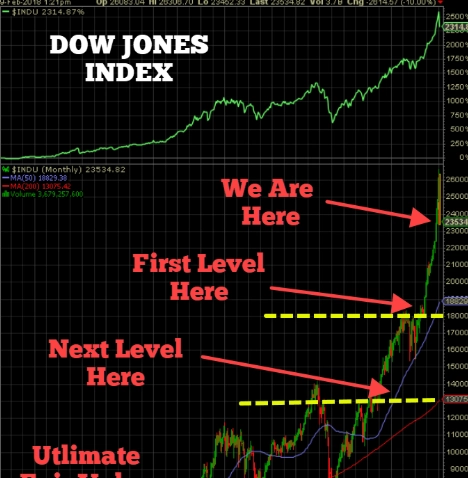
Alternatives to the Dow: S&P 500 and Nasdaq
You'll often hear the "Dow" mentioned alongside the "S&P 500" and the "Nasdaq." They're not interchangeable.
- S&P 500: This is my personal favorite for a core U.S. stock holding. It tracks 500 of the largest U.S. companies, weighted by market cap. It's much broader than the Dow and is generally considered a better representation of the overall U.S. stock market. A fund like VOO or SPY tracks this.
- Nasdaq Composite: This tracks all the companies on the Nasdaq stock exchange, which is heavy with technology and biotech firms (like Apple, Microsoft, Amazon, Tesla). It's more volatile and sector-concentrated. The QQQ ETF tracks the Nasdaq-100, which is the top 100 non-financial companies on Nasdaq.
Think of it this way: The Dow is 30 blue-chip titans, the S&P 500 is the large-cap market, and the Nasdaq is tech growth. Most balanced portfolios will have a heavy dose of an S&P 500 fund, maybe some Nasdaq for growth, and the Dow often gets covered within those broader indexes anyway.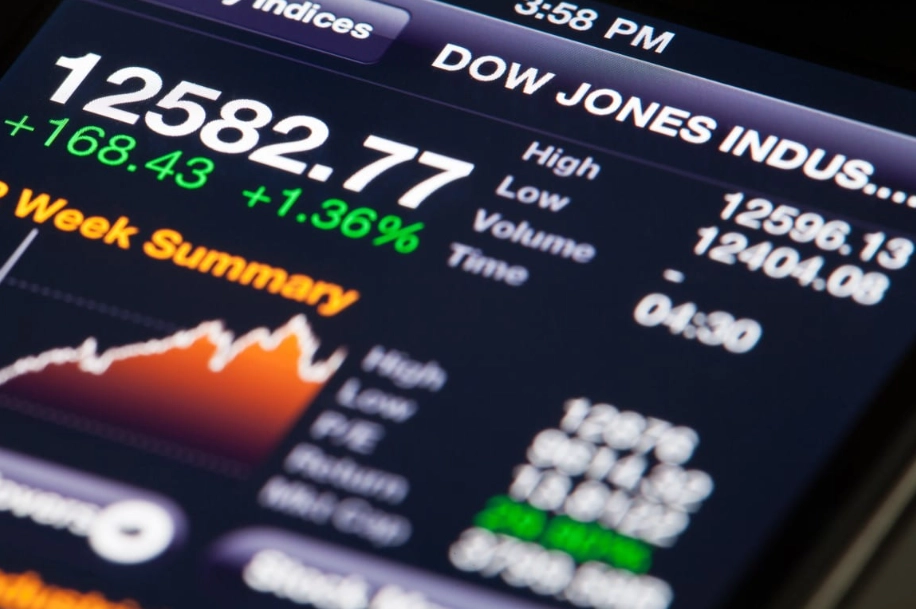
Common Questions About the Dow Jones Share Index
Let's tackle some of the specific questions that pop up when you're trying to make sense of it all.

The Dow's Role in Your Financial Life
Even if you never buy a single share of DIA, the Dow Jones share index impacts you. Its daily movements affect the value of countless pension funds and 401(k) plans that hold its component stocks. It sets the tone for business news and consumer confidence. When it crashes, as it did in 2008 or during the early 2020 COVID panic, it creates real fear that can freeze spending and hiring.
For an investor, watching the Dow is less about timing the market and more about understanding market sentiment. A steadily climbing Dow over years suggests corporate profits are growing and the economy is expanding. A turbulent, sideways-moving Dow can signal uncertainty.
My final thought? The Dow Jones Industrial Average is a fascinating historical artifact that became a financial powerhouse. Understand its quirks—the price-weighting, the 30 companies, the committee. Use it as a gauge, a piece of the puzzle. But for building real wealth, look to broader, more systematic approaches like low-cost index funds that cover the whole market. The Dow gives you the story of America's corporate giants. Make sure your portfolio tells the story of your entire financial future, not just one chapter of it.
And the next time someone says "The Dow is up," you'll know exactly what that means, what's behind it, and what it does and doesn't mean for your money. That's a pretty useful bit of knowledge to have.
Reader Comments