Let's cut through the jargon. When you hear "non-exempt employee," you should think one thing: overtime eligible. This isn't just HR paperwork; it's the core of fair pay under the U.S. Fair Labor Standards Act (FLSA). Misclassifying a worker here isn't a small accounting error—it's a legal and financial landmine waiting to explode. I've seen too many small businesses, even some mid-sized ones, get this wrong because they relied on gut feeling or outdated advice. This guide walks you through exactly what it means, how to classify correctly, and the real-world steps to stay compliant.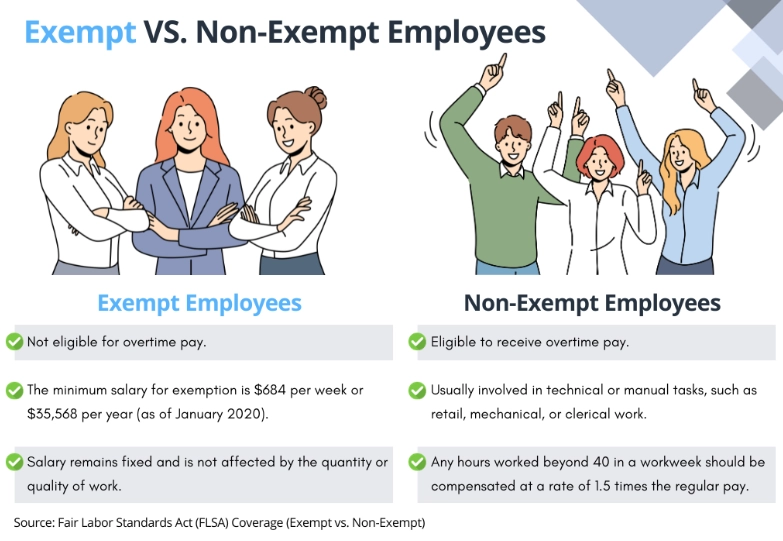
What You'll Find in This Guide
Exempt vs. Non-Exempt: The Real Difference
Think of it as a filter. All employees are presumed non-exempt by default. The law says they get overtime unless you, the employer, can prove they meet specific criteria to be "exempt" from those overtime rules. It's your burden to prove it.
Here’s the practical breakdown most people miss: Exempt status is about the nature of the job, not the job title or how you pay them. Calling someone a "manager" or paying them a salary doesn't automatically make them exempt. That's mistake number one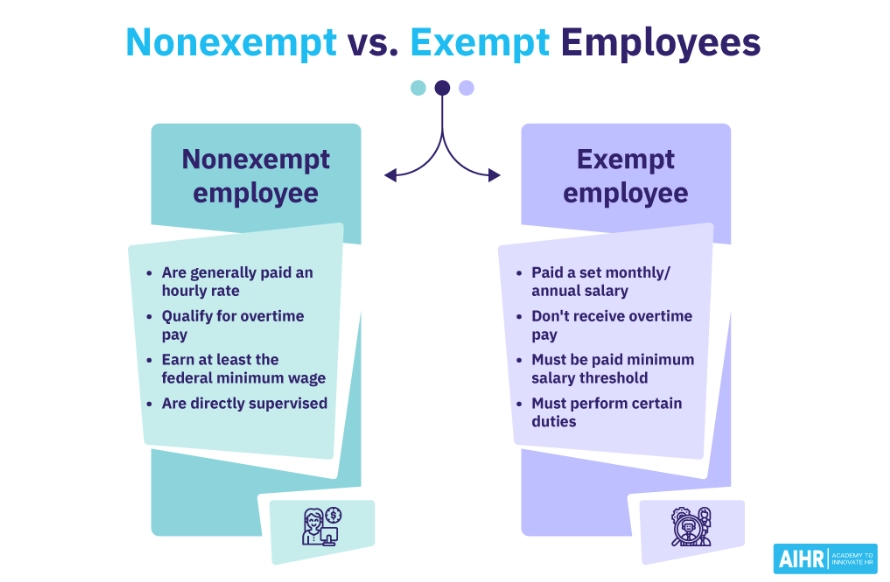
See that? A non-exempt employee can be salaried. This trips up countless business owners. You pay them a fixed weekly salary for, say, 35-40 hours, but if they work 45 hours, you still owe them overtime on top of that salary. The salary just becomes part of the overtime calculation.
The 3 Tests That Determine Exempt Status
The U.S. Department of Labor sets the rules. To be exempt, an employee must pass all three of these tests. Fail one, and they're non-exempt.
1. The Salary Basis Test
The employee must receive a predetermined, fixed salary that cannot be reduced because of variations in the quality or quantity of work. There's a minimum salary threshold. As of 2024, it's $684 per week ($35,568 annually). Some states, like California and New York, have much higher thresholds. You must meet the higher of the federal or state requirement.
2. The Salary Level Test
This is just the numerical part of the first test—hitting that minimum dollar amount. It's the easiest test to verify but also the one that changes, so you have to keep up with announcements from the DOL.
3. The Duties Test
This is where 90% of the confusion happens. The employee's primary job duties must fall into one of the exempt categories:
- Executive Exemption: Primary duty is managing the enterprise or a recognized department, and they regularly direct the work of at least two full-time employees.
- Administrative Exemption: Primary duty is office or non-manual work directly related to management or general business operations, and they exercise discretion and independent judgment on significant matters.
- Professional Exemption: Primary duty requires advanced knowledge in a field of science or learning, usually obtained through a prolonged course of specialized intellectual instruction (like lawyers, doctors, architects).
How to Calculate Overtime Pay (It's Not Just 1.5x)
You know it's time-and-a-half. But the "regular rate" it's based on is trickier than just the hourly wage, especially for non-exempt employees on salary or with bonuses.
Scenario: Maria is a non-exempt customer service specialist. She's paid a weekly salary of $800 for a 40-hour workweek. This week, she worked 50 hours to handle a product launch. She also earned a $100 performance bonus this pay period.
- Determine the Regular Rate: First, find her hourly rate from her salary: $800 / 40 hours = $20/hour. But wait, the bonus must be included. Add the $100 bonus to the weekly salary: $800 + $100 = $900. Divide this by the 40 "straight time" hours: $900 / 40 = $22.50. This $22.50 is her regular rate for overtime calculation this week.
- Calculate Overtime Premium: She worked 10 overtime hours. The overtime premium is half the regular rate for each OT hour (because she's already been paid the "one" for all hours via her salary). Overtime premium = $22.50 / 2 = $11.25 per OT hour.
- Total Pay: Straight-time salary: $800. Bonus: $100. Overtime premium: 10 hours x $11.25 = $112.50. Total = $1,012.50.
See how the bonus changed her regular rate? Miss that, and you've underpaid her. This is a common payroll software setup error.
The 5 Most Costly Classification Mistakes
After consulting on dozens of cases, these are the errors I see repeated.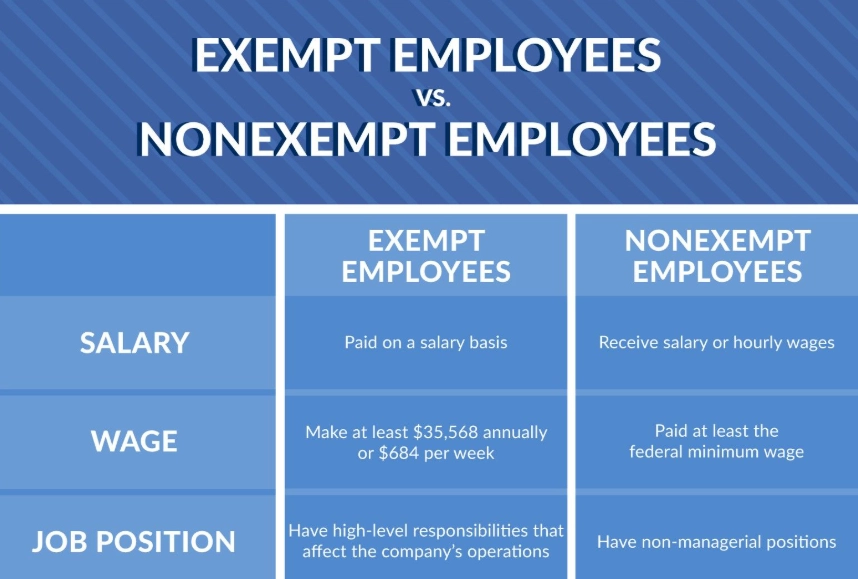
1. The "Salaried = Exempt" Assumption. We covered this. It's the cardinal sin. You can have salaried, non-exempt employees. Their salary covers their straight-time pay for all hours worked, up to 40. Overtime is extra.
2. Misapplying the "Computer Employee" Exemption. This one's technical. It's not for everyone who uses a computer. To be exempt under this rule, the employee must be a systems analyst, programmer, software engineer, or similar, and be paid at least $684/week on a salary/fee basis, or at least $27.63 per hour. Your IT helpdesk staff making $25/hour? Non-exempt.
3. The "Manager" Who Doesn't Manage. You give someone the title to justify a salary and exempt status, but they have no real authority to hire, fire, promote, or direct the work of others. They're a lead worker or a senior staffer, not a bona fide executive. The DOL will see right through this in an audit.
4. Making Improper Deductions from Salary. For a truly exempt employee, docking pay for partial-day absences (except under very specific FMLA or similar scenarios) can destroy the "salary basis" test, potentially reclassifying them as non-exempt retroactively. For non-exempt salaried employees, you can make deductions for missed work, but it gets messy. Have a clear, lawful policy.
5. Ignoring State Laws. The FLSA is the floor. States like California have daily overtime (over 8 hours in a day), higher salary thresholds for exemption, and stricter duties tests. If your state law is more protective, you must follow it.
Your 4-Step Compliance Action Plan
Don't panic. Be systematic.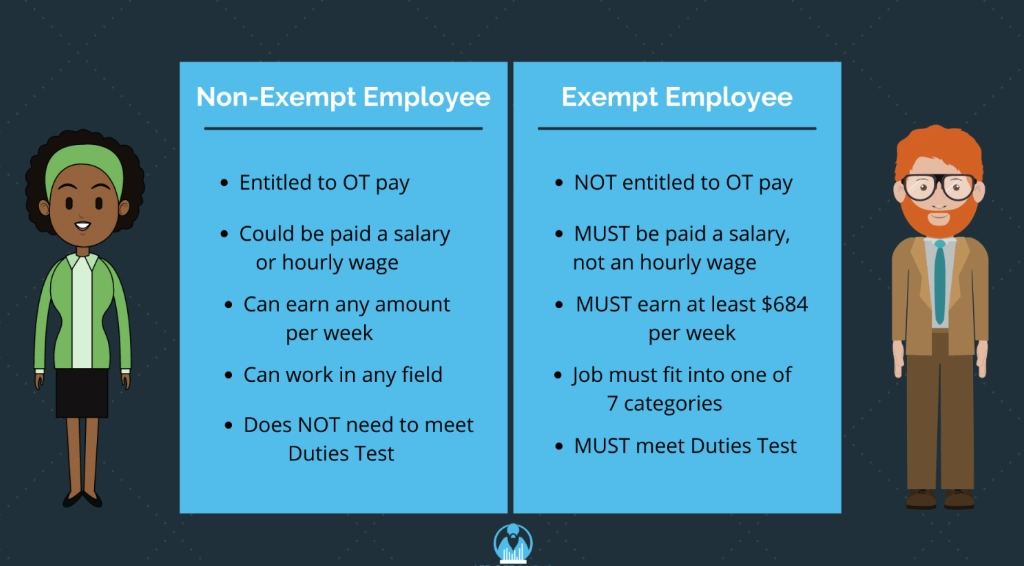
Step 1: Audit Your Current Roles. Take job descriptions off the shelf. Look at what people actually do day-to-day. For each employee you think is exempt, write down how they meet each prong of the salary basis, salary level, and duties tests. Be brutally honest.
Step 2: Reclassify If Necessary. If you find misclassified employees, you must correct it. Transitioning someone from exempt to non-exempt can be sensitive. Frame it as a compliance update that ensures they are properly compensated for all hours worked, including potential overtime. Consult an employment attorney for the messaging and legal mechanics.
Step 3: Implement Ironclad Time Tracking. Every non-exempt employee must accurately record all hours worked. This includes answering emails after hours, quick calls, and working through lunch. Use a reliable system and train managers not to condone off-the-clock work. That's a major liability.
Step 4: Train Your Managers. Your frontline managers are your biggest risk and your first line of defense. Train them on overtime rules, the importance of accurate time records, and the prohibition of off-the-clock work. Make sure they understand they can't pressure employees to work unpaid.
Answers to Your Toughest Questions
Can I switch a non-exempt employee to a fixed schedule to control overtime costs?
You can set their schedule, yes. But if they work beyond it, you must pay overtime. The control comes from managing workload and expectations, not from refusing to pay for unauthorized overtime. If you know an employee is working extra and you don't stop it, you're on the hook for the pay. The law focuses on hours worked, not hours authorized.
We pay our non-exempt staff a salary with a "bonus" for weeks they go over 40 hours. Is that okay?
This is a red flag. That "bonus" is very likely just overtime pay that's being mislabeled. Overtime must be calculated at 1.5 times the regular rate, which includes that bonus. A flat bonus for OT hours probably doesn't meet the legal calculation. You're risking underpayment. Structure it correctly: pay the salary, track all hours, and calculate the precise overtime premium owed each week.
 One of our non-exempt employees is remote and works irregular hours. How do we track that reliably?
The same way you do for in-office staff: with a designated system. Require them to log in and out of a timekeeping app or submit daily timesheets. Set clear expectations that all work time must be recorded. Have regular check-ins to review hours. The burden is on you to create a system that captures the time, not on the employee to somehow manage it informally. Trust but verify.
What's the actual penalty for misclassifying an employee as exempt?
It's severe. You'd be liable for: all unpaid overtime (going back 2-3 years, depending on the willfulness), an equal amount as liquidated damages (doubling the amount owed), the employee's attorneys' fees, and potential civil penalties from the DOL. For a single employee earning $50k, working 10 hours of OT a week for two years, the back pay alone could exceed $30,000. Now multiply that by a whole team. It can cripple a business.
Reader Comments