Have you ever sat through a terrible movie just because you paid for the ticket? Stuck with a failing project at work because you've already invested six months into it? Held onto a stock that's plummeting, hoping it will bounce back to justify your initial buy? If you're nodding, you've met the sunk cost fallacy. It's not just an economic term; it's a psychological trap that costs us time, money, and peace of mind every single day. I've seen it derail startup founders, including myself in an early venture, and quietly drain the portfolios of otherwise savvy investors. Let's unpack this mental bug and, more importantly, build a toolkit to defeat it.
What You'll Learn in This Guide
- What Exactly Is a Sunk Cost? (It's Not What You Think)
- Why We Can't Let Go: The Psychology Behind the Trap
- Where It Hides: Sunk Costs in Business, Investing & Life
- The 3-Step Framework to Escape the Sunk Cost Trap
- The Big Mistake: When "Ignore All Sunk Costs" is Bad Advice
- Your Burning Sunk Cost Questions, Answered
What Exactly Is a Sunk Cost? (It's Not What You Think)
A sunk cost is any past expense or invested effort that is irrecoverable. The money is spent. The time is gone. You cannot get it back, no matter what you decide to do next. This is the crucial, often-missed point.
The sunk cost fallacy is the irrational decision to continue an endeavor solely because of the resources already committed, even when abandoning it would be more beneficial. You're making future choices based on past losses, which is like driving forward while only looking in the rearview mirror.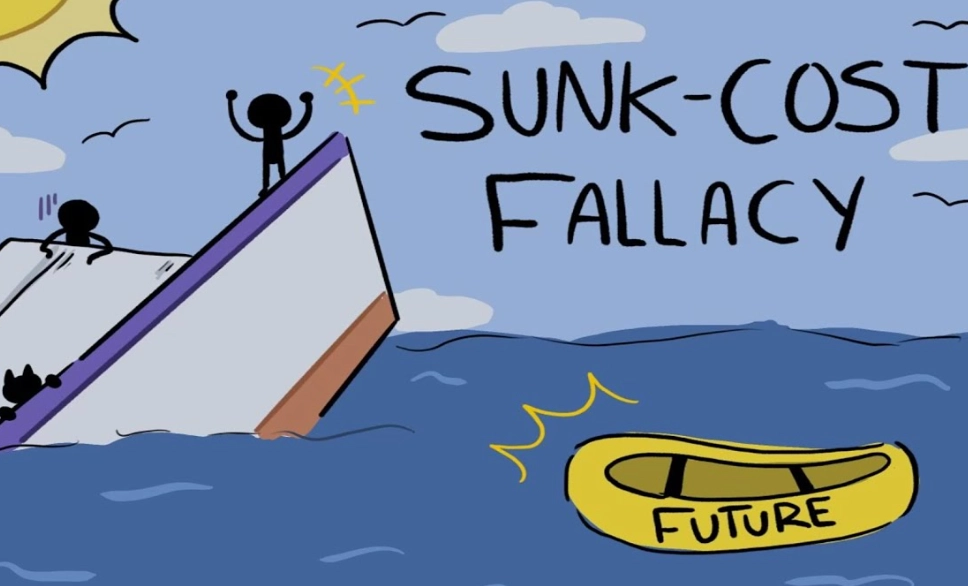
Classic Example: The Concorde jet. Governments kept funding the unprofitable supersonic airliner for decades because they had "invested too much to quit," pouring billions more into a project that was economically doomed from later stages. It's a textbook case of throwing good money after bad.
Here’s where people get tripped up. They confuse sunk costs with ongoing investments. If you can repurpose or salvage part of an investment for a new direction, that part isn't fully sunk. The fallacy is in letting the completely lost portion dictate your path.
Why We Can't Let Go: The Psychology Behind the Trap
Logically, we know we should ignore sunk costs. Emotionally, it feels like admitting defeat. Our brains are wired to avoid loss and crave consistency. The American Psychological Association notes this is tied to loss aversion—the pain of losing $100 is psychologically twice as powerful as the pleasure of gaining $100. Walking away from an investment feels like concretizing that loss, so we cling on.
There's also ego protection. Abandoning a project you championed can feel like a public admission of poor judgment. I've sat in boardrooms where executives doubled down on failing initiatives because the alternative was to say, "My original call was wrong." It's costly pride.
The Commitment Feedback Loop
The more we invest—time, money, emotion—the harder it becomes to quit. This creates a self-justifying loop: "I've put in this much, so it must eventually pay off." We start reframing continued investment as "dedication" rather than "waste."
Where It Hides: Sunk Costs in Business, Investing & Life
This bias doesn't live in textbooks; it's in your everyday choices. Let's map it out.
| Domain | Common Sunk Cost Trap | The Rational Alternative (Often Unsaid) |
|---|---|---|
| Personal Finance & Investing | Holding a plummeting stock/"bag" to "break even." Continuing to pay for an unused gym membership or subscription. | Sell and reallocate capital to a better opportunity. Cancel the subscription today; the past fees are gone. |
| Business & Projects | Continuing a software development project with outdated tech because of prior investment. Keeping an underperforming employee because of training costs. | Pivot or scrap the project. Assess the employee on future potential and fit, not past training expenses. |
| Career & Education | Staying in a career path you hate because you have a degree in it. Finishing a useless certification because you started it. | Your degree is a credential, not a life sentence. The time spent on the cert is sunk; don't waste more. |
| Relationships & Daily Life | Staying in an unfulfilling relationship due to time invested. Forcing yourself to finish a bad meal you paid for. | The past years are memories, not a reason for future misery. Your health and satisfaction matter more than the plate's price. |
See the pattern? The trap is universal. The first step to beating it is recognizing its face in different contexts.
The 3-Step Framework to Escape the Sunk Cost Trap
Forget vague advice like "be rational." Here's a concrete process I use and coach others on. Pull this out the next time you feel stuck.
Step 1: The "Clean Slate" Thought Experiment
Ask yourself: "If I walked into this situation today, with none of the past investment, would I start it? Would I buy this stock at its current price? Would I hire this person today? Would I begin this relationship as it is now?"
This mentally resets the clock. It forces you to evaluate the present and future on their own merits. If the answer is "no," you have a strong signal that you're being influenced by sunk costs.
Step 2: Quantify the Bleed
Make the ongoing cost of continuing explicit. This isn't about the sunk cost; it's about the future cost of inaction.
- Financial Bleed: How much more money will this consume per month?
- Opportunity Cost: What better projects, investments, or life experiences are you missing out on by staying put? (This is the big one).
- Emotional & Time Tax: What is the stress, anxiety, or wasted hours costing your well-being and productivity?
Write these numbers and descriptions down. Seeing the future bleed often outweighs the pain of the past loss.
Step 3: Pre-commit to Decision Triggers
This is the pro move. Set predefined, quantitative criteria for walking away before you're emotionally entangled.
For an investment: "I will sell if it drops 20% below my purchase price or if the company's core revenue metric misses targets for two consecutive quarters."
For a project: "We will reassess and potentially cancel if we haven't achieved MVP user adoption by [date] or if monthly burn exceeds [amount]."
For a personal goal: "I will quit this course if I find myself consistently dreading it and not applying any learnings after 4 modules."
These triggers act as circuit breakers, separating the decision from the heat of the moment when the sunk cost fallacy has its strongest pull.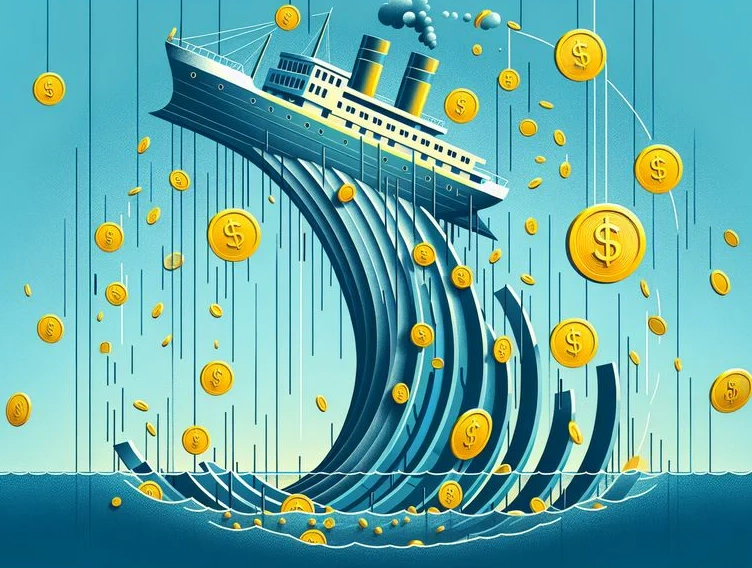
The Big Mistake: When "Ignore All Sunk Costs" is Bad Advice
Here's a nuanced take you won't hear often: blindly ignoring all sunk costs can be just as foolish as being ruled by them. The common advice is too simplistic.
The key is to ignore sunk costs for emotional justification, but to consider them for informational value. The past investment itself shouldn't dictate the future, but the process and data from that investment might.
Example: You've spent $50,000 developing a product that's failing. The pure "ignore sunk cost" zealot says: "Scrap it, the $50k is gone." But what if that $50k bought you invaluable market feedback showing a different customer need? The rational move isn't to blindly continue or blindly quit. It's to use the learning (paid for by the sunk cost) to pivot to a new, validated idea. The money is still gone, but its informational byproduct has real future value.
So, don't ask "How much have I put in?" Ask "What have I learned from what I've put in, and does that learning justify a new, independent investment?" That's the expert-level distinction.
Your Burning Sunk Cost Questions, Answered
I've invested 5 years in a relationship that's going nowhere. Is leaving now a waste of all that time?
The five years are sunk. They're memories and experience, not a bank account you can withdraw from. The only relevant questions are: 1) Are you happy and fulfilled in the relationship today? 2) Based on the partner's consistent actions (not promises), do you see a future that makes you excited? If both answers aren't a clear yes, staying longer just because of the past five years is guaranteeing you'll waste year six, seven, and beyond. The time already spent is the exact reason not to sacrifice more future time.
In business, isn't persistence in the face of sunk costs sometimes praised as "grit" or "commitment"?
This is a dangerous confusion. Grit is perseverance toward a worthwhile long-term goal despite obstacles. The sunk cost fallacy is perseverance toward a failing course of action because of past losses. The difference is in the feedback. Grit adjusts tactics but keeps the strategic vision clear. The fallacy ignores negative feedback (like consistent market rejection or mounting losses) and doubles down on the same failing tactic. True grit is flexible. The fallacy is rigid. Don't let a culture that prizes "never giving up" trick you into burning resources on a proven dead end.
How do I deal with the regret and self-blame after realizing I've fallen for this trap and lost money?
First, reframe the "loss." That money bought you an expensive but powerful lesson in behavioral economics and self-awareness—a lesson that will save you far more money in the future. Second, practice self-compassion. Every single person, including the most successful investors and CEOs, falls for this bias. It's human wiring. The mistake isn't falling for the trap initially; it's refusing to climb out once you see it. Making the clear-eyed decision to stop now is an act of strength, not an admission of failure. Take the lesson, implement the pre-commitment triggers for next time, and move your focus to your next best opportunity.
The sunk cost fallacy is a tax on poor decision-making. But the tax is optional. You can cancel the subscription. By learning to spot the emotional tug of past investments, using a structured framework to evaluate choices, and understanding the subtle difference between wasted costs and valuable learning, you take back control. Your future resources—your money, your time, your energy—are too valuable to be held hostage by past expenses. Make your next decision based on where you want to go, not on what you've already left behind.
Reader Comments