What's Inside This Guide
Let's talk about LLCs. You've probably heard the term thrown around if you're even remotely thinking about starting a business. It sounds official, maybe a little intimidating. Is it just legal jargon, or is it something you actually need? I remember helping a friend who was selling handmade furniture online. He was doing great, but then he got spooked by a story about someone getting sued and losing their house because of their business. That's when we dove into the world of LLCs.
The truth is, forming an LLC isn't just for tech startups or people with offices. It's for the freelancer, the consultant, the Etsy seller, the local landscaper – anyone who wants to separate their personal life from their business ventures. It's about sleeping better at night.
But here's where most guides lose people. They either get bogged down in legalese or oversimplify to the point of being useless. You're left wondering, "Okay, but what does that mean for ME on a Tuesday afternoon?" We're going to cut through that.
What Exactly Is an LLC and Why Should You Care?
Imagine your business gets into a legal dispute. Maybe a client claims they were injured by a product, or a contract goes sideways. If you're operating as a sole proprietorship (which is what you are by default if you don't choose a structure), your personal assets – your savings account, your car, even your home – are on the line. The lawsuit can pierce right through your business and come for your personal life.
An LLC changes that game. It creates a separate legal entity for your business. The "limited liability" part means that as the owner (called a "member"), your personal liability is typically limited to your investment in the company. Your personal assets are shielded from business debts and claims. That's the big one. That's the peace of mind.
Now, is it a force field that protects you from everything? No. You can't commit fraud or act recklessly and hide behind the LLC. That's called "piercing the corporate veil," and courts will hold you personally responsible. But for the normal ups and downs of business risk, the LLC is a incredibly robust shield.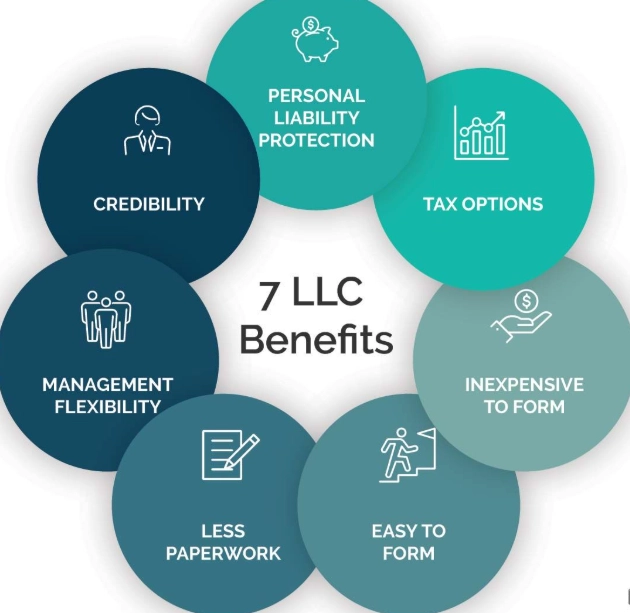
The Big Three Benefits of Choosing an LLC
Everyone talks about liability, but the benefits run deeper.
First, the obvious: Personal Asset Protection. We covered it, but it bears repeating. Your personal wealth and your business risk are separated. This is the primary reason most people form an LLC.
Second, and this is huge: Tax Flexibility. This is where LLCs really shine. By default, a single-member LLC is treated as a "disregarded entity" by the IRS. That's a fancy way of saying the profits and losses pass through to your personal tax return (Schedule C). No separate corporate tax return. You avoid the dreaded "double taxation" of C-Corporations. But – and here's the cool part – if it benefits you, you can elect for your LLC to be taxed as an S-Corporation. This can potentially save you money on self-employment taxes once your profit reaches a certain level. You have options, which is powerful.
Third: Credibility and Professionalism. "John Smith Consulting" feels different from "John Smith Consulting, LLC." Having "LLC" after your business name signals to clients, vendors, and potential partners that you're serious, established, and have taken formal steps to structure your enterprise. It can help you land bigger contracts and build trust.
LLC vs. The Alternatives: A Straightforward Comparison
How do you know an LLC is right for you? Let's stack it up against the other common choices. This table should make it crystal clear.
| Business Structure | Liability Protection | Taxation | Complexity & Cost | Best For |
|---|---|---|---|---|
| Sole Proprietorship | None. You are personally liable for all business debts. | Pass-through to personal return. Simple. | Simplest and least expensive. No formal formation needed. | Low-risk, casual businesses just starting out. Testing an idea. |
| Partnership | Generally, none for general partners. Personal liability is shared. | Pass-through to partners' personal returns. | Relatively simple, but a partnership agreement is crucial. | Businesses with two or more owners who want a simple structure. |
| Limited Liability Company (LLC) | Yes. Members are typically not personally liable. | Flexible: Default pass-through, can elect S-Corp or C-Corp treatment. | Moderate. Requires state filing and fees. Operating agreement recommended. | Most small to medium businesses seeking liability protection with tax simplicity. |
| S-Corporation | Yes. Shareholders are typically not personally liable. | Pass-through to shareholders' personal returns. Avoids double taxation. | More complex. Strict ownership rules (max 100 shareholders, all must be U.S. persons). | Businesses that will benefit from S-Corp salary/dividend structure to reduce SE tax. |
| C-Corporation | Yes. Shareholders are typically not personally liable. | Double taxation: Corporate profits taxed, then dividends taxed again to shareholders. | Most complex and expensive. Extensive record-keeping and formalities. | Companies planning to seek major venture capital funding or go public. |
See the sweet spot? For the vast majority of founders who want protection without corporate complexity, the LLC is the answer. The S-Corp is actually a tax election, not a structure you form at the state level—you often form an LLC first, then make the S-Corp election with the IRS.
The Step-by-Step Reality of Forming Your LLC
Okay, you're convinced. How do you actually get this thing off the ground? It's a process, but it's manageable. Don't let the steps scare you—they're mostly administrative.
Step 1: Choose Your State of Formation. This is the first big decision. Most small businesses will form their LLC in the state where they physically operate. It's the simplest. But you'll hear about Delaware, Wyoming, and Nevada being "business-friendly." They are, with well-established case law and sometimes lower fees. However, if you operate in California but form in Delaware, you'll likely need to register as a "foreign LLC" in California anyway, paying fees and taxes in both states. For most, home state wins. I formed my first one in my home state, and it was perfectly fine.
Step 2: Pick a Unique Business Name. Your LLC's name must be distinguishable from other entities registered in your chosen state. It must include an identifier like "LLC," "L.L.C.," or "Limited Liability Company." Do a name search on your state's Secretary of State website. Also, think about the URL. Is the .com available? Even if you're not building a website today, securing the domain is smart.
Step 3: Designate a Registered Agent. This is a person or company authorized to receive legal papers (like lawsuit notices) on behalf of your LLC. They must have a physical street address in the state of formation. You can be your own registered agent, but that means your home or office address becomes public record, and you must be available during normal business hours. Many people use a professional service for privacy and reliability.
Step 4: File the Articles of Organization. This is the main document that officially creates your LLC with the state. It's usually a simple form asking for your LLC name, registered agent details, business purpose (often you can write "any lawful business"), and sometimes the names of the members. You file this with the Secretary of State's office and pay a filing fee. Fees vary wildly by state—from under $50 to over $500.
This is the moment your LLC becomes legal.
Step 5: Create an Operating Agreement. This is the internal rulebook for your LLC. Even if you're a single-member LLC, you need one. I can't stress this enough. It outlines how the LLC will be run: voting rights, profit/loss distribution, what happens if a member wants to leave or dies. It's not usually filed with the state, but it's critical for maintaining your liability protection and avoiding disputes. A handshake agreement isn't enough. You can find templates, but for multi-member LLCs, spending a few hundred dollars with a lawyer to draft one is a fantastic investment.
Step 6: Get an EIN. An Employer Identification Number (EIN) is like a social security number for your business. You need it to open a business bank account, hire employees, and for tax purposes. It's free and you can get it instantly from the IRS website. Don't use your SSN for business stuff.
Step 7: Handle the Ongoing Stuff. You're not done after filing. You need to open a separate business bank account. This is non-negotiable for keeping your liability protection intact—mixing personal and business funds ("commingling") is a fast way to get your protection pierced. Get any necessary business licenses or permits from your city or county. Check the SBA's guide on licenses and permits as a starting point.
Living With Your LLC: Taxes, Compliance, and Real Operations
Forming the LLC is the wedding. Running it is the marriage. Here's what daily life looks like.
How LLC Taxes Actually Work
This is where eyes glaze over, but stick with me. It's simpler than you think.
For a single-member LLC, the default is pass-through taxation. The LLC itself doesn't pay federal income tax. You report all the LLC's profits and losses on Schedule C of your personal Form 1040. You pay income tax and self-employment tax (Social Security and Medicare) on the net profit.
For a multi-member LLC, it's similar but treated as a partnership for tax purposes. The LLC files an informational return (Form 1065), and each member gets a Schedule K-1 showing their share of profit/loss, which they then report on their personal return.
Now, the S-Corporation Election (Form 2553). This is a strategic move. As an S-Corp, you must pay yourself a "reasonable salary" as an employee (subject to payroll taxes). Any profit beyond that salary can be distributed as dividends, which are not subject to self-employment tax. This can result in significant tax savings once your business is profitable enough to justify a salary and have leftover profit. The paperwork is more complex (payroll, quarterly filings), so the savings need to outweigh the admin cost and fees.
Staying Compliant: Don't Lose Your Good Standing
States don't just forget about you after you form. Most require an Annual Report (sometimes called a Statement of Information) and an associated fee. This updates your contact and registered agent info. Miss this, and they can administratively dissolve your LLC, stripping away your liability protection.
Keep your personal and business finances strictly separate. Use that business bank account for everything business-related. Get a business credit card. Pay yourself via formal owner draws or payroll. This practice, along with maintaining your operating agreement and meeting minutes (for multi-member LLCs), is how you "respect the corporate veil."
Answering Your Burning LLC Questions
So, is an LLC right for you? If you're serious about your business, if you interact with clients or create products that carry any inherent risk, if you want to build something that's legally distinct from yourself—the answer is almost certainly yes. The process is a rite of passage. It forces you to think through the fundamentals of how your business will work. And in the end, that clarity, plus the protection, is worth far more than the filing fee.
Start with your state's official website. Look up "[Your State] Secretary of State LLC formation." Read the instructions. It demystifies the whole thing. From there, you can decide if you want to DIY, use a filing service, or hire a pro. But the first step is just deciding to look into it. Your future self, enjoying that peace of mind, will thank you.
Reader Comments