Let's talk about a number that can predict business failure or success, one most owners glance at but few truly understand. It's not your profit margin. It's your accounts receivable turnover ratio. I've seen companies with soaring sales go under because they ignored this single metric. They were profitable on paper but bankrupt in the bank. This ratio cuts through the accounting noise and tells you one brutal truth: how good you are at turning sales into actual, usable cash.
Think of it as the pulse of your customer payment system. A strong, steady beat means healthy cash flow. A weak or erratic one? That's a warning sign of collection problems, bad debt, or a credit policy that's strangling your growth.
What You'll Learn in This Guide
- What This Ratio Actually Measures (And What It Doesn't)
- How to Calculate It Correctly—A Step-by-Step Walkthrough
- What a High or Low Number Really Means for Your Business
- Where You Should Stand: Industry Benchmarks
- Practical Steps to Improve Your Ratio and Get Paid Faster
- Common Mistakes Even Experienced Managers Make
What the Accounts Receivable Turnover Ratio Actually Measures (And What It Doesn't)
At its core, the accounts receivable turnover ratio tells you how many times in a period (usually a year) you successfully collect your average accounts receivable. It's an efficiency metric.
A simple analogy: Imagine you have a bucket (your credit sales). You fill it with water (issue invoices). The turnover ratio measures how quickly and completely you can empty that bucket into your cash tank. If you fill it faster than you empty it, you'll eventually overflow—that's a working capital crisis.
Here's the crucial part most summaries miss: This ratio does not measure profitability. You can have a fantastic turnover ratio by only selling to ultra-creditworthy clients for tiny amounts. It also doesn't measure customer satisfaction. An extremely high ratio might mean you're hounding clients so aggressively you're damaging relationships.
The real power comes from pairing it with its cousin: Days Sales Outstanding (DSO). While the ratio gives you a frequency, DSO translates it into a concrete timeline—the average number of days it takes to get paid. They're two sides of the same coin.
How to Calculate Accounts Receivable Turnover Ratio (Step-by-Step)
Let's move beyond the textbook formula. I'll show you how a real business, let's call it "B2B Widgets Inc.," does this.
The standard formula is: Net Credit Sales ÷ Average Accounts Receivable.
Sounds simple, right? The devil is in the details.
Step 1: Find Your Net Credit Sales
This is the first tripwire. You cannot use total revenue from your income statement if you have any cash sales. That will inflate your ratio and give you a false sense of security. You need the revenue specifically from sales made on credit.
For B2B Widgets Inc., their annual income statement shows $1,000,000 in revenue. But their point-of-sale data tells them $150,000 of that was retail (cash/credit card) sales. Their Net Credit Sales = $1,000,000 - $150,000 = $850,000.
If you're a pure B2B company, your total revenue is likely all credit sales.
Step 2: Calculate Average Accounts Receivable
Don't just use the year-end receivables number. That's a snapshot that could be abnormally high or low. You need an average.
Pull the Accounts Receivable balances from your balance sheet at the start and end of the period.
B2B Widgets Inc.:
Jan 1 Receivables: $95,000
Dec 31 Receivables: $105,000
Average Receivables = ($95,000 + $105,000) / 2 = $100,000.
For a more accurate picture, use quarterly or even monthly averages if your business is seasonal.
Step 3: Do the Math and Interpret
Now, plug the numbers in:
Turnover Ratio = $850,000 / $100,000 = 8.5.
This means B2B Widgets Inc. collected its average receivables balance 8.5 times over the year. To make it more intuitive, calculate the Days Sales Outstanding (DSO):
DSO = (365 days / Turnover Ratio) = 365 / 8.5 ≈ 43 days.
So, on average, it takes them 43 days to get paid from the date of invoice. This is a number you can actually manage against.
What Does a High or Low Ratio Actually Mean?
This is where context is everything. A high number isn't automatically good, and a low number isn't automatically bad.
A High Turnover Ratio (e.g., >12)
The Obvious Interpretation: Great! You're collecting cash quickly. Your credit and collections processes are efficient.
The Hidden Danger (The Non-Consensus View): A very high ratio can be a red flag. It might mean your credit policy is too restrictive. You're only selling to the most creditworthy, low-risk customers, which could mean you're missing out on significant sales volume from good-but-not-perfect clients. I worked with a manufacturing firm proud of their ratio of 15. We dug deeper and found their sales growth was stagnant. They were leaving money on the table out of fear of bad debt.
Alternatively, it could mean most of your sales are actually cash-based, and you've miscalculated by using total revenue.
A Low Turnover Ratio (e.g.,
The Obvious Interpretation: Trouble. You're struggling to collect payments. Your cash is tied up, and the risk of bad debt is high.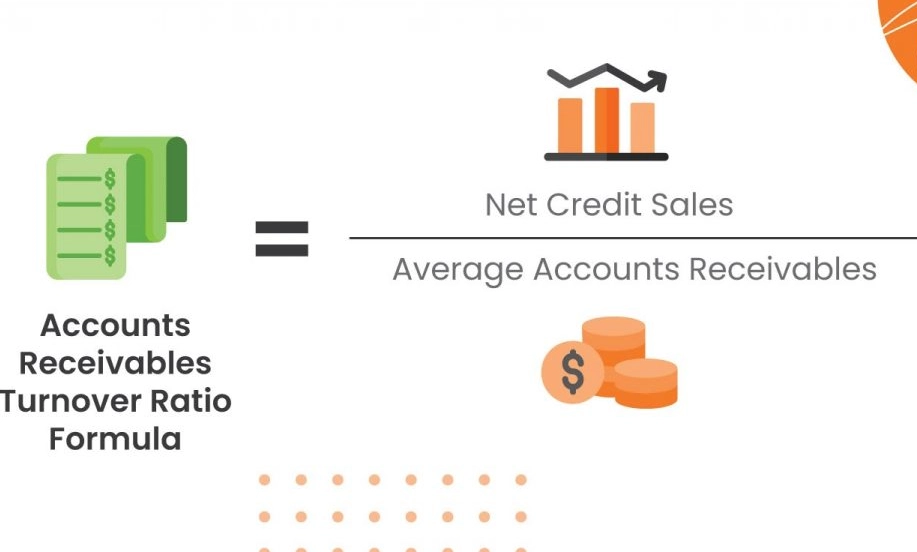
The Nuanced Reality: In some industries, a low ratio is standard. Think heavy construction, large machinery, or government contracting—payment terms are often 60, 90, or even 120 days. A ratio of 4 (DSO of 91 days) might be the industry norm. The key is to compare yourself to your peers, not to a textbook ideal.
The real killer is a ratio that's trending downward over time. That signals an active deterioration in your collections performance or a shift toward riskier customers.
Industry Benchmarks: Where Should You Be?
You need a frame of reference. Here's a rough guide based on data from sources like the Risk Management Association and industry reports. Remember, these are medians and can vary widely.
| Industry | Typical Turnover Ratio Range | Typical DSO (Days) | Notes |
|---|---|---|---|
| Software & Services | 8 - 12 | 30 - 45 | Often has recurring revenue models. |
| Manufacturing (Durable Goods) | 6 - 9 | 40 - 60 | Longer production/payment cycles. |
| Wholesale Trade | 8 - 10 | 36 - 45 | Depends heavily on retailer relationships. |
| Construction | 4 - 7 | 52 - 90 | Notoriously long payment terms. |
| Healthcare (Services) | 10 - 14+ | 26 - 36 | Impacted by insurance billing efficiency. |
Your first job is to find data for your specific niche. Trade associations are a great place to start.
How to Improve Your Accounts Receivable Turnover Ratio: A Tactical Plan
Okay, your ratio is lower than you'd like. Your DSO is stretching out. What now? Here are actionable steps, not just generic advice.
Revise Your Credit Policy, Not Just Your Collections. Most businesses focus on chasing late payments. Be proactive. Define clear credit limits for new customers based on verifiable data (D&B reports, bank references). Institute a "hold" on new orders if an account goes 15 days past due. This gets their attention faster than any collection email.
Invoice Immediately and Accurately. The payment clock starts at invoicing. If your project ends Friday but you don't invoice until the following Wednesday, you've instantly added 5 days to your DSO. Use automated invoicing software. More critically, ensure invoices are flawless. A single line-item error can cause a client's accounts payable department to reject it, delaying payment by weeks.
Offer (and Promote) Early Payment Discounts. A 2% discount for payment within 10 days (2/10 Net 30) can work wonders. Calculate the annualized cost of that discount—it's often far less than the cost of the capital you'd need to borrow to cover the cash flow gap.
Implement a Structured, Escalating Collections Process.
Day 1-30: Friendly payment reminders (automated).
Day 31-45: Personal call from the accounts receivable clerk.
Day 46-60: Call from the sales account manager (relationship leverage).
Day 60+: Call from a senior manager, with a discussion on halting future service.
The key is consistency. Let customers know you have a process and you follow it.
Common Mistakes Even Smart Managers Make
After years in this, I see the same errors repeated.
Mistake 1: Using Total Sales in the Calculation. I've said it, but it's the #1 error. It inflates your ratio and makes you think you're doing better than you are.
Mistake 2: Ignoring the Aging Report. The turnover ratio is an aggregate. A ratio of 7 could mean everyone pays in 52 days, or it could mean 80% pay in 30 days and 20% pay in 120 days. The latter is a major risk. You must look at the accounts receivable aging schedule weekly to see which specific invoices are old.
Mistake 3: Not Segmenting Customers. Calculate the ratio for your top 5-10 customers individually. You might find one large client with terrible payment terms is single-handedly destroying your overall metric. This gives you data to renegotiate terms with that specific client.
Mistake 4: Forgetting Seasonality. If you're a seasonal business, an annual ratio smooths out critical problems. Calculate it quarterly. Did your Q4 sales boom while collections lagged into Q1? That's a cash flow trap the annual number hides.
Your Questions on Receivables Turnover, Answered
Wrapping this up, the accounts receivable turnover ratio isn't just another number for your accountant. It's a direct line into the health of your business's lifeblood: cash. Don't just calculate it. Understand it. Contextualize it with DSO and aging reports. Benchmark it. And most importantly, use it to drive action—tightening credit here, improving invoicing there, having a tough conversation with a slow-paying client.
That's how you move from hoping to get paid to knowing you will.
Reader Comments