Quick Navigation
- Breaking Down the P/E Ratio Formula: It's Not Just Math
- The Two Main Flavors of P/E: Trailing vs. Forward
- How to Interpret the Number: What's a "Good" P/E Ratio?
- The Major Limitations and Pitfalls (Where People Get Burned)
- Putting It All Together: A Practical Checklist for Using P/E
- Common Questions About P/E Ratio Meaning (FAQ)
- Final Thoughts: The P/E as a Starting Point, Not a Conclusion
Let's be honest. When you first see "P/E Ratio" on a stock screener or a financial website, it can feel like you're staring at a secret code you're not meant to understand. You hear experts throw the term around on TV, but the real P/E ratio meaning often gets lost in a cloud of financial jargon. Is it just a fancy number for Wall Street insiders? Absolutely not.
I remember looking at my first stock quote and seeing a P/E of 25 next to a company I liked. I had zero clue if that was good, bad, or just... there. I figured a bigger number must mean a better company, right? That assumption cost me money. It's a mistake I see all the time.
So, let's strip away the complexity. The meaning of the P/E ratio is surprisingly simple at its core. It's a relationship, a comparison. It answers one basic question: How much are investors willing to pay right now for $1 of this company's profits? That's it. If a company's stock trades at $100 per share and it earned $5 per share last year, the P/E ratio is 20 ($100 / $5). You're paying twenty bucks for every one dollar of annual profit.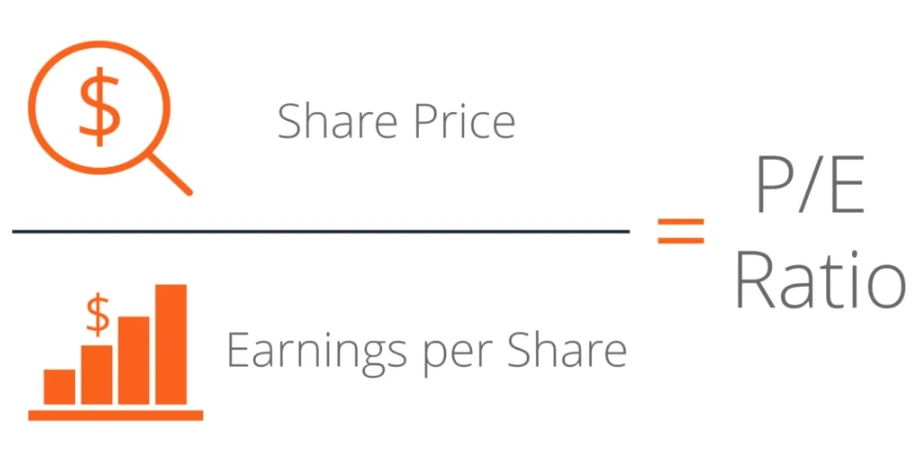
Breaking Down the P/E Ratio Formula: It's Not Just Math
Everyone shows you the formula: Price per Share / Earnings per Share (EPS). It seems straightforward. But the devil, as they say, is in the details. Each part of that simple division tells a story.
The Price part is easy. It's the market's current voting machine. It's the collective opinion of millions of buyers and sellers on what the share is worth today. It's emotional, reactive, and sometimes irrational.
The Earnings part is where things get tricky. This is the company's reported profit. Which earnings? Last year's? This year's estimate? The next twelve months? This single question creates the different types of P/E ratios you'll encounter. Using the wrong one is like using a map from 1990 to navigate today—you'll get lost.
A Real-World P/E Calculation
Let's say "TechGrow Inc." is trading at $150 per share. Last fiscal year, the company reported a net income of $500 million. They have 50 million shares outstanding.
First, find EPS: $500 million profit / 50 million shares = $10 Earnings Per Share.
Then, P/E Ratio: $150 share price / $10 EPS = 15.
The P/E ratio meaning here is clear: investors are paying $15 for every $1 of TechGrow's past annual earnings.
See, it's not scary math. It's just a ratio. The real skill isn't in the calculation—any website does that for you—it's in knowing which earnings number to use and how to interpret the result.
The Two Main Flavors of P/E: Trailing vs. Forward
This is crucial. When someone quotes a P/E, you must ask: trailing or forward? Mixing them up is a classic beginner error.
Trailing P/E (P/E TTM)
This is the most common and concrete type. It uses the company's actual, reported earnings from the past 12 months (often called TTM: Trailing Twelve Months). It's historical fact. The meaning of the trailing P/E ratio is based on what the company has already done. It's reliable because the numbers are in the books, but it's also backward-looking. The stock market is a discounting machine; it cares more about the future. Still, I always check this first. It's the bedrock.
Forward P/E (P/E Forward)
This is the speculative one. It uses the estimated earnings for the next 12 months. Analysts pool their forecasts, and the ratio is calculated based on that future guess. The meaning of a forward P/E ratio is all about expectations. A low forward P/E suggests the market expects modest growth or has low expectations. A high forward P/E screams that investors are betting big on massive future profit growth.
Here's my take: I use forward P/E cautiously. Analyst estimates are notoriously wrong as a group. They're often overly optimistic. Basing an investment solely on forward P/E is like planning your retirement budget on an expected lottery win. It can be a useful gauge of sentiment, but never treat it as gospel.
How to Interpret the Number: What's a "Good" P/E Ratio?
This is the million-dollar question with a frustrating answer: It depends. There is no universal "good" P/E. A P/E of 15 might be expensive for a slow-growing utility company but dirt cheap for a hyper-growth tech startup.
To find the true P/E ratio meaning for a specific stock, you must make comparisons. This is the most important step most people skip.
1. Compare to the Company's Own History
Is the current P/E higher or lower than its 5-year or 10-year average? If Apple typically trades at a P/E of 20 and suddenly it's at 30, you need to ask why. Did its growth prospects double? Or is the stock just getting ahead of itself? A chart of historical P/E can be more telling than the price chart itself.
2. Compare to the Industry Average
This is non-negotiable. Different industries have different typical P/E ranges. Capital-intensive, stable industries (like banks or utilities) trade at lower P/Es. High-margin, fast-growing industries (like software or biotech) command higher P/Es. Comparing a bank's P/E to a software company's is meaningless.
Let's look at some rough, real-world averages to illustrate this critical point. Remember, these are broad generalizations and change with market conditions.
| Industry Sector | Typical Trailing P/E Range (Approx.) | Why It Trades There |
|---|---|---|
| Technology (Software) | 25 - 40+ | High growth potential, scalable business models, large profit margins. |
| Healthcare (Pharma) | 15 - 25 | Steady demand but faces regulatory risks and patent cliffs. |
| Consumer Staples (Food, Household Goods) | 18 - 25 | Stable, recession-resistant earnings but slow growth. |
| Utilities | 14 - 20 | Highly regulated, stable cash flows, but almost no growth. Viewed as bond-proxies. |
| Financials (Banks) | 10 - 15 | Cyclical, sensitive to interest rates, and often carry higher debt levels. |
3. Compare to the Overall Market
How does the stock's P/E stack up against a broad index like the S&P 500? The S&P 500's long-term average P/E is around 15-16. If the market's P/E is 20 and your stock is at 35, it's trading at a significant premium. You need a very compelling reason for that premium to be justified.
For authoritative data on market-wide valuations, the cyclically adjusted P/E ratio (CAPE) maintained by Yale's Robert Shiller is a fantastic resource for historical context.

The Major Limitations and Pitfalls (Where People Get Burned)
The P/E ratio is a fantastic tool, but it's not a magic wand. It has blind spots. Ignoring these is how investors lose money. I've learned this the hard way.
Earnings Can Be Manipulated. This is the big one. The "E" in P/E comes from accounting earnings, which involve judgments and estimates (depreciation, inventory valuation, one-time charges). Companies can sometimes use legal accounting choices to make earnings look smoother or higher. A low P/E based on inflated earnings is an illusion of value. Always look at cash flow (Operating Cash Flow) to cross-check the quality of earnings. The U.S. Securities and Exchange Commission (SEC) EDGAR database is where you go to get the real, unfiltered financial statements.
It Ignores Debt. Two companies can have the same P/E, but one might be drowning in debt while the other has a clean balance sheet. The indebted company is far riskier. A company's enterprise value (EV) to earnings ratio can sometimes give a fuller picture because it incorporates debt.
It Fails for Companies with No Earnings. What's the P/E ratio meaning for a startup losing money? It's meaningless. A negative P/E is mathematically possible but financially useless. For growth companies investing heavily for the future, metrics like Price-to-Sales (P/S) might be more relevant in the early stages.
It Doesn't Account for Growth. This is the most common oversight. A stock with a P/E of 30 growing earnings at 40% per year might be cheaper than a stock with a P/E of 15 growing at 5% per year. This is where the PEG ratio (P/E divided by the growth rate) comes in handy, though it has its own flaws with relying on future growth estimates.
Putting It All Together: A Practical Checklist for Using P/E
Okay, so you understand the P/E ratio meaning. How do you actually use it without getting analysis paralysis? Here's my personal, step-by-step checklist. It's saved me from more bad decisions than I can count.
- Step 1: Identify the Type. Am I looking at Trailing or Forward P/E? I always note both but start my thinking with the trailing number as my anchor.
- Step 2: Check the History. I pull up a 5-10 year P/E chart. Is the current level at the high end, low end, or average of its own range? Sudden spikes or drops need an explanation.
- Step 3: Industry Reality Check. I quickly find the average P/E for the sector. Is this stock in line, or is it a dramatic outlier? If it's an outlier, my next question is: why?
- Step 4: Dig Into the "E". I don't just take the EPS number for granted. I glance at the income statement and cash flow statement. Are earnings backed by solid cash flow? Or are they full of one-time gains and accounting magic? The SEC filings are your friend here.
- Step 5: Consider the Growth Rate. I roughly compare the P/E to the expected growth rate. A P/E of 25 with 25% growth (a PEG of 1) tells a very different story than a P/E of 25 with 5% growth (a PEG of 5).
- Step 6: Look at the Balance Sheet. I don't do a deep dive every time, but I always check the debt-to-equity ratio. A high P/E on top of a mountain of debt is a double red flag.
This process takes 10-15 minutes per stock once you're used to it. It turns a single, confusing number into the start of a real investigation.
Common Questions About P/E Ratio Meaning (FAQ)
Let's tackle the specific questions that pop up when you're knee-deep in research. These are the things I had to google when I was starting out.
Is a high P/E ratio always bad?
No, not always. A high P/E can mean the stock is overvalued. But it can also mean investors expect exceptional future growth. The key is to determine if the growth expectations baked into that high P/E are realistic. A company like Tesla traded at a sky-high P/E for years because the market was pricing in a transformative future, not just next year's car sales. Sometimes it's justified, often it's not.
Is a low P/E ratio always good?
This is the classic value trap. A low P/E can be a screaming buy, or it can be a sign of a broken business with no growth prospects—a "value trap." A low P/E on a tobacco company or a legacy retailer might be low for a reason (declining industry, dying business model). Cheap can always get cheaper. The low P/E must be paired with a solid business that the market is simply misunderstanding or overlooking temporarily.
Can the P/E ratio be negative? What does that mean?
Yes. A negative P/E happens when the "E" (earnings per share) is negative, meaning the company is losing money. The meaning of a negative P/E ratio is essentially undefined in valuation terms. You can't use it for comparison. You need to switch to other metrics like Price-to-Sales or look at the path to future profitability.
What's the difference between P/E and Earnings Yield?
They are two sides of the same coin. P/E is Price/Earnings. Earnings Yield is Earnings/Price. It's just the inverse. A P/E of 20 means an Earnings Yield of 5% (1/20 = 0.05). The earnings yield can be handy to compare a stock's "profit yield" to the yield on a bond. If a 10-year Treasury bond yields 4% and a stock has an earnings yield of 3%, the bond might look more attractive, all else being equal.
How does the P/E ratio relate to market crashes or booms?
At a market-wide level, the average P/E of the S&P 500 is a classic gauge of sentiment. Very high average P/Es (like above 25) often indicate an overly optimistic, possibly bubbly market (think dot-com bubble). Very low average P/Es (like below 10) can indicate deep pessimism and fear (like during the 2009 financial crisis lows). It's a contrarian indicator at extremes. For a deep historical look, resources like Investopedia's P/E ratio definition and analysis provide excellent background.
Final Thoughts: The P/E as a Starting Point, Not a Conclusion
Understanding the true P/E ratio meaning is one of the most empowering steps you can take as an investor. It demystifies a core piece of the financial language. But please, let my early mistakes be a lesson.
Never, ever buy or sell a stock based on the P/E ratio alone. It's a fantastic first filter, a great comparative tool, and an essential piece of the puzzle. But it's just one piece. It doesn't tell you about management quality, competitive advantages (moats), industry trends, or potential legal risks.
Use it to ask better questions. A high P/E should make you ask, "What amazing growth is the market seeing that I'm missing?" A low P/E should make you ask, "What terrible problem does the market see that I'm ignoring?"
That shift—from seeing the P/E as an answer to using it as a question-generator—is when you start doing real analysis. The number finally starts working for you, not the other way around.
So next time you see that P/E figure, don't just glance at it. Interrogate it. Compare it. And remember, you're not just buying a ratio; you're buying a tiny piece of a real business. The P/E helps you gauge the price. The hard work is figuring out if the business behind it is worth it.
Reader Comments